
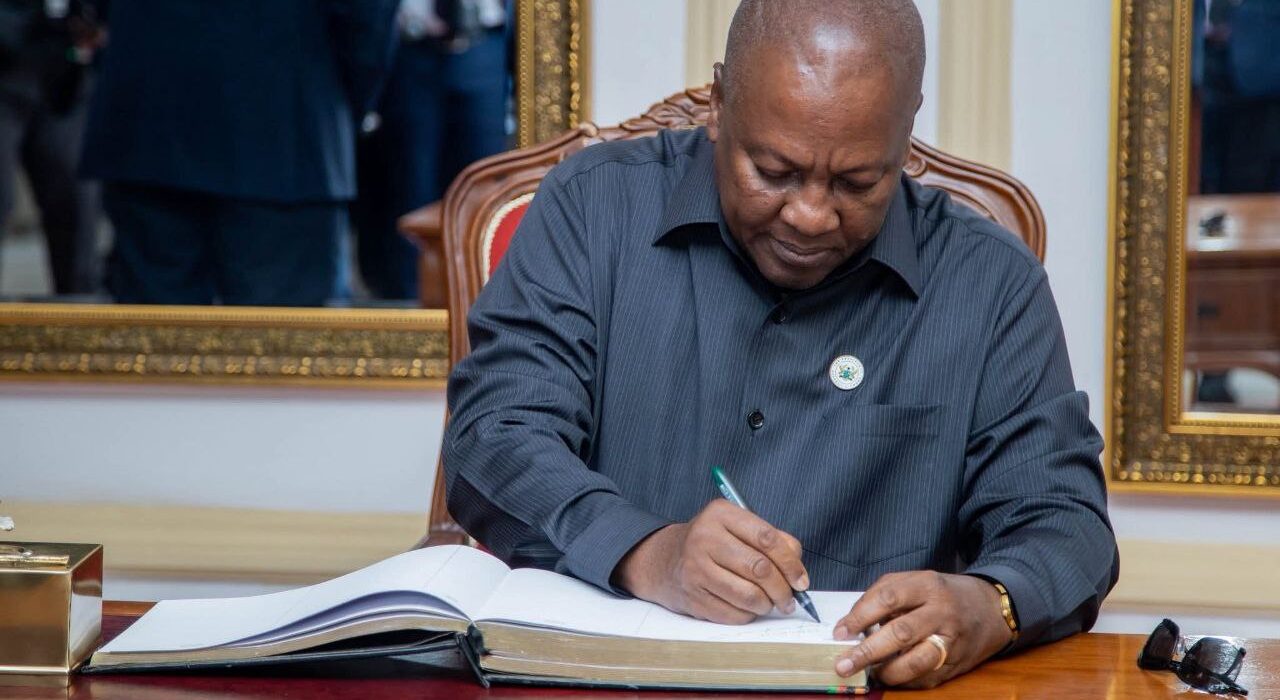
Ghana and Zambia have formalised a broad framework for deepened bilateral cooperation following the signing of ten Memoranda of Understanding (MoUs) during the three-day State Visit of President John Dramani Mahama to Lusaka.
The agreements reflect a deliberate effort by both governments to translate longstanding political goodwill into practical cooperation across governance, security, trade, health, aviation, and people-to-people relations.
The first MoU focuses on Diaspora Cooperation between the two countries. It establishes a platform for collaboration between Ghanaian and Zambian diaspora communities, recognising their growing role in investment promotion, skills transfer, and cultural exchange. The agreement seeks to enhance coordination between diaspora institutions and government agencies in both countries, with the aim of leveraging diaspora networks for national development.
An MoU on Cooperation in Disaster Risk Management was also signed, committing both countries to knowledge-sharing and capacity-building in disaster preparedness, response, and recovery. The agreement provides a framework for technical cooperation, early-warning systems, and the exchange of best practices in managing natural and human-induced disasters, an increasingly critical area in the face of climate-related risks.
To strengthen trade and investment promotion, Ghana and Zambia signed an institutional collaboration agreement between the Zambia Development Agency and the Ghana Export Promotion Authority. This MoU is designed to facilitate market access for exporters, promote joint investment opportunities, and enhance cooperation in trade promotion activities between the two countries.
Relatedly, an MoU on Standardisation and Conformity Assessment was concluded between the Zambia Bureau of Standards and the Ghana Standards Authority. The agreement aims to harmonise standards, improve product certification processes, and reduce technical barriers to trade, thereby supporting smoother cross-border commerce and improving consumer protection in both markets.
One of the most significant agreements signed during the visit was the MoU on the Waiver of Visa Requirements for holders of Diplomatic, Official/Service, and Ordinary Passports. This agreement is expected to significantly ease travel between the two countries, promote tourism and business exchanges, and strengthen people-to-people relations as part of broader African free-movement aspirations.
In the area of security, an Addendum to the Memorandum of Understanding on Military Defence Cooperation was signed, reinforcing existing defence ties between Ghana and Zambia. This was complemented by the adoption of Rules of Procedure for the Joint Defence Implementation Committee, which provides an operational framework for coordinating defence cooperation, joint training, and strategic engagement.
A Bilateral Air Services Agreement was also concluded, creating a legal framework to improve air connectivity between Ghana and Zambia. The agreement is expected to support trade, tourism, and investment by facilitating direct or expanded air services and strengthening transport links between West and Southern Africa.
Health cooperation featured prominently, with the signing of an MoU on Cooperation in the Field of Health. The agreement provides for collaboration in public health, health systems strengthening, capacity-building, and the exchange of expertise in health service delivery and policy development.
To enhance regulatory cooperation in the pharmaceutical sector, Ghana and Zambia signed an MoU between the Zambia Medicines Regulatory Authority and the Food and Drugs Authority of Ghana. This agreement seeks to strengthen regulatory oversight, information sharing, and cooperation in ensuring the safety, quality, and efficacy of medicines and medical products.
Taken together, the ten MoUs signed during President Mahama’s State Visit mark a comprehensive reset and expansion of Ghana–Zambia relations. By addressing strategic sectors ranging from mobility and trade to security and health, the agreements lay a structured foundation for sustained bilateral engagement and practical cooperation between the two countries.
Related Posts