
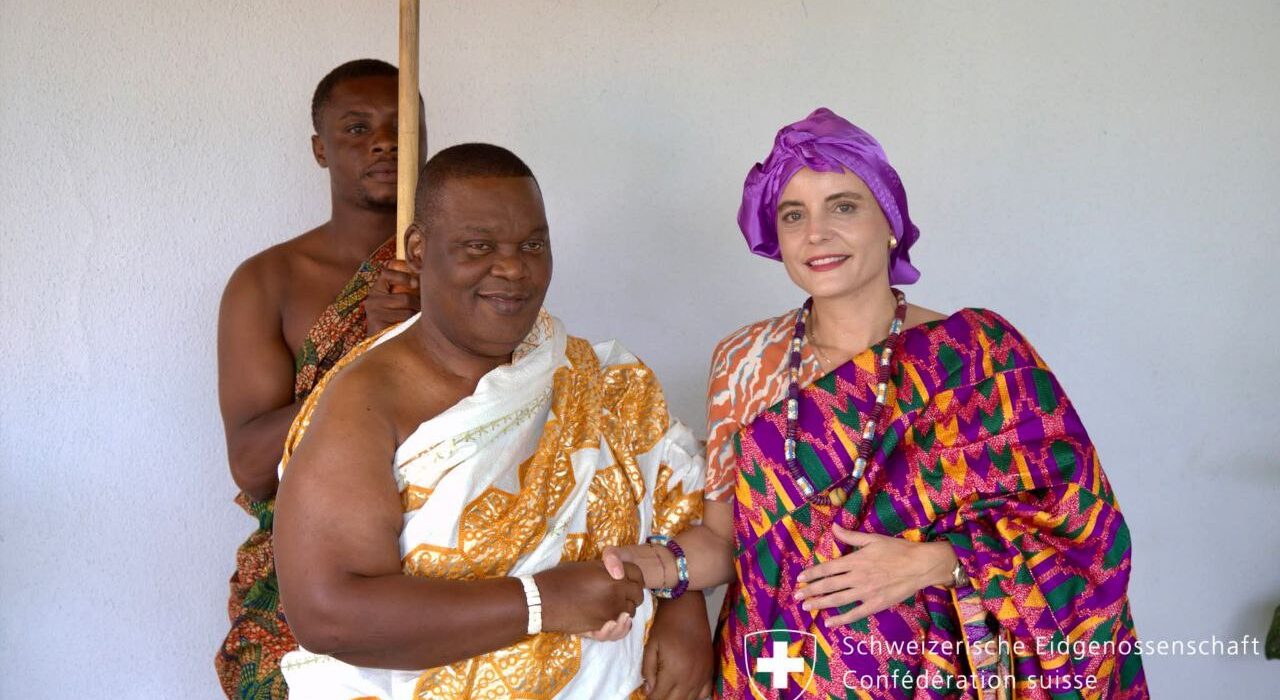
Ambassador of Switzerland to Ghana, Simone Giger, has been adorned with traditional cultural regalia by the Gbese Traditional Council, symbolising goodwill, respect, and appreciation for her commitment to dialogue on leadership, culture, and youth opportunities in Accra.
The Ambasador received Dr. Nii Ayi-Bonte II, Gbese Mantse, and his entourage at the Swiss Embassy in Accra in a meeting that centred on leadership, culture, and opportunities for young people in Ghana’s capital. The exchange highlighted mutual interests in creating platforms for youth empowerment and strengthening ties between Switzerland, Ghanaian traditional authorities, and civil society.
The discussion underscored the critical role of Ghana’s youthful population in driving future economic and social progress. According to the Ghana Statistical Service, youth aged 15 to 35 make up a significant portion of the national population, with urban centres like Greater Accra housing a large share of young people not currently in education, employment, or training (NEET). In the third quarter of 2023, nearly 565,360 young people in Greater Accra were reported to be NEET, the highest figure among all regions in the country.
National data shows that approximately 1.9 million youth aged 15–35 in Ghana were not engaged in education, employment, or training in the same period, and that the NEET rate in Greater Accra was among the highest nationwide at roughly 26.9%. This demographic reality poses both challenges and opportunities for policymakers, community leaders, and international partners committed to youth development.
Urban areas like Accra reflect greater access to education and markets, they also reveal persistent gaps in employment opportunities and skills alignment for youth. The meeting explored how cultural institutions, entrepreneurship, vocational skills training, and diplomatic partnerships could be leveraged to support young Ghanaians in accessing sustainable economic opportunities.
Ambassador Giger reiterated Switzerland’s interest in collaborative youth programmes, particularly those that prepare young people for participation in the global economy. The dialogue also touched on avenues for private sector engagement and international exchange initiatives that can enhance skills, mobility, and jobs for youth in Accra and beyond.
Dr. Nii Ayi-Bonte II visit emphasised the importance of cultural confidence and leadership development in harnessing the potential of Ghana’s youth. It is an example of how traditional authorities and modern governance structures must work together to build resilience, creativity, and community-based opportunities for young people in urban and rural areas alike.
The conversation holds the potentials to feed into planned collaborative frameworks for youth empowerment, signalling continued diplomatic interest in Ghana’s demographic dividend and the shared aspiration to equip young people with the tools needed for productive engagement in national and global arenas.
Related Posts