

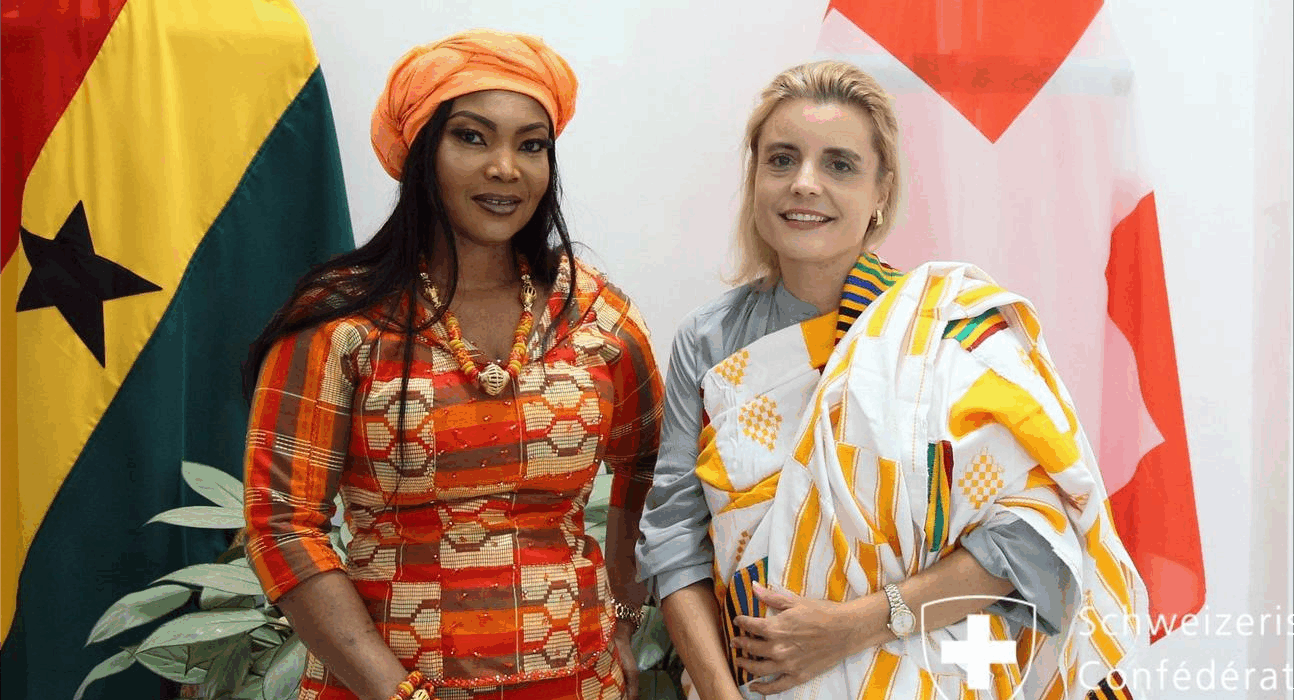
The Swiss Ambassador to Ghana, Her Excellency Simone Giger, has held high-level discussions with the Paramount Queen Mother of Ngleshie Alata, Queen Affipong IV, on empowering young women and implementing initiatives to improve the livelihoods of vulnerable populations in Jamestown.
This engagement is part of Ambassador Giger’s broader outreach to traditional authorities in Accra’s coastal areas, aimed at addressing systemic barriers to youth development, promoting women’s empowerment, and enhancing the standard of living.
The visit follows her previous meeting with the Gbese Mantse, Dr. Nii Ayi-Bonte II, at the Swiss Embassy in Accra, where discussions focused on leadership, culture, and opportunities for young people in Ghana’s capital.
Her engagements signal a critical model of cooperation between diplomats and traditional authorities, providing bilateral initiatives with direct access to community concerns, while strengthening cultural bonds, a dimension of diplomacy that is often overlooked but essential for sustainable development programming.
Research by Adu-Brao Berlinda indicates that household heads in Jamestown often fail to provide adequate support for their female children, particularly in financing education, monitoring academic progress, and actively participating in their wards’ schooling. These gaps contribute to the persistent disadvantage of young women in the community.
Young women in Jamestown face multiple challenges that hinder their personal and professional growth. Limited access to quality education is a persistent issue, with financial constraints forcing many girls to drop out of school early or engage in informal work to support their families. This not only limits their academic attainment but also reduces future employment opportunities and economic independence.
Cultural and societal expectations also pose significant barriers. Early marriage, domestic responsibilities, and gendered norms often constrain young women’s ability to participate fully in education, leadership, and entrepreneurial activities. These social pressures can reinforce cycles of dependency and limit young women’s visibility in decision-making spaces within the community.
Additionally, young women in Jamestown confront challenges related to health and safety. Limited access to reproductive health services, combined with exposure to street-level economic vulnerabilities, increases the risk of early pregnancies, exploitation, and gender-based violence. These challenges undermine efforts to achieve gender equity and highlight the urgent need for targeted interventions that combine education, skills training, and protective social policies.
Through her engagement with Queen Affipong IV, Ambassador Giger seeks to address these barriers by fostering collaborative programs that empower young women, enhance livelihoods, and ensure that interventions are culturally sensitive and locally grounded.
Related Posts