
President Mahama has disclosed that a coalition will be established around the Caribbean Community 10-Point Reparations Plan, with close collaboration from African institutions and global partners, to pursue reparative justice following the landmark United Nations resolution declaring the Transatlantic Slave Trade the gravest crime against humanity.
President Mahama noted that the adoption of the resolution represents only the beginning of a broader campaign for justice, stressing that the next steps remain crucial in translating the symbolic victory into concrete outcomes.
Despite garnering an overwhelming vote, the execution persists as resolutions of the United Nations General Assembly are not legally binding, raising concerns about implementation, particularly given previous resolutions that have gone unenforced in international relations.
The resolution, adopted on March 25, 2026, secured 123 votes in favour, with the United States, Israel and Argentina voting against, while 52 countries abstained, including the European Union and the United Kingdom. The resolution calls for reparatory justice, restitution of cultural artefacts, formal apologies, and measures to address the enduring impacts of slavery.
The abstention by many European states has generated debate, with several countries describing aspects of the resolution as problematic, particularly concerns over ranking crimes against humanity and the legal implications of financial compensation. Analysts note that the reluctance reflects broader sensitivities among former colonial powers regarding reparations and historical accountability.
Meanwhile, Kemi Badenoch has also publicly rejected the idea of reparations, arguing that the United Kingdom should not pay compensation despite acknowledging the historical crime of slavery. Her position reflects broader divisions among Western nations regarding reparatory justice.
In light of these developments, President Mahama emphasized that Africa and its partners must adopt a coordinated strategy to sustain momentum for reparations.
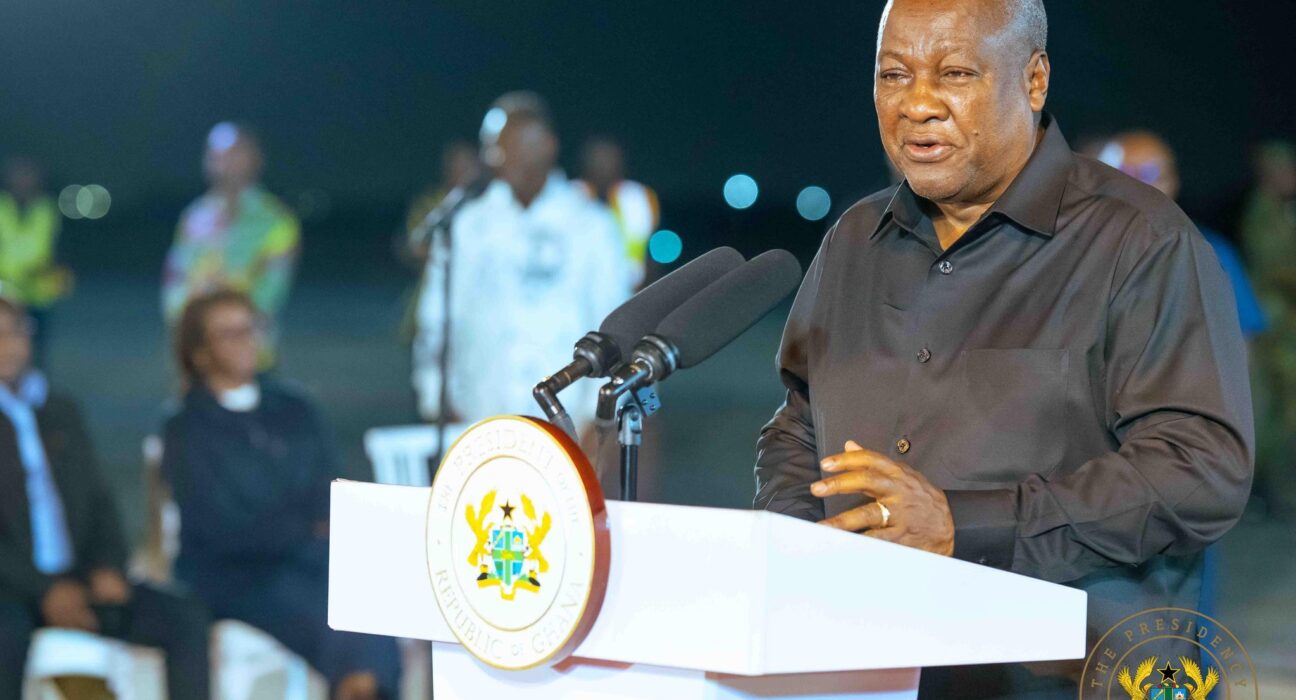
“This resolution is just the beginning. It is not an end. We will work with our partners to translate this moral victory into concrete outcomes. CARICOM already has a 10-point plan for reparative justice. We will work to build a coalition around their plan. Ghana will continue to work with our allies towards dialogue, education, remembrance, and reparative action,” he stated upon arrival at Kotoka International Airport.
He further described the milestone as a defining moment for Africa and the global African diaspora.
“Let this moment remind us of what we can achieve when we act with purpose and unity. This is a proud moment for Ghana. It is a proud moment for Africa. It is a proud moment for people of African descent wherever they are in the world,” he added.
Historians and economists widely acknowledge that the Transatlantic Slave Trade significantly contributed to the economic transformation of European powers and the Americas. Between the 15th and 19th centuries, over 12.5 million Africans were forcibly transported across the Atlantic, forming the labour backbone of plantation economies that generated vast wealth for colonial powers such as Britain, France, Portugal, Spain, and the Netherlands.
Profits from slave-based industries such as sugar, cotton, tobacco, and coffee fuelled the rise of industrial capitalism in Europe. For instance, cotton produced by enslaved Africans in the Americas became the primary raw material for Britain’s textile industry during the Industrial Revolution, helping transform Britain into the world’s leading industrial power. Banks, insurance companies, and shipping industries in European capitals such as London, Liverpool and Bristol were also built on wealth generated from slavery and colonial trade.
Infrastructure development across Europe, including railways, ports, and manufacturing centres, was similarly financed through profits derived from enslaved labour. Economists argue that the accumulation of capital from slavery enabled Western nations to industrialize earlier, while African economies were simultaneously underdeveloped through resource extraction and population displacement.
CARICOM 10-Point Reparations Plan
The CARICOM Reparations Commission 10-Point Reparations Plan outlines a comprehensive framework for reparatory justice. The plan calls for full formal apologies, repatriation programs, debt cancellation, technology transfer, educational support, healthcare development, and psychological rehabilitation for descendants of enslaved Africans and colonized peoples.
The plan also emphasizes the return of cultural heritage, development assistance, and investment in education and public health systems to address the long-term consequences of slavery and colonialism. CARICOM argues that European governments were primary beneficiaries of slavery and therefore bear responsibility for reparatory measures aimed at correcting historical injustices and supporting sustainable development.
President Mahama’s proposed coalition is expected to bring together African nations, Caribbean states, and global partners to operationalize these recommendations and advance a unified approach toward reparatory justice, marking what observers describe as the beginning of a new phase in the global reparations movement.
Related Posts