
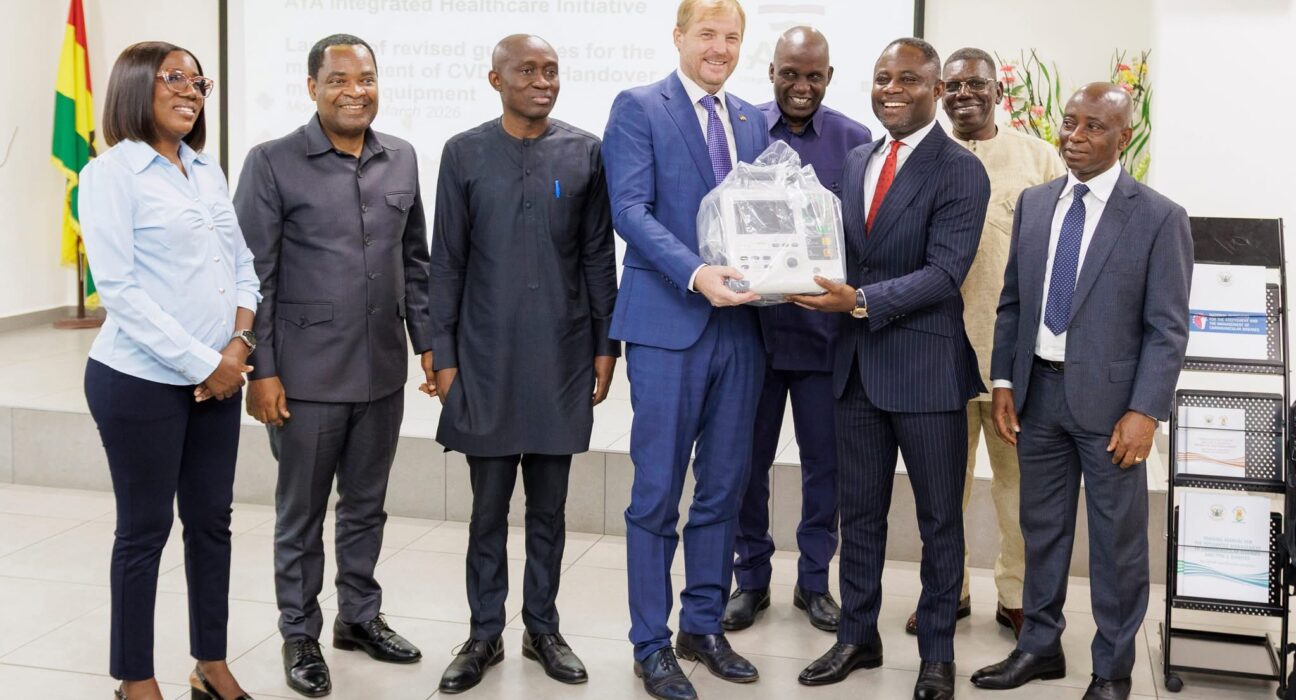
Germany, through the Deutsche Gesellschaft für Internationale Zusammenarbeit (GIZ) GmbH, has supported Ghana’s efforts to strengthen the diagnosis and management of non-communicable diseases (NCDs) with the provision of medical equipment valued at over GH₵6 million.
The equipment was handed over to the Ministry of Health, Ghana, during a ceremony held in Accra earlier this week.
The support, delivered under the AYA Integrated Healthcare Initiative, forms part of ongoing cooperation between Germany and Ghana aimed at improving healthcare delivery and patient outcomes.
The intervention is designed to enhance frontline healthcare systems, strengthen emergency response, and expand diagnostic capacity across participating regions in Ghana.
The equipment package includes defibrillators, electrocardiogram (ECG) machines, blood pressure monitoring devices, glucometers, and weighing scales with height meters, which are expected to benefit thousands of patients while improving service delivery at the community level.
Beyond equipment support, the initiative has contributed to strengthening Ghana’s clinical framework through the revision of national guidelines for the management of cardiovascular diseases and Type 2 diabetes, as well as the development of CHPS implementation booklets and training manuals.
The AYA Integrated Healthcare Initiative is implemented by GIZ in collaboration with Ghana’s health authorities, including the Ghana Health Service, with funding support from Bayer, Sanofi, and the Gates Foundation, and additional support from Panorama Global.
Speaking on behalf of the GIZ country director, Wilhelm Hugo underscored the importance of partnerships in addressing the growing burden of non-communicable diseases, reaffirming Germany’s continued support for strengthening Ghana’s health system.
At the event, the Minister for Health, Kwabena Mintah Akandoh, highlighted the significance of the intervention to Ghana’s healthcare system.
“This investment represents an important strategic shift toward strengthening care at the sub-district level, where most Ghanaians first seek healthcare services. By equipping CHPS compounds, health centres, and district hospitals, we are improving access to essential services closer to communities,” he said.
This substantial support from Germany, delivered through the Deutsche Gesellschaft für Internationale Zusammenarbeit (GIZ) GmbH, not only enhances Ghana’s healthcare capacity but also underscores the collaborative partnership between the two countries, reflecting a shared commitment to improving health outcomes and strengthening bilateral relations.
By Hussein Habibata Maltiti
Related Posts