
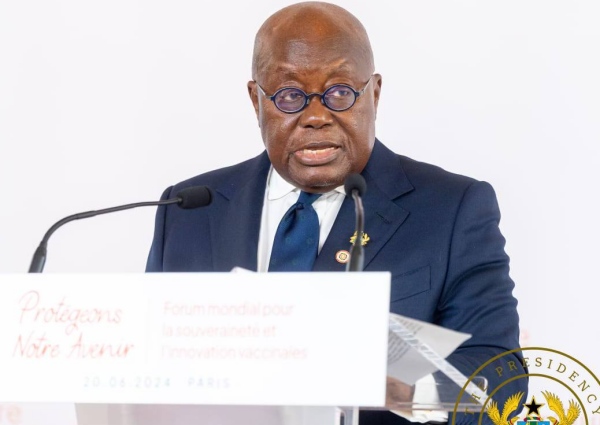
The Economic Community of West African States has appointed former Ghanaian President Nana Addo Dankwa Akufo-Addo to lead its Election Observation Mission for the upcoming presidential elections in Benin scheduled for April 12, 2026.
The appointment marks a significant regional assignment for the Ghanaian statesman and underscores continued confidence in his leadership in electoral diplomacy. This will be his second major election observation role in recent months, following his leadership of the Commonwealth Observer Group to monitor elections in Bangladesh, which took place following heightened political tensions and widespread youth-led protests that contributed to major political changes in the country.
According to ECOWAS, the objective of the mission in Benin is to support the electoral process in line with Article 14 of the Supplementary Protocol on Democracy and Good Governance. The provision mandates the deployment of independent observers from member states other than the country conducting the elections, aimed at ensuring neutrality and credibility in the electoral process.
The protocol further stipulates that the Executive Secretary shall appoint the leader and members of the Observer or Supervisory Mission, who must be independent individuals drawn from across ECOWAS member states. This framework forms part of the regional bloc’s broader commitment to promoting democratic governance, transparency, and peaceful transitions of power across West Africa.
The ECOWAS Election Observation Mission will monitor key phases of the electoral process, including campaign activities, voting procedures, ballot counting, and the collation of results. The team will also assess compliance with electoral laws, democratic standards, and international best practices, while working to strengthen public trust among political actors, electoral institutions, and citizens.
In line with efforts to consolidate democratic gains in a region increasingly facing governance challenges, particularly across parts of the Sahel, ECOWAS will deploy 80 short-term election observation experts and 25 ECOWAS Youth Observers to support the process. The initiative reflects the bloc’s commitment to inclusive election monitoring and youth participation in democratic governance.
The presidential election is expected to see approximately 7.8 million registered voters cast their ballots across 14,462 polling stations nationwide. Electoral authorities have intensified preparations, including logistics deployment, voter education campaigns, and coordination with security agencies to ensure a peaceful and credible electoral process.
The upcoming April 12, 2026, presidential election in Benin features two main candidates: Finance Minister Romuald Wadagni, who is widely seen as the frontrunner and the chosen successor to outgoing President Patrice Talon, and Paul Hounkpè of the FCBE party.
Wadagni has campaigned on continuing economic reforms and national development initiatives, building on his record as finance minister, while Hounkpè positions himself as an alternative voice focused on social issues and inclusive governance. The main opposition party, The Democrats, has been sidelined from the ballot after failing to meet signature requirements, and its leadership change has left it without a major candidate in the race.
Security concerns are a significant backdrop to the vote. In December 2025, a failed coup attempt by military elements highlighted political tensions and fears over institutional weaknesses, prompting calls from international actors for inclusive dialogue and stability.
Extremist groups linked to jihadist activity along northern borders have also posed spillover security threats in recent years, adding to public anxiety about safety and governance. Civil society organisations have called for broader political dialogue and more inclusive participation to reinforce confidence in the electoral process as Benin seeks to maintain its democratic traditions amid regional pressures
The outcome of the elections will carry broader implications for democratic consolidation within the ECOWAS region, as the bloc continues to prioritise credible elections, peaceful transitions, and strengthened governance frameworks as part of efforts to safeguard political stability and deepen regional integration.
Related Posts