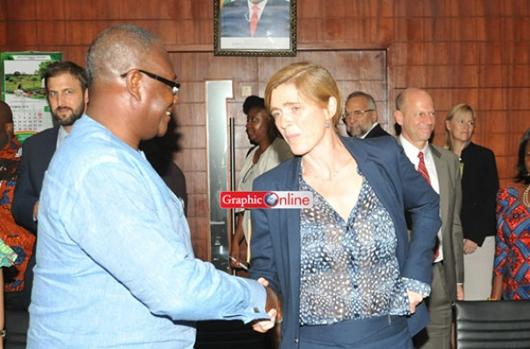

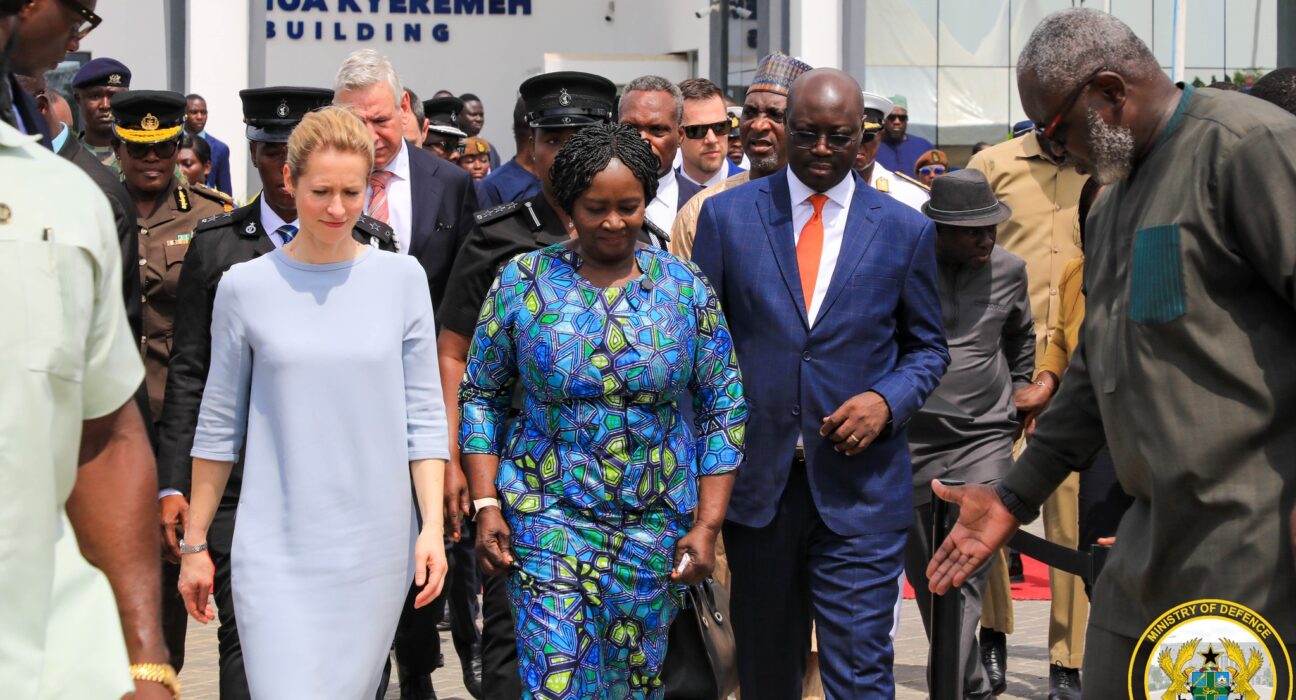
European Union Vice President, Kaja Kallas, has expressed strong admiration for the alignment between Ghana’s national priorities and the European Union’s strategic objectives following her recent engagements in Africa.
She commended both Ghana and Nigeria for their shared values with the EU, particularly in areas such as counterterrorism cooperation, defence strengthening, and broader security collaboration.
Kallas noted that she was “struck” by the close parallelism between the national development agendas of both countries and the European Union’s policy direction, following discussions with African ambassadors accredited to the bloc.
The engagement formed part of efforts to review EU–Africa relations, deepen cooperation in areas of mutual interest, and reaffirm commitment to a rules-based international order and effective multilateralism.
Over the past 19 months, after engaging with 30 ministers across the continent, Kallas identified Ghana and Nigeria as standout partners whose development priorities closely align with those of the European Union.
“I recently returned from visits to Nigeria and Ghana. In both countries, I was struck by how closely our views and objectives align, and by the strong mutual interest in taking our partnership even further,” she said.
Her visit to Ghana was particularly significant for discussions on strengthening the country’s defence architecture in response to the growing threat of terrorism spillover in the sub-region, which continues to pose risks to regional stability and Ghana’s security outlook.
During the visit, the European Union signed its first defence cooperation agreement of its kind on the African continent with Ghana. The agreement, part of a broader €50 million continental defence package, is designed to strengthen Ghana’s security capacity. It complements existing frameworks, including the Coastal States Stability Mechanism and the EU Strategic Defence Initiative in the Gulf of Guinea (EU SDI GoG).
In Nigeria, discussions focused on the continent’s largest economy and its evolving security challenges. The EU also committed over €700 million in support of counterterrorism efforts, alongside the launch of the first EU–Nigeria Peace, Security and Defence Dialogue.
On the economic front, the EU has introduced new Global Gateway initiatives in digital development, agriculture, and health, amounting to €66 million in grants and €221 million in low-interest loans
As the European Union’s High Representative for Foreign Affairs and Security Policy, her engagement with African ministers remains pivotal, given Africa’s strategic importance to the bloc. This significance is reflected in the EU’s expanding investments across trade, security, and defence cooperation on the continent.
Related Posts