
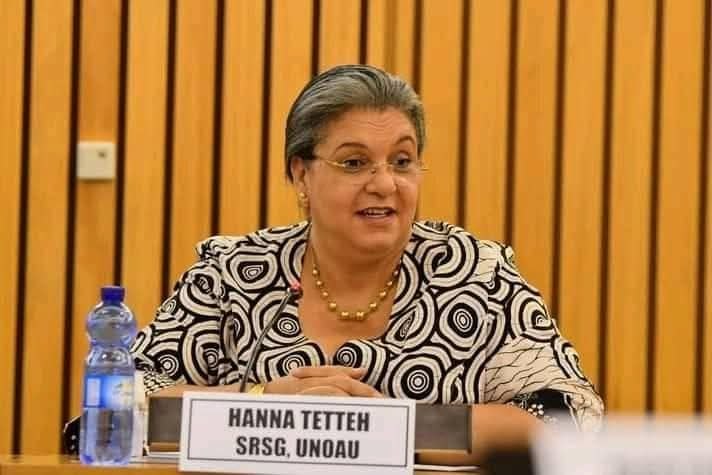
Former Minister for Foreign Affairs and Head of the United Nations Support Mission in Libya (UNSMIL), Hannah Tetteh, has warned that the humanitarian crisis confronting irregular migrants in Libya is far more severe than the anti-immigrant tensions currently unfolding in South Africa, urging African governments to address the root causes driving unsafe migration.
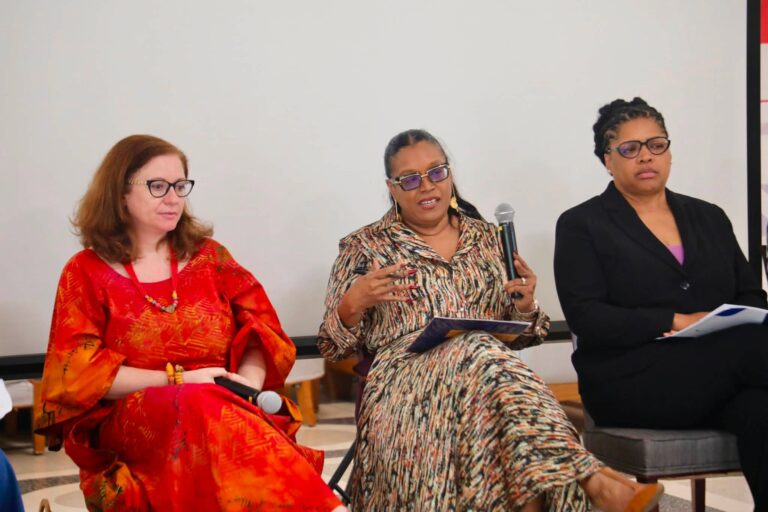
Speaking at the 21st Kronti ne Akwamu Public Lecture organised by the Centre for Democratic Development (CDD-Ghana) at the British Council in Accra, Ms. Tetteh painted a grim picture of the realities facing African migrants attempting to reach Europe through Libya.
Addressing the lecture on the theme “The Changing Global and Multilateral Rules-Based Order,” the Special Representative of the United Nations Secretary-General for Libya recounted disturbing cases involving Ghanaians who died along the dangerous migration route to Tripoli, a major transit point for migrants seeking to cross the Mediterranean into Europe.
She revealed that some deceased Ghanaians had been accorded Muslim burials after their bodies were recovered, regardless of their actual religious backgrounds, a disturbing situation which hasn’t yet made waves in the public domain.
“I know the work that our embassy has to do in Libya, especially when they find out that there are Ghanaians who have perished along the way and they actually retrieve their bodies and give them Muslim funerals. That data has not been in the public domain as much and so we’re not cognisant of the scale at which it is happening,” she said.
Ms. Tetteh lamented that, despite the magnitude of the humanitarian crisis in Libya, public attention across Africa has largely centred on xenophobic violence in South Africa, leaving the suffering of thousands of migrants in Libya underreported.
Her remarks come as Ghana has recently received three separate repatriation flights carrying distressed nationals evacuated from Libya following coordinated rescue efforts by the Government of Ghana and the International Organization for Migration (IOM).
While acknowledging the difficult security and institutional environment in Libya, she recognised the Embassy of Ghana in Tripoli for its efforts in locating stranded Ghanaians, facilitating evacuations and assisting in the recovery and identification of deceased nationals despite reports of extortion, detention, exploitation and physical abuse faced by many migrants.
She further drew attention to increasingly restrictive immigration policies being adopted across Europe and other Western countries, warning that tightening border controls and the deportation of undocumented migrants should serve as a wake-up call for African governments to strengthen domestic economies and create sustainable opportunities for their citizens.
“We should be very, very sensitive to the fact that Europe and the Western world is closing its doors to illegal migration. And so what does that mean? Both at the continental, sub-regional level and as a country, we have to expand our efforts to negotiate legal labour channels and ensure the protection of the rights of our diaspora citizens whose remittances remain an important source of foreign exchange inflows,” she stated.
She further called on African governments to pursue structured labour mobility agreements with destination countries while strengthening diplomatic protection for citizens abroad, noting that remittances have become an indispensable pillar of many African economies, including Ghana’s.
Ms. Tetteh urged governments to invest in resilient public institutions capable of responding to emerging security and humanitarian crises, arguing that policymakers must move beyond an exclusive focus on economic growth to prioritise human security, social cohesion and institutional preparedness.
Touching on migration within Ghana, she observed that anti-immigrant sentiments were also existent domestically, particularly towards foreign squatters and street beggars in parts of Accra which ongoing operations by the Ghana Immigration Service has repatriate mass undocumented migrants of that population.
Her lecture underscored the profound transformation international rules-based order was undergoing as unilateral actions by major powers increasingly reshape global governance. She urged that Africa must adapt strategically to this changing geopolitical landscape by safeguarding its sovereignty, strengthening regional cooperation and defending the multilateral values that underpin international peace, security and development.
Related Posts