
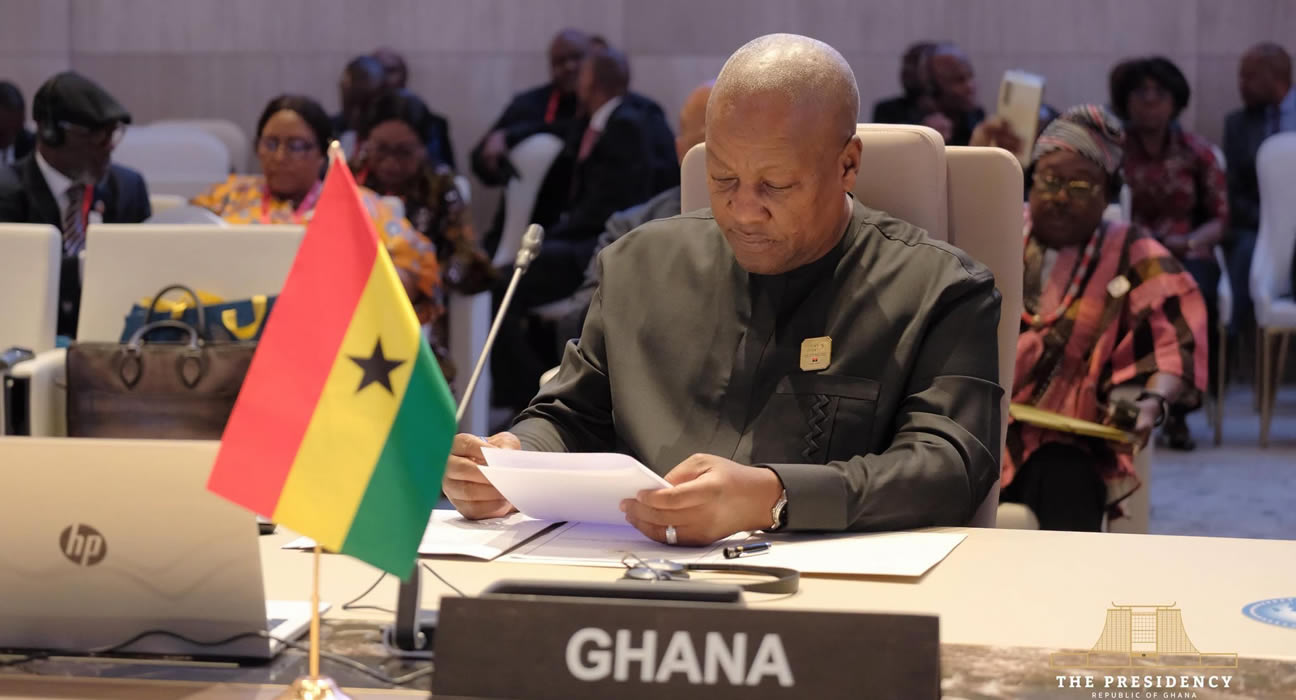
President John Mahama has revealed that the rejected US health deal was the fastest agreement he had seen thrown out of Cabinet, describing the conditions attached to the framework as “humiliating”.
The deal was proposed by the Trump administration under its America First Global Health Strategy to replace health funding previously provided through USAID. The strategy was designed to shift US health assistance towards bilateral agreements, greater domestic financing by recipient countries and an eventual transition from external aid to self-reliance.
Ghana rejected the proposed five-year health agreement in April 2026, which would have provided about $109 million to Ghana over five years, after raising concerns about provisions relating to sensitive health data.
But President Mahama, speaking at the Council on Foreign Relations in New York, has now provided further details on the reasons behind Ghana’s rejection of the deal after several provisions were flagged when the Ministry of Health presented an Information Paper to Cabinet.
“I’ve never seen anything thrown out as fast as that. And so of course we rejected it. And we asked the health minister to inform the US ambassador that we didn’t need it,” he said.
According to President Mahama, the first concern was a requirement for Ghana to provide the United States with its pathogen profile, which he described as information on the diseases and pathogens endemic to the country.
The broader America First strategy places emphasis on health data systems and disease surveillance to help detect outbreaks and enable early responses before they reach US shores.
The second concern, Mahama said, was a requirement for Ghana to provide medical records to the United States, which he flagged as strange, questioning why one sovereign country would request the medical records of another.
“And they also say we should give our medical records. I mean, who takes another country’s medical records? And so that was strange,” he stated.
The concern over health information also touches Ghana’s data-protection regime, which places safeguards around the collection, use and disclosure of personal data, including sensitive personal information.
The third issue was the requirement for Ghana to commit counterpart funding to the health framework, with the reported US contribution put at about $109 million. Mahama described the proposed US contribution as a “pittance”.
However, Ghana has also increased domestic financing for healthcare.
The 2026 national budget allocated GH¢1.5 billion to the Free Primary Healthcare programme, while Parliament approved GH¢2.9 billion for the Ghana Medical Trust Fund, popularly known as MahamaCare, to support specialised healthcare, particularly for chronic and non-communicable diseases.
The government has also increased financing through the uncapping of the National Health Insurance Fund, which President Mahama said freed up an additional GH¢3 billion, equivalent to about $300 million, for healthcare investment.
The fourth concern raised by Mahama was the proposed treatment of medical products entering Ghana under the programme.
He said the agreement stipulated that medicines and other medical products brought into Ghana under the arrangement would not be subject to inspection by the Food and Drugs Authority (FDA).
“And then it also says that any medications or any medical products that shall be brought into our country, our Food and Drugs Administration has absolutely no rights to inspect. I mean, it was humiliating,” he stated.
The FDA’s mandate includes regulating and inspecting imported regulated products to ensure that they meet Ghana’s safety and public-health requirements, making the provision cited by Mahama a major point of contention for the government.
Given the provisions flagged in the agreement, Mahama said the Minister of Health was directed to inform the US representative in Ghana, currently Chargé d’Affaires Rolf Olson, that Ghana did not need the arrangement and would manage its health needs independently.
Mahama has reaffirmed the state’s commitment to managing its health system in line with the health sovereignty principles underpinning the Accra Reset Initiative, which he has championed as part of efforts to strengthen Africa’s capacity to build and finance its own health systems and reduce dependence on external assistance. The Accra Reset has placed greater domestic financing and health sovereignty at the centre of its broader vision for Africa’s health systems.
Related Posts