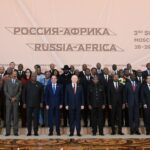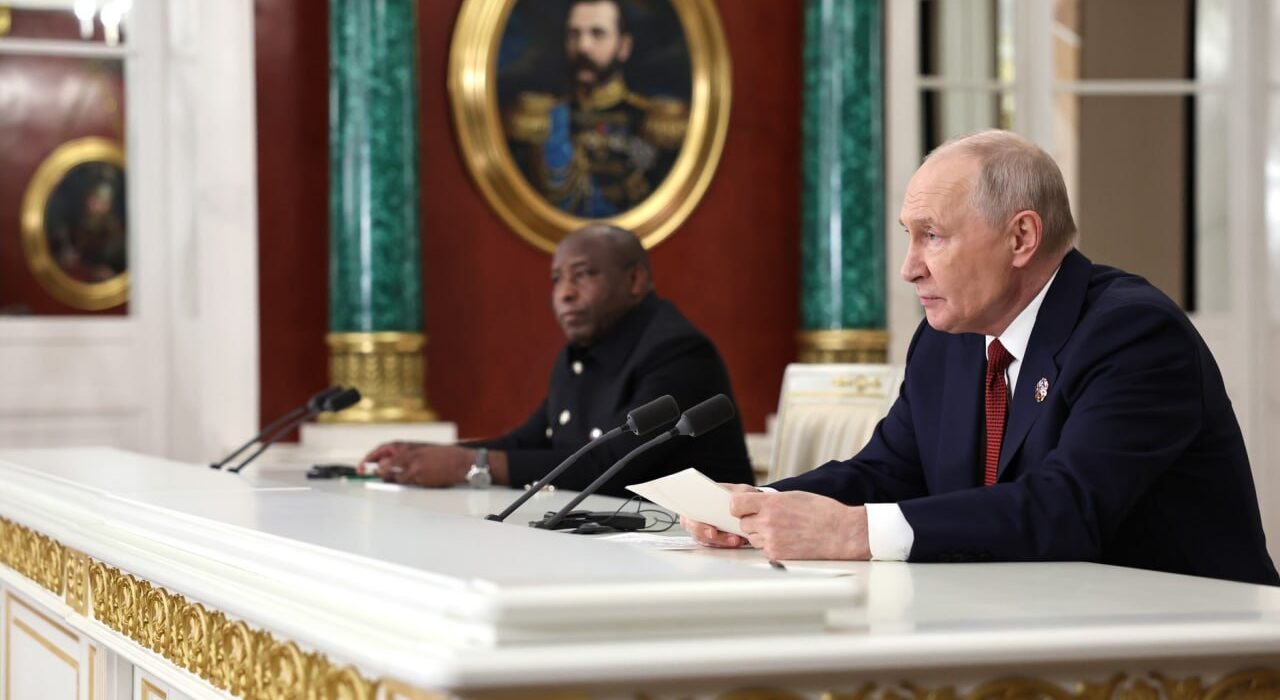
We, the Heads of State and Government of the Russian Federation and African States recognized by the United Nations (UN), the leadership of the African Union and leading African integration associations (hereinafter referred to as Russia and Africa), gathered on October 29, 2026, in Moscow (Russian Federation) to participate in the third Russia-Africa summit,
Declaring their commitment to the declarations of the first and second Russia-Africa summits (Sochi, October 24, 2019, and St. Petersburg, July 28, 2023), which consolidated the mutual desire to build up a mutually beneficial, equal and multifaceted partnership and give it a truly strategic character,
Reaffirming the intention to continue implementing the sectoral declarations adopted following the results of the second Russia-Africa summit on preventing an arms race in outer space, on cooperation in ensuring international information security, and on strengthening cooperation in the fight against terrorism,
Commending the results of the first and second ministerial conferences of the Russia-Africa Partnership Forum held in 2024 in Sochi (Russian Federation) and in 2025 in Cairo (Arab Republic of Egypt), which made a significant contribution to strengthening the Forum as an institutional basis for Russian-African relations,
Welcoming the results of the implementation of the Action Plan of the Russia-Africa Partnership Forum for 2023–2026 and expressing readiness to undertake the necessary efforts to implement the Action Plan for 2027–2029,
Based on the historically established and time-tested friendly ties between Russia and African states, mutual respect and trust, and the traditions of joint struggle against colonialism and for the independence of African states,
Welcoming the strengthening of the authority of African states, the African Union as the leading continental organization and regional integration associations in international affairs, reflecting the growing global role and influence of Africa as one of the independent centers of the emerging multipolar world order,
Reaffirming their commitment to the fundamental purposes and principles of the Charter of the United Nations in their entirety, integrity, interrelation and indivisibility,
Emphasizing the shared responsibility of Russia and African States for the formation of a fair, balanced and equitable multipolar world order based on the principles of sovereign equality of States, non-interference in their internal affairs, respect for sovereignty, territorial integrity and the right of all peoples to self-determination, as enshrined, inter alia, in UN General Assembly resolutions 1514 (XV) of 14 December 1960 and 79/115 of 4 December 2024,
Reaffirming the need for joint counteraction to modern colonial practices in order to strengthen sovereignty, ensure free development, mutually beneficial cooperation, diversification of external relations, preservation of national identity, traditional spiritual and moral values, cultural and civilizational equality and diversity,
Expressing their readiness to develop cooperation on the issue of perpetuating the historical truth about the era of colonialism, including in the context of the adoption of UN General Assembly resolution 80/106 of 5 December 2025, which proclaimed 14 December as the International Day against Colonialism in All Its Forms and Manifestations, as well as UN General Assembly resolution 80/250 of 25 March 2026 declaring the trade in enslaved Africans and the racially motivated conversion of Africans into property slavery the gravest crime against humanity,
Speaking out against any manifestations of racism, racial discrimination, discrimination on the basis of religion or origin, including manifestations of xenophobia and related intolerance, aggressive nationalism, neo-Nazism and neo-fascism,
Expressing concern about the current situation in the sphere of international security, characterized by the growth of conflict potential at the global and regional levels, general instability, as well as the intensification of challenges and strategic risks as a result of the aggravation of interstate contradictions, including between states possessing military nuclear potential,
calling on the international community to consolidate political and diplomatic efforts aimed at the general reduction of tensions, the peaceful settlement of current conflicts and the prevention of new crises, as well as the long-term and comprehensive provision of global and regional stability based on the principles of equal and indivisible security, mutual respect for each other’s fundamental interests and the elimination of the root causes of conflicts and contradictions,
Sharing and supporting the priorities and aspirations of African States as set out in the African Union’s Agenda 2063, “The Africa We Want”, including the implementation of its Second Ten-Year Plan for 2024–2033, as well as in the 2030 Agenda for Sustainable Development,
Welcoming the awarding of the first Leo Tolstoy International Peace Prize to the African Union for its significant contribution to peacebuilding,
Noting as appropriate the extension of the African Union 2025 theme to the decade of “Justice for Africans and people of African descent through reparations”,
Taking into account the African Union 2026 theme “Ensuring sustainable access to water and safe sanitation systems to achieve the goals of Agenda 2063”,
expressing commitment to continuing consistent efforts to ensure and strengthen the sovereignty of the Russian Federation and African States in all its dimensions,
reaffirming the commitment to promoting sustainable and inclusive economic growth and the creation of a more representative system of international economic governance in order to effectively respond to global and regional economic and financial challenges,
Welcoming the efforts of Russia and Africa to develop diversified, independent, reliable and resilient to international economic and political shocks, including the actions of third parties, mechanisms for cooperation in financial, trade, transport and logistics, scientific and technical and other areas key to development,
noting the importance of establishing and developing effective channels of interaction between integration associations with the participation of Russia and African states,
Remembering the first human spaceflight, which took place 65 years ago on April 12, 1961, by Soviet citizen Yuri Alekseyevich Gagarin, which became a landmark achievement in the history of mankind and a major breakthrough on a civilizational scale and opened up new horizons for humanity,
acting in accordance with the norms of national legislation of Russia and African States, have agreed on the following:
Cooperation in political and legal spheres
1. To deepen equal and mutually beneficial cooperation between Russia and African states in order to create a more just and stable multipolar world order based on the principles of sovereign equality of states, non-interference in their internal affairs, and respect for sovereignty.
2. To promote further strengthening of the central coordinating role of the UN as a global multilateral mechanism for coordinating the interests of UN Member States and their actions to achieve the goals of the UN Charter.
3. Coordinate approaches in the UN Security Council to sanctions policy towards African states, including with a view to further easing and lifting restrictive measures that have become irrelevant.
4. Jointly counter the use of illegal unilateral instruments and methods, including the use of coercive measures in circumvention of the UN Security Council and their extraterritorial application, as well as the imposition of approaches that undermine international food and energy security.
5. Collaborate constructively on issues of balanced reform of the UN Security Council, taking into account contemporary geopolitical realities and the common position of African states, enshrined in the Ezulwini Consensus and the Sirte Declaration of 2005, with the aim of strengthening the representation of African states in the UN Security Council and eliminating the historical injustice committed against them.
6. To respect the principles of international law in their entirety and interrelationship, as reflected in the UN Charter and the Declaration on Principles of International Law concerning Friendly Relations and Cooperation among States in accordance with the UN Charter adopted on 24 October 1970.
7. Consolidate the efforts of Russia and African states advocating for the restoration of universal respect for international law and strengthening its role as the basis of international relations.
8. Strengthen cooperation within international organizations to reform and improve the global governance system, including the global financial architecture.
9. Counteract attempts to politicize international legal cooperation in criminal matters, the abuse of international criminal justice mechanisms, their use for the purpose of exerting neo-colonial pressure on African states, as well as any attempts to politicize the institutions of international justice and their use for the purpose of political pressure on states in a multipolar world.
10. Strengthen coordination and cooperation in ensuring the independence and impartiality of international courts, arbitrations and tribunals.
11. Promote the strengthening of international legal norms concerning the immunities of State officials, noting that privileges and immunities are granted to officials not for personal gain but to ensure the effective performance of their official functions as representatives of States.
12. Strengthen the legal framework for cooperation in the field of justice, including on matters of mutual legal assistance in civil, criminal and other cases, on matters of extradition and transfer of persons sentenced to imprisonment, as well as the protection of citizens from unlawful criminal prosecution of third parties.
13. Strengthen cooperation to counter manifestations of neocolonial policies aimed at undermining the sovereignty of states, depriving them of the freedom to make their own decisions, and plundering their natural resources.
14. Promote the deepening of the BRICS-Africa partnership and the establishment of a dialogue between the African Union and the Collective Security Treaty Organization, the Eurasian Economic Union, the Commonwealth of Independent States, and the Shanghai Cooperation Organization in order to promote mutually beneficial interests and strengthen practical cooperation in areas of common interest.
15. Welcome BRICS cooperation with African states in promoting the development of an equitable and inclusive system of international relations based on a just world order and the sovereign equality of all states. Support BRICS’s comprehensive work with African countries to ensure their more active and meaningful participation in global processes and decision-making mechanisms.
16. Contribute to the completion of the decolonization process in Africa, and seek the creation of legal mechanisms for assessing and compensating for the damage caused to African countries during the colonial period, including taking into account the outcome of the High-Level Conference on the Implementation of UN General Assembly Resolution 80/250 on the Transatlantic Slave Trade (Ghana, Accra, 17–19 June 2026).
17. Intensify efforts to combat all manifestations of racism and racial discrimination, discrimination based on religion, belief or origin, xenophobia and related intolerance, aggressive nationalism, neo-Nazism and neo-fascism and take measures to cooperate to achieve the comprehensive implementation of the Durban Declaration and Programme of Action of 2001.
18. Promote the improvement of the mechanism for applying international sanctions, based on the exclusive competence of the UN Security Council in the matter of their introduction, as well as the need to ensure the effectiveness of such measures in terms of maintaining international peace and security and preventing the deterioration of the humanitarian situation.
19. Oppose unilateral coercive measures that are contrary to the UN Charter and international law, hinder the achievement of the Sustainable Development Goals, and have a negative impact on the global economy and international trade. Strengthen cooperation and coordinate efforts to mitigate the negative impact of such measures on economic growth, trade, energy, healthcare, and food security, particularly in developing countries.
20. Oppose the practice of blocking sovereign assets and attempts to seize them, and confirm the unacceptability of using any political or economic coercion as a means of exerting pressure on sovereign states.
21. Confirm the enduring importance for Russia and African states of the universally recognized principle of equality and self-determination of peoples, which has become the legal basis for the decolonization process.
22. Strengthen Russian-African interparliamentary cooperation and coordinate efforts to adopt decisions and resolutions that meet the interests of the Russian Federation and African states at international parliamentary events. Develop ties between the Federal Assembly of the Russian Federation and the national parliaments of African states, the Pan-African Parliament, and the African Parliamentary Union.
23. Expand interaction between parliamentary political parties of the Russian Federation and African states, including through participation in international and regional forums and conferences.
24. Enhance interregional cooperation, including expanding sister-city ties, and strengthen the relevant legal framework. Facilitate the expansion of inter-municipal cooperation and its effectiveness, promote twin-city initiatives, and exchange experience between municipalities, including in the areas of integrated improvement and development of modern urban areas, and the implementation of digital platforms and smart city technologies. Encourage the establishment of business contacts between regional and municipal economic operators.
Cooperation in the field of security
25. Consolidate political and diplomatic efforts, such as dialogue, negotiations, mediation, and recourse to good offices, that contribute to the overall reduction of tensions, the peaceful resolution of current conflicts and the prevention of new crises, as well as the comprehensive provision of global and regional stability.
26. Continue close cooperation aimed at resolving and preventing conflicts in Africa based on the fundamental principle of “African solutions to African problems.”
27. Welcome the efforts of the African Union to implement its flagship initiative “Silencing Guns” by 2030, in line with the goals of Agenda 2063: “The Africa We Want”.
28. Support African peace initiatives on the continent by strengthening the relevant capacity of African States. Advocate for the adoption of effective measures to improve the predictability, reliability, sustainability, and flexibility of funding for peacekeeping operations led by the African Union and under the auspices of the UN Security Council in accordance with Chapter 8 of the UN Charter and UN Security Council Resolution 2719 of 21 December 2023.
29. Promote the creation, within the framework of the Russia–Africa Partnership Forum, of a permanent Russian-African dialogue mechanism at the highest level to coordinate efforts in the fight against terrorism and extremism and to address issues related to food and information security.
30. Strengthen interstate cooperation and the exchange of best practices in countering new challenges and threats, primarily terrorism, extremism, including violent extremism leading to terrorism and radicalization, as well as the financing of terrorism and extremist activity, the spread of terrorist and extremist ideologies, transnational organized crime and corruption, illicit trafficking in narcotic drugs, psychotropic substances and their precursors, piracy and armed robbery at sea, based on strict adherence to the generally recognized principles and norms of international law, primarily the UN Charter, relevant UN conventions and UN Security Council resolutions, taking into account the UN Global Counter-Terrorism Strategy.
31. Enhance cooperation to counter the use of new technologies by terrorist groups, including drones, encrypted platforms and digital finance, taking into account the non-binding principles to prevent, detect and counter the use of new and emerging financial technologies for terrorist purposes (the Algiers Guiding Principles, adopted by the UN Security Council Counter-Terrorism Committee on 6 January 2025).
32. Strengthen the potential for developing comprehensive cooperation between the African Union and the Collective Security Treaty Organization in ensuring regional security and stability, as well as in the fight against terrorism and extremism, combating drug trafficking, illegal migration, strengthening information security and in other areas of mutual interest.
33. Develop the Russia-Africa partnership to ensure food and energy security and achieve sustainable sovereignty of states.
34. Strengthen Africa’s food security and agri-food system, calling for developing countries, in particular African countries, to be given priority for ensuring uninterrupted supplies of food and agricultural products.
35. Promote the strengthening of the international political foundations for maintaining strategic stability, arms control, disarmament, and the non-proliferation of weapons of mass destruction and their means of delivery. Interact to ensure the integrity, viability, and universalization of the Treaty on the Non-Proliferation of Nuclear Weapons of June 12, 1968, the Convention on the Prohibition of the Development, Production, and Stockpiling of Bacteriological (Biological) and Toxin Weapons and on Their Destruction of April 10, 1972, and the Convention on the Prohibition of the Development, Production, Stockpiling, and Use of Chemical Weapons and on Their Destruction of January 13, 1993. Interact to ensure full compliance with the current architecture of international legal agreements in the field of arms control, non-proliferation, and disarmament.
36. Work together to prevent the fragmentation and politicization of international legal instruments in the field of arms control, disarmament and non-proliferation of nuclear weapons, as well as to prevent the misuse of their technical mandates for political purposes.
37. Continue to take joint steps to prevent an arms race in outer space and preserve it for purely peaceful uses for the benefit of all humankind. Reaffirm the urgent need to develop a legally binding multilateral instrument establishing reliable guarantees against the placement of weapons in outer space and against the threat or use of force against or through outer space objects. Support efforts to globalize the international initiative on no first placement of weapons of any kind in outer space and call on all States to join this political commitment.
38. Strengthen joint efforts to translate into practical terms the agreements reached on developing mutually beneficial cooperation in the exploration and use of outer space for peaceful purposes. Reaffirm the importance of strict compliance with the 1967 Treaty on Principles Governing the Activities of States in the Exploration and Use of Outer Space, including the Moon and Other Celestial Bodies, and the inalienability of the right of all States to access outer space and its use for peaceful purposes.
39. Uphold the central role of the UN in matters of international information security. Join efforts at multilateral forums to establish, in accordance with the principles of the UN Charter, a fair and equitable system of international information security based on universal legally binding norms, as well as a global regulatory architecture for the civilian use of artificial intelligence technologies. Promote the entry into force of the UN Convention against Cybercrime, the adoption of a mechanism for its implementation, and the development of an additional protocol on offences. Jointly advocate for the creation of an equal and transparent interstate system for governing the Internet, while preserving the sovereign right of states to regulate its national segments and preventing the use of information and communications technologies to interfere in the internal affairs of states. Contribute to efforts aimed at overcoming the digital divide.
Cooperation in trade and economic spheres
40. Facilitate the expansion of trade, economic, and investment cooperation between the Russian Federation and African states, including through the use of instruments of the African Union and leading African integration associations through interaction, as appropriate, within the framework of their respective mandates. Welcome joint efforts to increase and diversify trade turnover, expand opportunities for African exports of value-added goods, eliminate trade barriers, and stimulate mutually beneficial foreign direct investment.
41. Strengthen cooperation between Russia and African states in terms of supporting the initiative being implemented by African countries to create the African Continental Free Trade Area, if appropriate and taking into account the results of consultations with the competent authorities of these states, through the transfer of technology and the promotion of investment, including within the framework of the implementation of the second stage (2021–2030) of the African Infrastructure Development Program.
42. Promote further cooperation between Russia and African countries in promoting the development of value chains and increasing mutual production and export potential for value-added industrial products. Use existing instruments of the African Development Bank and the African Export-Import Bank for these purposes.
43. Welcome the work of the bilateral Russian-African intergovernmental commissions on trade, economic, scientific and technical cooperation, which are a key mechanism for interaction between government agencies, business and scientific circles.
44. Strengthen cooperation in the financial sector, including with a view to ensuring reliable and sustainable settlement mechanisms aimed at ensuring mutual trade and economic activities, as well as with a view to ensuring access for investors and the circulation of securities in the capital markets of Russia and African countries.
45. Deepen cooperation and support the development of dialogue in the field of public audit, taking into account the special role of supreme audit institutions in ensuring the effective use of public funds and contributing to the achievement of national goals.
46. Support efforts to strengthen cooperation in the field of competition policy, aimed at creating a fair market environment and promoting the effective and sustainable development of the economies of Russia and African countries.
47. Promote the strengthening of the public-private partnership mechanism in order to support joint initiatives aimed at sustainable development and stimulating international investment cooperation.
48. Strengthen cooperation in the field of digital technologies and innovations, including artificial intelligence technologies, taking into account the national development goal of the Russian Federation “Digital Transformation”, the National Strategy for the Development of Artificial Intelligence for the period up to 2030 and the Digital Transformation Strategy for Africa (2020–2030).
49. Enhance cooperation between Russian and African development institutions through the exchange of experience and expertise in order to facilitate the implementation of joint investment projects aimed at accelerating socio-economic development.
50. Provide support to Russian and African entrepreneurs by ensuring favorable conditions for foreign trade activities and finding entry into the markets of Russia and African countries, as well as providing opportunities for localization of production.
51. Welcome the holding of business and investment forums between Russia and African states, and the creation of new dialogue platforms for interaction between Russian and African businesses.
52. Advocate for a comprehensive reform of the International Monetary Fund (IMF) and the World Bank to ensure their functioning is based on the principles of depoliticization, equality, and consideration of the interests of all participants. Strengthen the role and voice of African countries in decision-making and promote their increased representation on the management boards of the IMF and the World Bank.
53. Advocate for the reform of multilateral development banks to expand lending to developing countries and assist them in achieving the Sustainable Development Goals, diversify the geographic and sectoral structure of their project operations, and attract financing from various sources, including in national currencies. Invite international financial institutions, multilateral development banks, and international organizations to consider using a multidimensional vulnerability index as a complement to their existing policy and practical instruments, with a view to taking it into account when developing practical and political measures for development cooperation.
54. Promote the reform of the World Trade Organization (WTO) to ensure an open, transparent, inclusive, non-discriminatory and rules-based multilateral trading system, while maintaining the central role of the WTO and fundamental principles such as decision-making by consensus, most-favoured-nation treatment, and special and differential treatment for developing and least-developed countries.
55. Promote the principles of sovereign development, which require due consideration of the national characteristics, unique economic needs and civilizational differences of each state in international relations, and facilitate their enshrinement in the new development agenda for the period after 2030.
56. Expand interaction and strengthen coordination within the G20. Promote its consolidation as the leading forum for international economic cooperation on a non-politicized basis, with an emphasis on strict adherence to the mandate, membership, and consensus principles. Advocate for non-discriminatory participation of states in G20 processes and promote a stronger voice for countries of the Global South, particularly Africa, including by promptly restoring the full and active participation of South Africa in the Group as an integral and full member.
57. Provide the necessary assistance to formalize and develop dialogue between the Eurasian Economic Union and African states, as well as African integration associations, in order to intensify mutually beneficial cooperation in the areas of sustainable economic development, industry, agriculture, trade, digital transformation of the economy, logistics, entrepreneurship development, and other issues of mutual interest.
58. Develop cooperation aimed at developing and strengthening the industrial and production potential of Russia and African countries.
59. Make joint efforts to ensure access to affordable, reliable, sustainable and modern energy sources for all, taking into account the Energy Strategy of the Russian Federation for the period up to 2050, the formation of the Single Energy Market of Africa, the Continental Master Plan for Energy Systems, the African Strategy for Energy Efficiency in order to promote industrialization, economic growth, improving the well-being of the population, eradicating energy poverty, overcoming energy shortages and providing the population with environmentally friendly cooking methods.
60. Promote fair and balanced energy transitions, taking into account national interests and development characteristics and priorities, and based on the principles of technological neutrality, non-discriminatory access to financing and the unimpeded transfer of energy technologies on mutually beneficial terms.
61. Stress the importance of enhancing energy security and market stability by strengthening supply chains, promoting the development of open, transparent and competitive markets, ensuring the protection of critical energy infrastructure and condemning terrorist attacks against critical infrastructure, including energy infrastructure.
62. Uphold and emphasize the importance of a diversified energy mix using all energy sources, including fossil fuels, hydroelectric, nuclear and hydrogen energy, and renewable energy sources, in accordance with national conditions and development priorities, to ensure sustainable supply and meet growing energy demand, energy security and the stability of energy markets.
63. Promote the development of bilateral and multilateral cooperation to ensure the energy sovereignty and security of Russia and African states through collaboration in the implementation and use of affordable, reliable, sustainable and modern energy sources, taking into account the initiatives implemented by African countries, including Mission 300 to ensure access to electricity for 300 million people in Africa by 2030, including by expanding the use of nuclear and renewable energy.
64. Highlight the key role of natural gas in ensuring energy security, stimulating economic and industrial development, maintaining social stability, contributing to the achievement of the climate goals of the UN Framework Convention on Climate Change and the Paris Agreement, eradicating energy poverty and promoting clean cooking solutions, and take into account the need for increased funding, policy support and cross-sectoral cooperation to ensure universal access to clean cooking solutions on the African continent, in line with the African Union Agenda 2063 and the United Nations Sustainable Development Goals.
65. Welcome the strengthening of the authority of the Gas Exporting Countries Forum as the leading organization advocating for the expansion of the use of natural gas in the global economy.
66. Promote the active involvement of African financial institutions in the financing and implementation of joint projects with Russia in the fuel and energy sector.
67. Support Russian-African cooperation in the creation of mutually beneficial value chains in the area of critical raw materials, while preserving the right of the respective states to maintain a sovereign regulatory framework for national industries.
68. Create conditions for ensuring technological and raw material sovereignty, support economically feasible local processing and enrichment processes, advanced training, technology transfer and the participation of enterprises in mineral raw material value chains in order to create jobs and increase the benefits of producing countries, including through maximum localization of processing processes for extracted mineral raw materials, exchange of experience and technology, in the interests of the prosperity and sustainable development of countries, the eradication of poverty and an improvement in the standard of living of citizens.
69. Strengthen cooperation in the field of agriculture, including advanced technologies, aimed at increasing and diversifying the turnover of agricultural products and mineral fertilizers, developing Africa’s own sustainable agricultural production, and implementing the Strategy for the Development of the Agro-Industrial and Fisheries Complexes of the Russian Federation until 2030 and the Comprehensive Program for the Development of African Agriculture.
70. Support the development of dialogue on issues of construction, housing policy, urban development, housing and public utilities, as well as the sustainable development of cities and towns, taking into account national priorities and characteristics.
71. Expand cooperation in transport by developing maritime, river, road, rail, and aviation infrastructure. Facilitate the development and modernization of international transport routes and logistics systems, improve transport services, and strengthen cooperation in transport management, road safety, shipping, and digitalization, taking into account the need to ensure a just energy transition.
72. Support efforts to develop mutually beneficial bilateral cooperation in the precious metals sector. Promote the Kimberley Process as the only global intergovernmental mechanism for certifying and regulating trade in rough diamonds, aimed at preventing conflict diamonds from entering the market.
Cooperation in science, education, healthcare, culture, sports, youth policy and the media
73. Strengthen cooperation in education and science, facilitate the establishment and expansion of direct partnerships between Russian and African educational and scientific organizations, promote joint research projects, and hold scientific conferences and seminars. Facilitate the implementation of professional training programs and public sector capacity development programs to support the African Union’s aspirations for good governance and strong, effective institutions, applied research, international humanitarian projects, academic and student exchanges, as well as the study of the Russian language in African countries, the development of Russian African studies, and the introduction of innovative technologies and best practices in relevant fields.
74. Conduct joint activities in the field of secondary education, technical and vocational education and training, promote the introduction of new technologies, including artificial intelligence, science, technology, engineering and mathematics, into curricula and training programs, strengthen cooperation in the field of teacher training and development.
75. Develop cooperation in the fields of remote sensing of the Earth from space, satellite telecommunications, navigation and positioning, astrophysics, and planetology in order to identify priority areas of cooperation. Strengthen cooperation in the design, production, and operation of spacecraft, equipment, and components related to space technologies in order to identify promising areas of cooperation.
76. Strengthen national health systems and increase their reliability and sustainability, taking into account the goals and objectives of the African Agenda on Health Security and Sovereignty and projects implemented by the African Humanitarian Agency, through the training of health personnel, the supply of medicines and medical products, and cooperation in the prevention and treatment of various communicable and non-communicable diseases.
77. Develop cooperation to ensure the sanitary and epidemiological well-being of the populations of African countries and promote their readiness to combat epidemics and pandemics. Support the strengthening of Africa’s capacity to respond to infections, including by improving laboratory infrastructure, conducting joint research, training personnel, and supplying Russian infection prevention, diagnostic, and control equipment, as well as mobile anti-epidemic laboratories.
78. Develop cooperation in the field of civil defense, protection of the population and territories from natural and man-made emergencies, ensuring fire safety and the safety of people on water bodies, as well as in the implementation of projects to assist international development in order to strengthen the capacity of national emergency services.
79. Respect the civilizational and national diversity of Russia and Africa, and emphasize the uniqueness of the traditions and historical heritage of our peoples.
80. Promote the strengthening of bilateral contacts in the arts and culture sector, and the creation and strengthening of arts and cultural infrastructure to encourage the development of creative industries. Encourage initiatives to hold joint Russian-African cultural events to promote the development of cultural diversity in Russia and Africa, as well as the preservation and enhancement of their distinctive cultural wealth. Develop Russian-African cooperation in the preservation, restoration, and protection of cultural assets.
81. Facilitate mutual trips of cultural figures for the purpose of developing creative contacts, exchanging experiences, and participating in conferences, symposiums, and other thematic forums.
82. Develop cooperation within UNESCO, in particular with regard to UNESCO’s global priority Africa and the implementation of its Operational Strategy for the period 2022–2029, supporting all efforts aimed at strengthening the role of Member States in the governance of the Organization and increasing the transparency and accountability of its activities in financial matters.
83. Counter attempts to rewrite and falsify history and the imposition of alien narratives. Develop joint historical, archival, and cultural-anthropological research in the interests of objectively elucidating our shared past, strengthening mutual respect, and combating contemporary forms of colonialism in the information and humanitarian spheres. Support cooperation between historians, archivists, research teams, and relevant volunteer and youth organizations through both bilateral contacts and multilateral mechanisms.
84. Recognize the importance of protecting cultural property, preserving cultural heritage and ancient monuments, and affirm the need to protect cultural property from illicit trafficking in addition to the need to ensure the return of cultural property and ancient monuments displaced during colonial plunder to their countries of origin.
85. Deepen intercivilizational and interfaith dialogue between Russia and African states, facilitating the development of cultural and humanitarian interaction at the global level, built on the principles of the priority of spiritual and moral values, decolonization, equality, justice, partnership, and mutual respect for cultural and civilizational diversity.
86. Develop cooperation in physical education and sports. Facilitate exchanges of delegations, athletes, teams, coaches, and other sports training specialists. Jointly combat the politicization of sports within international organizations, advocate for guaranteed free access for athletes and sports organizations to international sports activities, and explore opportunities for developing new formats of sports cooperation between Russia and African states, including in the context of the fight against doping in sports.
87. Promote the further advancement of equal international sports cooperation based on Olympic values and the principle of depoliticization of sports within the framework of multilateral organizations and associations such as the International Olympic Committee and UNESCO, international sports federations and other organizations.
88. Expand cooperation in the field of tourism, popularization of tourism projects, and the tourism potential of Russia and African countries.
89. Encourage people-to-people contacts, leveraging the potential of constructive non-governmental organizations and various forums, including youth forums. Engage young people from Africa in events in Russia, and Russian youth in African countries, promoting ideas for a just world order, mutual respect for each other’s interests, and friendship. Facilitate youth professional exchanges.
90. Encourage interaction in the field of information and communication technologies and the media, taking into account emerging and new technologies and social trends, including strengthening ties between national media and professional journalistic associations, mutual opening of media representative offices, professional training and advanced training of journalists, expansion of the practice of information exchange, implementation of joint media projects, ensuring respect for the professional rights of journalists, and promoting the development of media of compatriots living abroad.
91. Provide conditions for the dissemination of information that contributes to the strengthening of international peace, security and mutual understanding, the development of friendly relations between states, and the strengthening of traditional spiritual and moral values as a unifying principle for humanity.
Cooperation in the field of environmental and climate protection
92. Welcome the outcomes of the 30th session of the Conference of the Parties to the United Nations Framework Convention on Climate Change, which took place from 10 to 22 November 2025 in Belém, Brazil, and the holding of the 32nd session of the Conference of the Parties to the United Nations Framework Convention on Climate Change in 2027 on the African continent (Ethiopia). Advocate for increased international efforts to comprehensively implement the provisions of the United Nations Framework Convention on Climate Change of 9 May 1992 and the Paris Agreement of 12 December 2015, based on the principle of common but differentiated responsibilities and respective capabilities, based on the national interests and circumstances of each country.
93. Continue efforts to combat the negative impacts of climate change and build resilience in Africa, and develop joint climate and environmental projects, including those on greenhouse gas emission monitoring, reduction, and absorption, reforestation, and land use, using Russian and African technologies. Recognizing the special circumstances and vulnerabilities of African states, strengthen efforts by Russia and African states in the areas of adaptation, resilience building, and climate finance.
94. Expand cooperation to prevent the politicization of international environmental and climate action, its use for unfair competition, interference in the internal affairs of States and the limitation of the sovereignty of States over their natural resources, with due regard for obligations under international law.
95. Recognize the right of each State to independently choose the mechanisms and methods that are optimal for it to protect and rationally use the environment, mitigate the impact of climate change and adapt to it, and implement a just energy transition, taking into account national circumstances and capabilities.
96. Oppose unilateral discriminatory protectionist measures taken under the pretext of combating climate change that undermine competition and deliberately disrupt global production and supply chains.
97. Make joint efforts to address the problem of water scarcity on the basis of respect for equal rights and ensuring common interests in accordance with the principles of international law.
98. Develop cooperation to harness the potential of the oceans while promoting sustainable development and inclusive economic cooperation that supports ocean-based economies in Africa. Strengthen partnerships to explore opportunities for projects in marine biotechnology, aquaculture, low-emission and renewable energy, the blue/ocean-based economy, the circular economy, maritime connectivity, and scientific research. Encourage the development of joint research and innovation programs, capacity building, and the development of public-private partnerships and off-the-shelf investment projects, including through blended finance, co-financing, loan guarantees, insurance, and other financial instruments.
99. Coordinate efforts to develop solutions within international organizations based on the mutual interests of Russia and African states, including in the area of the legal use of the World Ocean.
100. Advocate for the development of maritime transport as an integral element of sustainable development that meets the objectives of preserving the marine environment, noting the significant role of the 1982 UN Convention on the Law of the Sea in maintaining the rule of law with respect to activities in the oceans.
101. Consistently oppose the unjustified detention, seizure, or arrest of civilian vessels, including those flying the flags of African States and meeting all requirements for the safety of navigation and protection of the marine environment, where such actions do not comply with international law, including the 1982 UN Convention on the Law of the Sea. Emphasize that such actions directed against vessels engaged in commercial voyages turn maritime trade into an instrument of economic and political pressure.
The heads of state and government of the African states recognized by the UN, the leadership of the African Union and leading African integration associations, as well as their representatives participating in the third Russia-Africa Summit, express their gratitude to the Russian Federation and its people for organizing and hosting this event in Moscow and reaffirm their commitment to further joint work to deepen mutually beneficial, equal, and multifaceted cooperation.
Related Posts