
The 31st United Nations Climate Change Conference (COP31) in Antalya, Türkiye, ended without agreement on a final cover decision after two weeks of negotiations and extended discussions, with deep divisions over fossil fuels and climate finance preventing countries from reaching consensus.
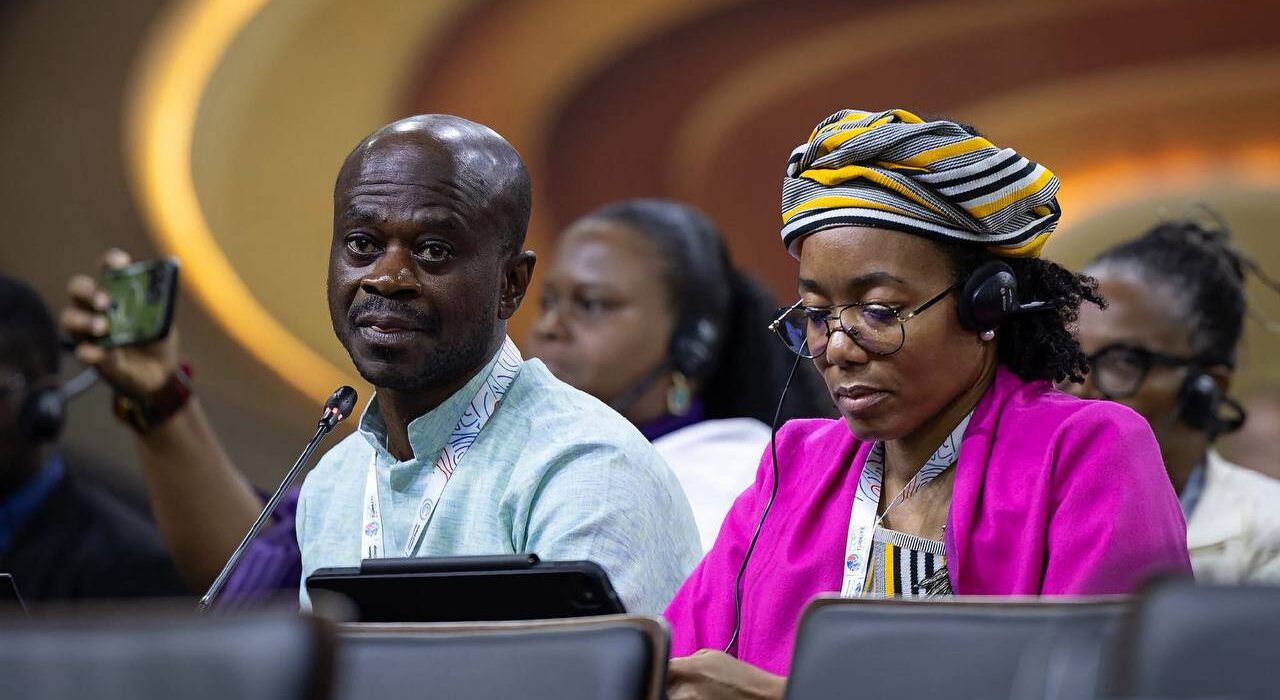
Against this backdrop, Ghana’s Minister for Environment, Science and Technology, Dr. Zanetor Agyeman-Rawlings, stood her ground in defence of Africa’s negotiating position, insisting that the continent would not accept climate commitments that lacked the financial resources needed to implement them.
Dr. Agyeman-Rawlings, who was speaking on behalf of the African Group of Negotiators (AGN), representing 54 African countries, also confronted COP31 President Murat Kurum after he interrupted her during the closing plenary while she was delivering the continent’s statement. She expressed disappointment over what she considered unequal treatment of delegations and questioned the respect accorded to Africa during the negotiations.
Prior to that, the minister had challenged developed countries over what she described as the continued exclusion of African interests through technicalities, inaccessible financing, shifting goalposts and failure to honour existing commitments.
She maintained that Africa had not come to the negotiations to beg for assistance but to demand what was rightfully due to its people, who continue to bear the consequences of climate change despite contributing relatively little to global emissions.
“We did not come here to beg. We came here to claim what is rightfully ours for our people, who are suffering the brunt of anthropogenic activities of developed countries and are now being asked to pay for them in ways that they never asked for,” she stated.
The minister further warned that Africa would not accept a climate transition that left its people behind or reduced the continent to a supplier of raw materials for the energy transition taking place elsewhere.
She argued that a just transition must protect workers, communities, women, young people and persons with disabilities, while ensuring that African countries benefit from the economic opportunities associated with the global shift towards cleaner energy.
Her position also extended to the financing arrangements underpinning climate action. She called for new, predictable and grant-based financing, warning against climate obligations that expose developing countries to further debt burdens.
The scale of Africa’s financing concerns was underscored by figures presented by the minister, who revealed that public adaptation finance to developing countries stood at between US$28.2 billion and US$31.7 billion in 2024, against estimated annual needs of approximately US$305 billion by 2035.
She also drew attention to the proposed US$120 billion annual adaptation-finance figure contained in the draft cover text, arguing that announcing a target without a clear delivery mechanism would amount to another unfulfilled promise.
“The draft cover text refers to at least US$120 billion a year by 2035. But a figure alone is not a commitment,” she stressed.
She called for a fixed financing baseline, annual milestones, public tracking and a concrete delivery plan, insisting that climate finance must be new, predictable and grant-based.
The failure to secure agreement at COP31 reflected broader geopolitical divisions over the future of fossil fuels, the pace of the global energy transition and who should bear its financial costs.
Negotiations over whether the final cover decision should explicitly address a transition away from fossil fuels proved particularly contentious. Saudi Arabia and other fossil-fuel-producing countries objected to stronger language, while the European Union, Panama and several climate-vulnerable countries opposed a proposed outcome that omitted any reference to fossil fuels.
Disagreements also emerged over the role of carbon capture technologies, with some countries supporting their inclusion while others warned against using them to justify continued dependence on oil and gas.
These disagreements were compounded by the persistent divide between developed and developing countries over climate finance. Africa’s demand for a clear pathway to tripling adaptation finance failed to secure the progress it sought, while negotiations on climate finance ended without substantive agreement on the issue.
The absence of a clear financing commitment, coupled with disagreements over fossil fuels, ultimately exposed the difficulty of reconciling the economic interests of major energy producers with the demands of countries most vulnerable to climate change. For Africa, the outcome reinforced the concern that the global energy transition risks reproducing existing inequalities unless its financing, benefits and opportunities are shared more fairly.
Related Posts