
Ghana has joined the India-led International Big Cat Alliance (IBCA), committing to a global partnership aimed at strengthening the conservation of big cats and their habitats.
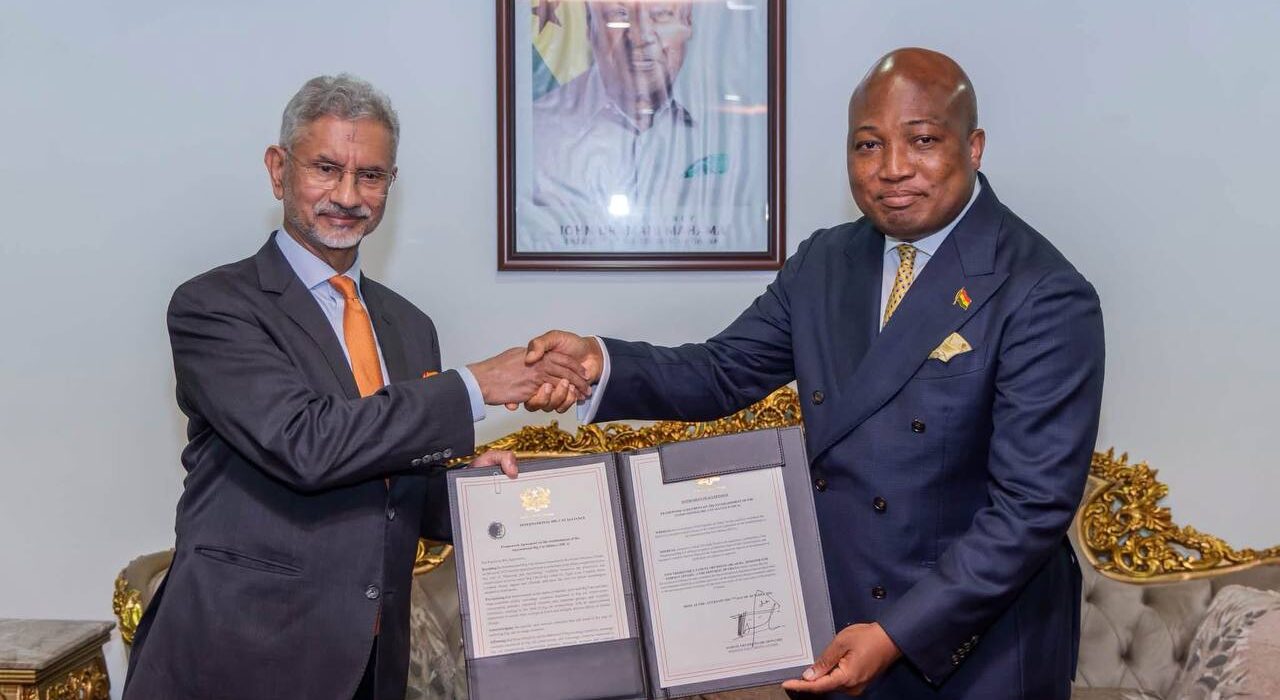
The formal Instrument of Acceptance was received by India’s External Affairs Minister, Dr Subrahmanyam Jaishankar, from Ghana’s Foreign Affairs Minister, Samuel Okudzeto Ablakwa, during Jaishankar’s first official visit to Ghana on October 6, 2026.
Foreign Affairs Minister Samuel Okudzeto Ablakwa said President John Dramani Mahama was committed to expanding Ghana’s wildlife reserves, preventing the extinction of big cats, combating poaching, reviving the country’s zoos and positioning Ghana as a premium conservation destination.
“President Mahama is keen to expand Ghana’s wildlife reserves, prevent the extinction of big cats, combat poaching, revive our zoos and make Ghana a premium conservation destination,” Ablakwa stated.
The IBCA was launched by India in 2023 and became a treaty-based intergovernmental organisation in January 2025. Its mandate covers the conservation of seven major big cat species — tiger, lion, leopard, snow leopard, cheetah, jaguar and puma — through international cooperation, knowledge sharing, technical assistance, capacity building, research, awareness and resource mobilisation.
The alliance is intended to bring together countries and conservation organisations to share successful conservation practices, strengthen protection of big-cat habitats and address threats including habitat loss, human-wildlife conflict and wildlife crime. India has also committed funding to support the organisation and its conservation activities.
For Ghana, the membership comes as the country seeks to strengthen the protection and sustainable management of its own wildlife resources. The Wildlife Division of the Forestry Commission currently manages 16 wildlife-protected areas, five coastal Ramsar sites and the Accra and Kumasi zoos, while also working with communities through initiatives such as Community Resource Management Areas.
Ghana has also stepped up efforts against illegal hunting and wildlife trafficking. In March 2026, a court sentenced a man to three years in prison for poaching in the Ankasa Conservation Area after he was arrested during an anti-poaching patrol. The Wildlife Division said it had intensified patrols in the protected area to curb illegal hunting.
The country is also implementing a nationwide closed season from August 1 to December 1 each year, during which hunting, capturing and destruction of wild animals are prohibited to allow wildlife populations to breed and recover. The Wildlife Division launched the 2026 campaign under the theme “Protect Wildlife, Preserve Life”, alongside renewed efforts to strengthen enforcement, community participation and protected-area management.
At the policy level, the Ministry of Lands and Natural Resources is working to operationalise Ghana’s Wildlife Resources Management Act, 2023, including proposed regulations for Community Resource Management Areas. The framework is intended to give communities a stronger role in the protection, conservation and sustainable use of wildlife resources.
The government has also linked wildlife conservation to ecotourism and local economic development, with the Forestry Commission pursuing investment in facilities within selected protected areas and forest reserves.
Ghana’s accession to the IBCA therefore gives the country access to a wider international network for conservation expertise, technical support, research, capacity building and potential resource mobilisation, while complementing existing national efforts to protect wildlife and develop conservation-based tourism.
Related Posts