
Ghana’s Minister for Foreign Affairs, Samuel Okudzeto Ablakwa, has signalled a new phase of structured and results-driven cooperation between Ghana and the European Union, outlining major initiatives and executable programmes expected to materialise in 2026 following high-level engagements with the European bloc.
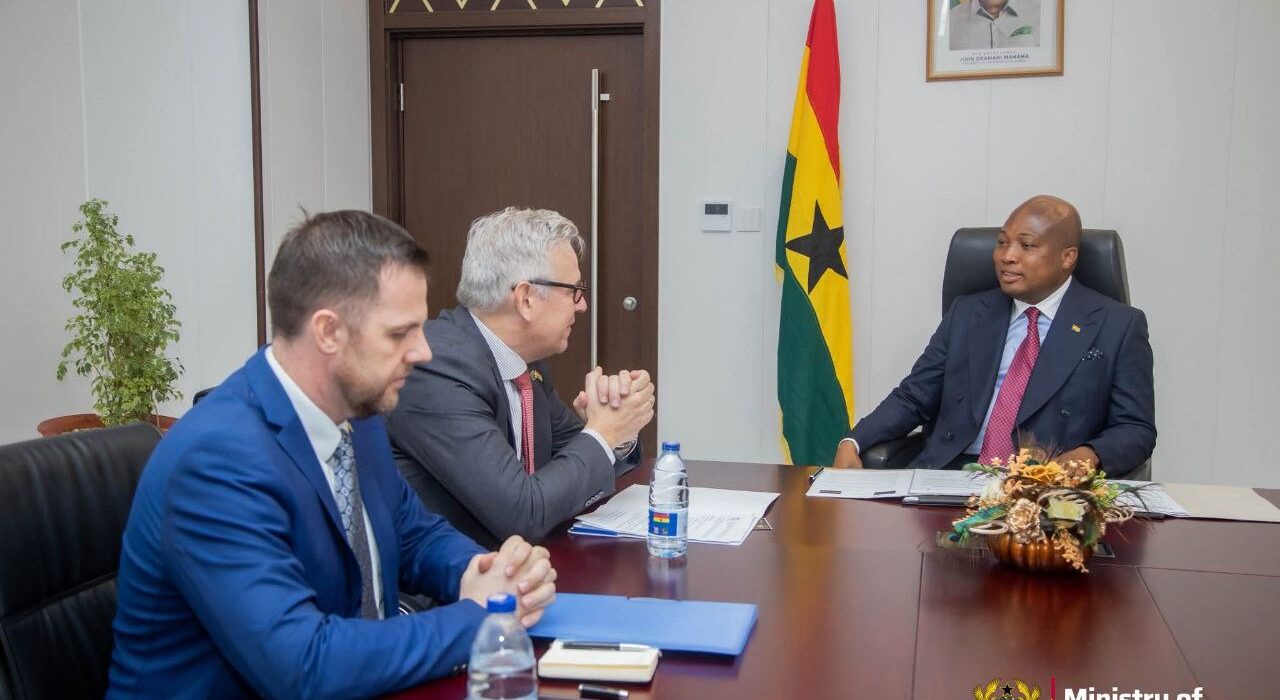
The renewed diplomatic momentum follows a strategic meeting in Accra between the Minister and the European Union Ambassador to Ghana, Rune Skinnebach, during which both sides reaffirmed their commitment to deepening bilateral and multilateral cooperation across priority sectors.
Central to the discussions was enhanced collaboration in peace and security, particularly in light of rising extremist threats in the Sahel. The engagement comes in the aftermath of the Titao terrorist attack in Burkina Faso, which claimed the lives of eight Ghanaian tomato traders and heightened cross-border security concerns. The Minister underscored the need for coordinated regional responses and strengthened intelligence-sharing mechanisms to safeguard Ghana’s northern frontier.
Ambassador Skinnebach reiterated the European Union’s readiness to scale up support in areas of strategic importance, emphasising that stability in West Africa remains critical to both regional and global security. He reaffirmed the EU’s commitment to supporting Ghana’s resilience-building efforts, counterterrorism cooperation, and broader security sector reforms.
Ablakwa described the engagement as constructive and forward-looking, noting that Ghana attaches significant value to its partnership with the European Union, which has evolved into a comprehensive framework spanning trade, development cooperation, governance, climate action and digital transformation.
Trade remains the anchor of Ghana–EU relations. The European Union is Ghana’s largest trading partner, accounting for a substantial share of Ghana’s total exports and imports. Under the interim Economic Partnership Agreement (EPA), Ghanaian products, including processed cocoa, tuna, horticultural goods and manufactured exports enjoy duty-free and quota-free access to the EU market, while European investors continue to play a major role in Ghana’s energy, infrastructure, financial services and agro-processing sectors.
This preferential trade regime has significantly enhanced Ghana’s export competitiveness and industrial integration into global value chains.
Beyond trade, the Minister highlighted expanding cooperation in agriculture modernisation, public health systems strengthening, education partnerships, artificial intelligence governance, and sustainable development programming. Both sides acknowledged the importance of aligning Ghana’s national development priorities with the EU’s Global Gateway strategy to unlock further investment and technology transfer.
The discussions also touched on collaborative efforts in climate resilience, digital innovation and youth empowerment, with a shared understanding that economic growth must be inclusive and security-conscious. The EU’s development assistance architecture in Ghana continues to support governance reforms, decentralisation, and social protection systems.
Ablakwa described the engagement as “very positive and mutually beneficial,” adding that Ghana looks forward to executing ambitious joint programmes in 2026. He reaffirmed the government’s commitment to deepening cooperation with the European Union, particularly in security, agriculture, public health, education, artificial intelligence and counterterrorism, positioning the partnership as a cornerstone of Ghana’s external relations strategy.
“Ghana values its partnership with the EU, now our largest trading partner. Looking forward to the execution of our big plans for 2026. We shall continue to deepen our relations, particularly in security, agriculture, public health, education, AI and counterterrorism.” he said.
Related Posts