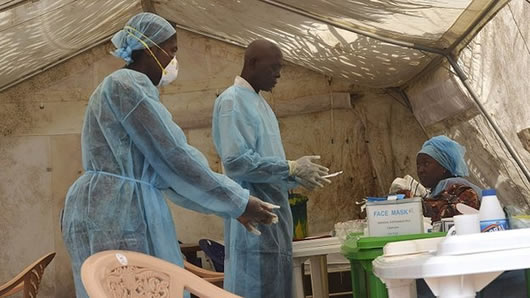

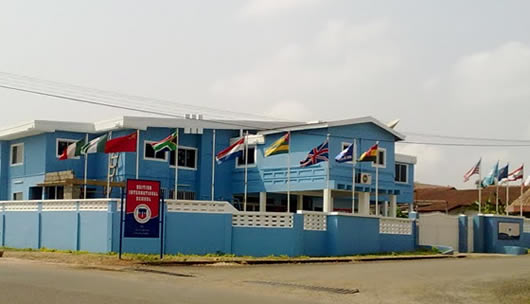
 The British International School (BIS), Ghana on Tuesday organised a workshop, to sensitise parents about the Ebola virus and precautionary measures to help protect students from being infected.
Mr Henry Morgan Minski, Director for BIS said the school has a responsibility of protecting students and staff from the Ebola disease, while there is the need to involve parents and other stakeholders to discuss the way forward.
Speaking on precautionary measures; he said the school, which would reopen on Monday, September 15, had acquired laser thermometers to help screen people entering the school, on daily basis.
Mr Minski said the school had employed three additional nurses in the Kiddie College, as well as Primary and Secondary departments, adding that “each of them will assist us in using the thermometers”.
In an interview with Ghana News Agency (GNA), the Director said that the school has partnered the Yeboah Hospital to attend to students with temperatures above 38 degree Celsius.
Speaking at the function, Mr Michael Adjabeng, Disease Surveillance Department, Ghana Health Service, said symptoms of Ebola fever, headache, sore throat, bodily pains and bodily weakness.
He said infected persons also experience systemic organ malfunctioning, and their liver and kidney are affected.
He said if the situation is not controlled, the infected person enters into the memorising stage where there is bleeding and this is the stage where it becomes difficult to be managed.
Mr Adjabeng said: “It takes between 21 days before the victims show signs related to the disease.”
He said the disease is transmitted through direct contacts of body fluids of infected persons.
Speaking on preventive measures; he said the disease could be prevented through hand washing, with soap and explained that this activity should be done under running water.
He explained that viruses usually have oily layers, as such the soap breaks the layers and the viruses are exposed.
Mr Adjabeng said the use of sanitizers is among the measures which could be used to prevent or control the rate of transmission.
In an interview with GNA, he said Ebola is real and there is the need to educate the masses to understand issues relating to the disease, to help reduce its transmission.
He said the role of the health sector is to ensure that education is ongoing and involves stakeholders, creation of isolated facilities as well as construction of treatment centres at Tema, Kumasi and Tamale.
Mr Adjabeng urged the media to use their platforms to educate the masses, especially on the signs and symptoms of the disease and how it could be prevented.
Mr John Arukwe, a parent, commended the school authority for the initiative.
In demonstrating the measures to be carried out to prevent Ebola in the school, parents, staff and other stakeholders were screened with the laser thermometers.
Source: GNA
Related Posts