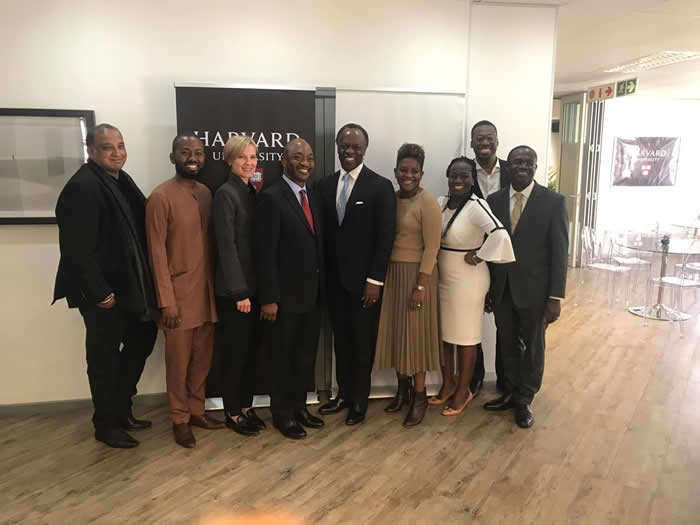

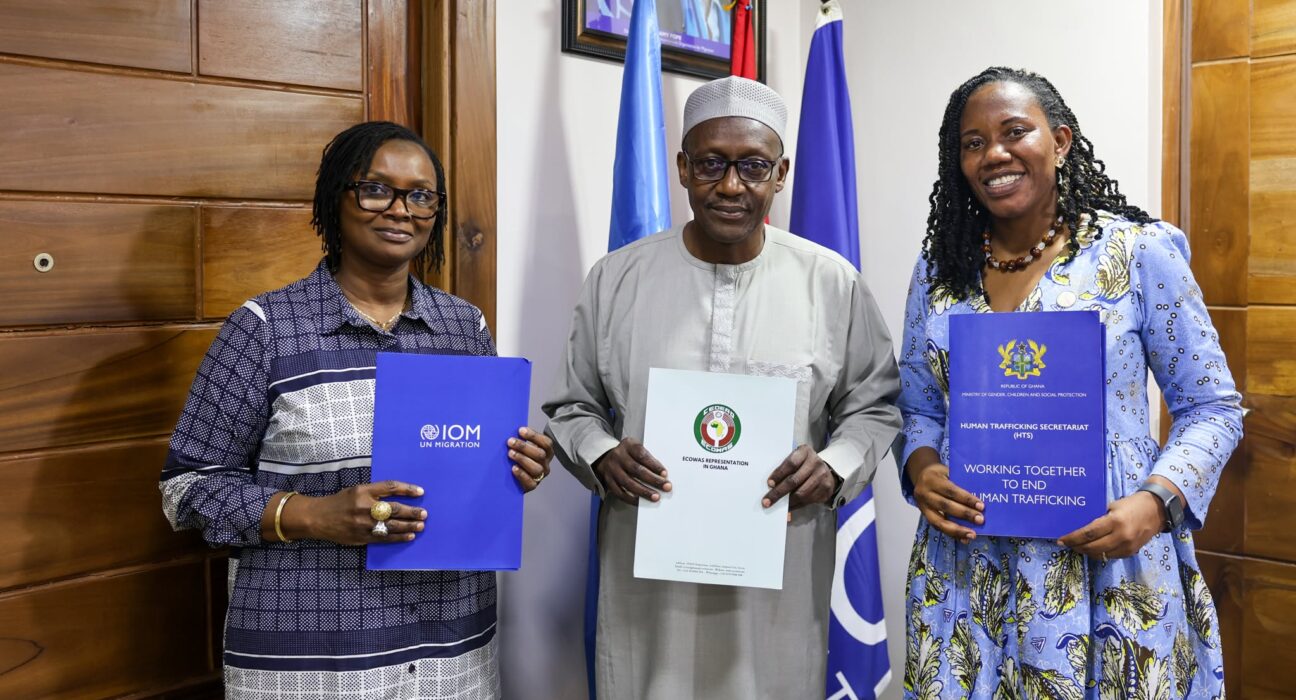
The Ambassador of the Economic Community of West African States (ECOWAS), Mohammed Lawan Gana, and the Ministry of Gender, Children and Social Protection have signed an agreement for the implementation of the ECOWAS Phase II Project aimed at strengthening protection and support services for victims of human trafficking in Ghana.
The project, which will be implemented by the International Organization for Migration (IOM) in collaboration with the Human Trafficking Secretariat of the Ministry of Gender, Children and Social Protection, seeks to enhance victim assistance mechanisms and improve the recovery and reintegration of survivors of trafficking.
The initiative will focus on strengthening coordination among key institutions involved in combating trafficking, promoting rights-based approaches and improving referral systems to ensure survivors receive timely and appropriate support.
Under the project, survivors are expected to benefit from comprehensive assistance, including temporary shelter, emergency healthcare, psychosocial support, education, vocational training and other essential services tailored to their individual recovery needs.
The intervention builds on Ghana’s existing national efforts to prevent human trafficking and support survivors through the Human Trafficking Secretariat, which coordinates anti-trafficking activities under the Ministry of Gender, Children and Social Protection. The Secretariat’s mandate includes supporting prevention efforts, coordinating responses, assisting investigations and promoting the rehabilitation and reintegration of trafficked persons.
Ghana’s anti-trafficking framework is guided by the Human Trafficking Act, 2005 (Act 694), which provides for the prevention of trafficking, punishment of offenders and the rehabilitation and reintegration of victims.
The partnership also complements previous efforts by international organisations to strengthen Ghana’s victim support systems. The International Organization for Migration has supported initiatives focused on improving coordination, referral pathways and assistance for victims, including the development of standard operating procedures for combating human trafficking in Ghana.
Through the ECOWAS-supported intervention, authorities hope to create a more coordinated national response that ensures survivors are not only rescued but also provided with the necessary support to rebuild their lives and achieve sustainable reintegration.
The project comes amid broader regional concerns over human trafficking, irregular migration and modern slavery across West Africa. ECOWAS institutions have consistently encouraged member states to strengthen cooperation, improve legal frameworks and expand support services for vulnerable migrants and trafficking survivors.
Earlier, during a Parliamentary Citizens’ Engagement on the Dangers of Irregular Migration and Modern Slavery held in Banjul, The Gambia, the ECOWAS Parliament called on member states to prioritise youth employment, strengthen anti-trafficking legislation and improve reintegration support for returnees as part of efforts to address irregular migration.
The signing of the Phase II Project reinforces ECOWAS’ regional commitment to combating trafficking in persons while supporting Ghana’s efforts to protect survivors, uphold human rights and provide sustainable solutions for communities affected by exploitation.
Related Posts