
The March and March Movement, the South African group that has spearheaded nationwide demonstrations calling for the removal of undocumented migrants, has confirmed the death of one of its leaders, Andile Mvuyelwa Somgxada, days after he was shot in Gauteng Province.
In a statement issued on Monday, the movement said Somgxada was shot while leaving his home in Greenfields, Ekurhuleni, on 4 July 2026. According to the group, he was rushed to hospital, where he remained under medical care before succumbing to his injuries on 9 July.
Describing him as a “dedicated and peace-loving patriotic South African,” the movement said his death comes at a time when several of its regional leaders have allegedly received warnings and death threats. It called on South African law enforcement authorities to conduct a thorough investigation into the killing and bring those responsible to justice.
The organisation also claimed that some of its leaders in Tshwane, KwaZulu-Natal and Mpumalanga had received threats following recent anti-immigration marches. Those claims have not been independently verified, and South African authorities had not publicly commented on them at the time of the statement.
“Mr Andile Mvuyelwa Somgxada, a dedicated and peace loving patriotic South African, was gunned down while leaving his home on Saturday, 04 July 2026. He was rushed to the hospital for medical attention, where he fought for his life until the final hour on Thursday, 09 July 2026, where he was pronounced dead.” the statement read.
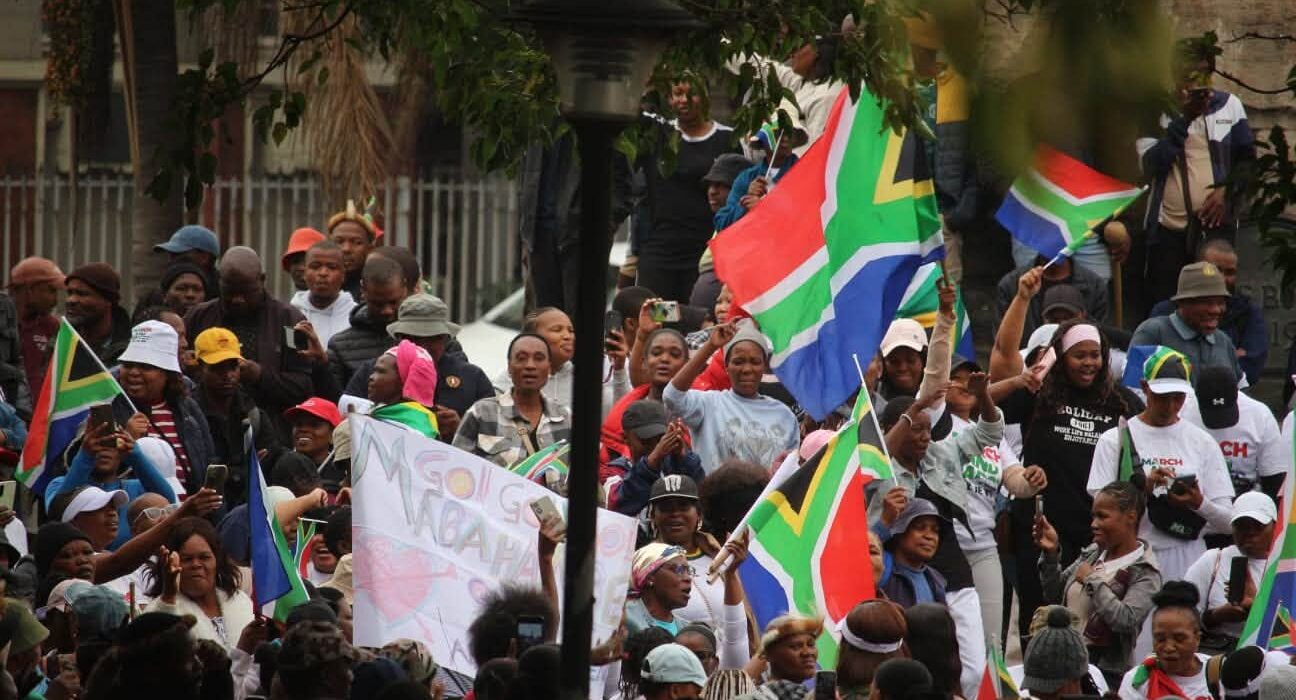
Despite the killing, the movement said it would intensify its Thursday demonstrations across South Africa, particularly in Gauteng Province, where it says undocumented migration remains a major concern. It further announced that a memorial service for Somgxada would be held in Gauteng, while his funeral is expected to take place in the Eastern Cape, subject to arrangements by his family.
The March and March Movement has been at the forefront of recent demonstrations demanding stricter immigration enforcement and the removal of undocumented foreign nationals from South Africa. Protesters have called for tougher action against illegal immigration, while the government has maintained that immigration laws must be enforced within the framework of the Constitution and the rule of law.
The demonstrations have prompted increased government scrutiny and renewed debate over immigration enforcement. South African authorities have continued operations targeting undocumented migrants, while emphasising that law enforcement actions should not translate into vigilantism or xenophobic attacks against foreign nationals.
The protests have also attracted regional attention after Ghana raised concerns over the safety of its nationals in South Africa following reports that a Ghanaian had died during demonstrations on 30 June.
The South African government subsequently rejected those claims, with Justice and Constitutional Development Minister Mmamoloko Kubayi, who chairs the Inter-Ministerial Committee on Migration, stating that investigations by the South African Police Service found no evidence that any deaths occurred during the protests. Authorities said the Ghanaian national referenced by Accra had been attacked in a separate criminal incident on 29 June that was unrelated to the demonstrations.
The diplomatic exchanges have underscored the sensitivity of migration issues within the region, with both Ghana and South Africa maintaining diplomatic engagement while seeking clarity over the circumstances surrounding the incident.
The death of Somgxada is likely to intensify attention on South Africa’s immigration debate, which has increasingly featured concerns over border management, undocumented migration, organised crime and community safety. While authorities continue to investigate the shooting, the incident adds a new dimension to a movement whose demonstrations have already become a significant regional and diplomatic issue.
Related Posts