
Egyptian Prime Minister Mostafa Madbouli announced Sunday a string of planned privatizations of state-owned companies, as Cairo grapples with an economic crisis and inflation at almost 15%.
Following years of accusations of state companies crowding out private investments, the government announced a roadmap to more than double the private sector’s share in the economy.
Madbouli laid out plans for 10 state-owned companies and two army-owned companies to be listed on the stock market later this year.
Two new holding companies, to incorporate “the seven largest ports” and “Egypt’s top hotels” will also be formed, percentages of which “will be listed on the stock exchange,” he told reporters.
By 2025, the government hopes to see “private sector contribution in investment grow to 65%,” up from 30% today.
President Abdel Fattah al-Sissi last month announced plans to “double its support to the private sector” in a program aimed to attract $10 billion annually over the next four years.
Earlier this month, American firm S&P Global released its latest Egypt Purchasing Manager’s Index, which showed the state’s non-oil private sector economy contracting for the 17th straight month.
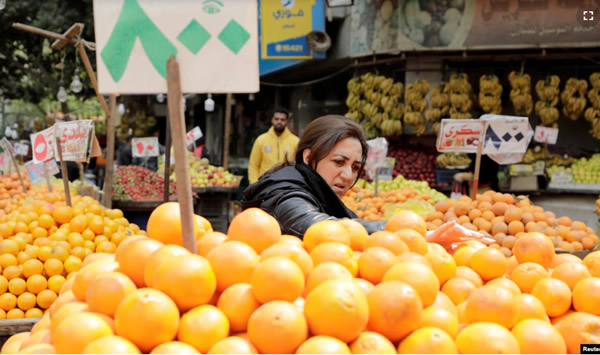
Inflation hit a three-year high of 14.9% in April, a month after the Egyptian pound lost 17% of its value overnight.
The state’s grip on the Egypt’s economy has been criticized as creating unfair competition.
Business magnate Naguib Sawiris last year warned of the effects of an unfair playing field, arguing that “the state has to be a regulator, not an owner” of economic activity.
Madbouli on Sunday said there was “no alternative” to the state’s involvement in the economy, considering the “instability” of recent years, alluding to security concerns surrounding Sissi’s rise to power, and more recently the COVID-19 pandemic.
Since Sissi became president in 2014, the former army general has embarked on massive national infrastructure projects, where the key but opaque role the army has played in Egypt’s economy for decades took center stage.
Although no official figures are published about the army’s financial interests, the new push for privatization of military-owned companies could seek to correct a skewed investment environment.
Since Russia’s invasion of Ukraine in late February sent global commodity prices soaring, Egypt — the world’s largest importer of wheat — has been reeling from mounting economic pressures, pushing the country to apply for a new loan from the International Monetary Fund.
Source: voanews.com
Related Posts