
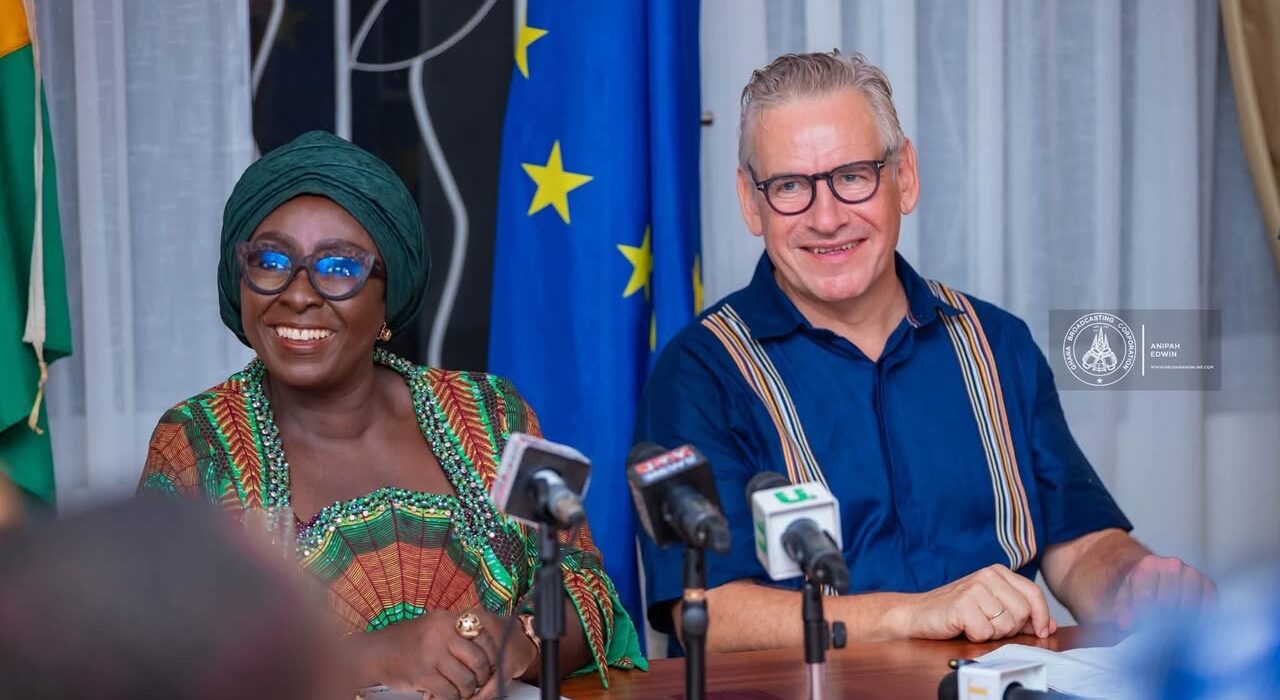
The European Union Ambassador to Ghana, Rune Skinnebach, has called for stronger platforms, partnerships and audiences to help Ghanaian storytellers take their work beyond the country, stressing that Ghana has no shortage of stories to tell.
He made the call on Monday, October 5, 2026, at the opening of the third edition of the European Film Festival Ghana, held at the Residence of the EU Ambassador in Accra.
The festival, themed “Peace, Tolerance and Inclusivity,” brings 21 Ghanaian and European films into a shared space for screenings, conversations and creative exchange.
Speaking at the opening, the Ambassador noted that the challenge for Ghanaian storytellers was not a lack of compelling stories, but creating the opportunities and connections needed to give those stories wider reach.
“As you know, Ghana has no shortage of stories to tell. What matters is making sure that Ghanaian storytellers have the platforms, the partners and the audiences to take those stories further,” he said.
He underscored that the festival provided one such platform by bringing together films from different countries and cultural settings, allowing audiences to encounter stories shaped by different experiences.
The opening programme illustrated this approach, which was supposed to feature the Ghanaian short film Rule of Thumb alongside Mr. Nobody Against Putin, a film from Denmark and the Czech Republic but rains halted the screening.
According to the Ambassador, the contrast between the productions was part of what made the festival valuable, as it allowed audiences to engage with different perspectives rather than viewing culture through a single narrative.
“Europe is not one story, Ghana is not one story, and humanity certainly isn’t one story,” he said.
The Ambassador encouraged audiences to approach the festival not only as an opportunity for entertainment but also as a space to discover new perspectives, engage with different experiences and exchange ideas through cinema.
The festival’s return provides an important platform for such exchanges, having resumed in Ghana after a five-year break.
The 2026 edition is the third since the festival was first introduced in Ghana in 2020, with the previous edition held in 2021.
The return of the festival also comes at a time when Ghana’s creative sector is seeking greater access to international markets, funding, professional networks and opportunities for local productions to reach audiences beyond Ghana.
The National Film Authority has welcomed the festival as an avenue for Ghanaian filmmakers to build international connections, learn from counterparts and explore opportunities within the wider global film industry.
For the EU, the festival forms part of its broader cultural engagement with Ghana, using cinema and other creative forms to deepen understanding between societies. The initiative brings together European and Ghanaian perspectives while creating space for conversations around culture, identity, peace, tolerance and inclusion.
The Ambassador expressed hoped that audiences would use the festival to watch, listen, discover and discuss, and ultimately leave with new ideas and perspectives.
With Ghanaian and European films sharing the programme, the festival continues to position cinema as more than entertainment: it is also a channel through which Ghanaian stories can gain new audiences, filmmakers can build international relationships and Ghana-Europe cultural ties can deepen.
Related Posts