Ghana and the State of Qatar have formally exchanged the Instruments of Ratification of the Labour Mobility Agreement, marking a significant step toward improving working conditions and safeguarding the rights of Ghanaian workers to be deployed to Qatar.
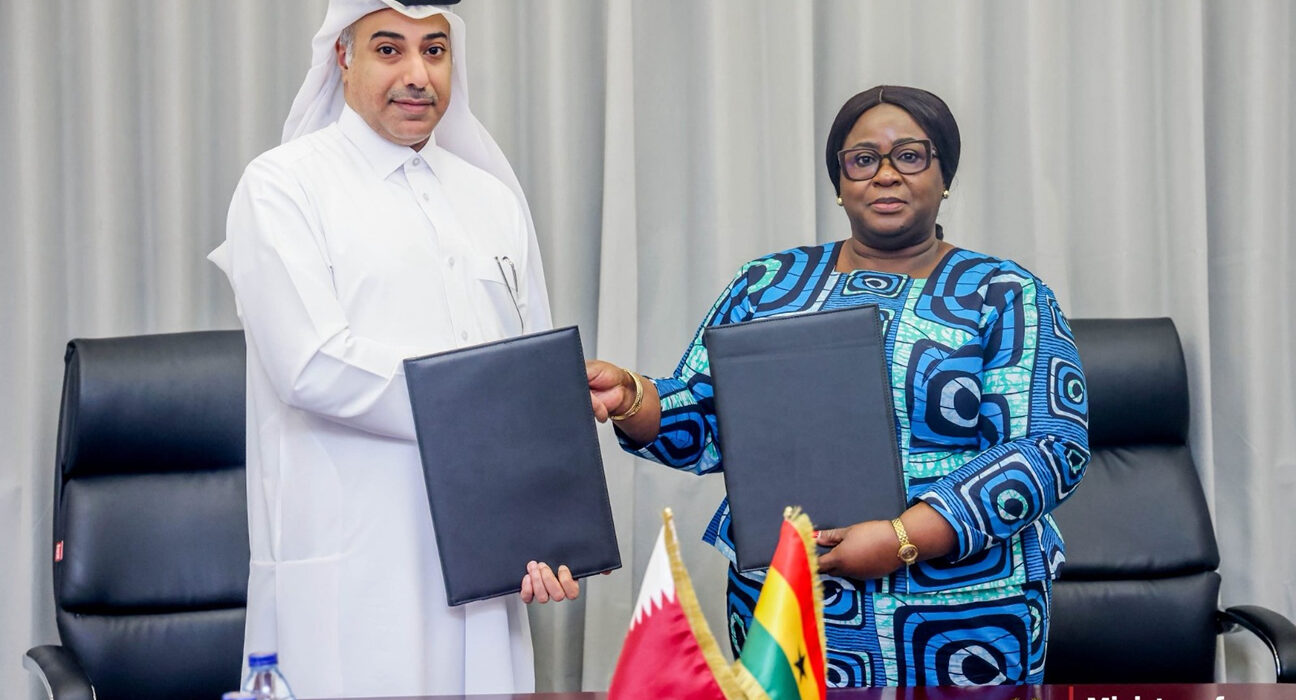
The exchange of the Instruments of Ratification took place at the Ministry of Foreign Affairs on April 17, 2026, marking a major milestone in efforts to increase Ghana’s labour force in Doha to 50,000 by 2030. The agreement is expected to guarantee improved working conditions, strengthen labour protections, and ensure the protection of the human rights of Ghanaian workers.
The Chief Director of the Ministry of Foreign Affairs, Khadija Iddrisu, signed on behalf of the Government of Ghana, while the Ambassador of the State of Qatar to Ghana, Khalid Bin Jabor Saif Jasser Al-Messallam, signed on behalf of Qatar.
Khadija Iddrisu emphasised that the agreement establishes a comprehensive framework to enhance labour mobility between the two countries. She noted that it would streamline migration processes, promote collaboration in skills development, and create structured employment pathways for Ghanaian workers.
She further indicated that the initiative aligns with Ghana’s national priorities to expand access to decent employment opportunities while ensuring the protection and welfare of Ghanaians working abroad. According to her, the agreement also reflects Ghana’s commitment to promoting safe, orderly, and regular migration.
Ambassador Khalid Bin Jabor Saif Jasser Al-Messallam described the agreement as mutually beneficial, noting that it would provide employment opportunities for Ghanaian workers while ensuring their welfare across key sectors in Qatar. He reaffirmed Qatar’s commitment to safeguarding the rights and working conditions of Ghanaian workers deployed under the arrangement.
Both parties emphasised the importance of sustained engagement and effective implementation of the agreement, signalling a strong commitment to strengthening bilateral relations through structured labour mobility and skills exchange.
The Labour Mobility Agreement was first announced by the Minister for Foreign Affairs, Samuel Okudzeto Ablakwa, on December 8, 2025, following a state visit to Qatar. During the visit, he disclosed Ghana’s target to increase the number of Ghanaian workers in Qatar to 50,000 by 2030, from an estimated 13,000 Ghanaians currently residing and working in Doha.
To support the implementation of the agreement, a Ghana–Qatar Joint Technical Committee was established to oversee and guide the operationalisation of the labour mobility framework and ensure that both countries achieve the intended benefits of the partnership.
The agreement also secured parliamentary ratification in accordance with Article 75 of the 1992 Constitution, which governs the approval of international agreements and treaties entered into by the Government of Ghana.
Government officials have further indicated that the recruitment process under the agreement will be credible, transparent, and free from nepotism, ensuring that opportunities are accessible to all qualified Ghanaians. They also assured that the rights of Ghanaian workers will be strongly protected, with provisions guaranteeing improved working conditions and structured grievance mechanisms.
The development comes amid longstanding global concerns about labour rights in Qatar. Human rights organisations, including Amnesty International, have previously raised issues such as wage theft, poor working conditions, and limited access to redress for migrant and domestic workers, particularly during the period leading up to the 2022 FIFA World Cup.
Additionally, Qatar received over 300 human rights recommendations under the United Nations Universal Periodic Review (UPR), many of which focused on labour rights, migrant protections, and working conditions. The new labour mobility agreement is therefore expected to strengthen safeguards and improve conditions for Ghanaian workers deployed to the Gulf state.
The exchange of the Instruments of Ratification marks a significant step in deepening Ghana–Qatar bilateral relations while creating structured employment opportunities and ensuring enhanced protection for Ghanaian workers abroad.
Story by: Francis Sowah
Related Posts