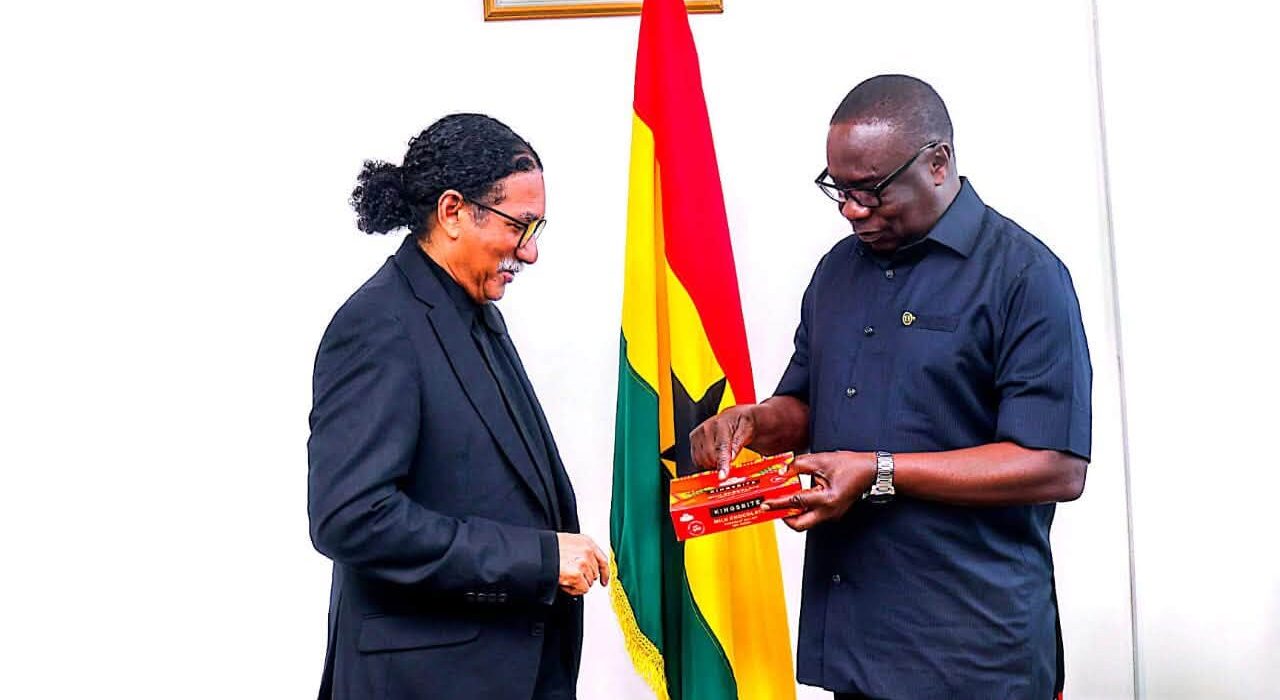
Ghana and Venezuela are exploring a proposed Memorandum of Understanding (MoU) on cocoa disease management, as the two countries seek to strengthen agricultural cooperation and protect Ghanaian farmers from losses caused by pests and diseases.
The discussions followed a courtesy call by Venezuela’s non-resident Ambassador to Ghana, Jesus Garcia, on Deputy Foreign Affairs Minister James Gyakye Quayson, during which the two sides explored areas of cooperation in aviation, education, oil and gas, tourism, military relations and cocoa processing.
The Ambassador offered to share Venezuela’s cocoa biotechnology expertise with Ghana to help protect cocoa plants from diseases and reduce production losses.
Ghana ranks as the world’s second-largest cocoa producer, with annual production of approximately 600,000 tonnes, while Venezuela ranks 17th. Despite Ghana’s position as a leading producer, the country continues to face challenges in cocoa disease management, making the proposed exchange of biotechnology and disease-control expertise with Venezuela potentially significant for the sector.
Venezuela has a history of cocoa research involving the selection and breeding of cacao varieties with improved resistance to pests and diseases. Its research institutions have worked on developing high-yielding varieties with disease resistance, alongside efforts to preserve the country’s cocoa genetic resources.
The proposed cooperation comes as Ghana continues to grapple with cocoa swollen shoot virus disease (CSSVD), one of the most damaging threats to the sector. The disease, transmitted by mealybugs, can cause yield losses of between 15% and 50%, particularly when severe strains are involved.
Ghana already has disease-control measures in place through the Ghana Cocoa Board’s Cocoa Diseases and Pests Control Programme (CODAPEC), which uses insecticide and fungicide spraying to tackle major pests and diseases, including capsids and black pod disease.
The Cocoa Health and Extension Division also oversees the removal of infected trees and the rehabilitation of affected farms using improved, disease-tolerant planting materials.
The proposed partnership could therefore offer an opportunity to complement Ghana’s existing interventions with additional research, technology transfer and expertise, subject to further technical discussions between the two countries.
Beyond cocoa, the engagement explored cooperation in oil and gas, an area in which Venezuela holds the world’s largest proven oil reserves, as well as aviation, education, tourism and military relations.
Ambassador Garcia also disclosed plans by the Venezuelan government to establish a resident embassy in Ghana as soon as possible, describing Ghana as a strategic country in the sub-region and pointing to the longstanding friendship between the two countries since diplomatic relations were established in 1969.
Related Posts