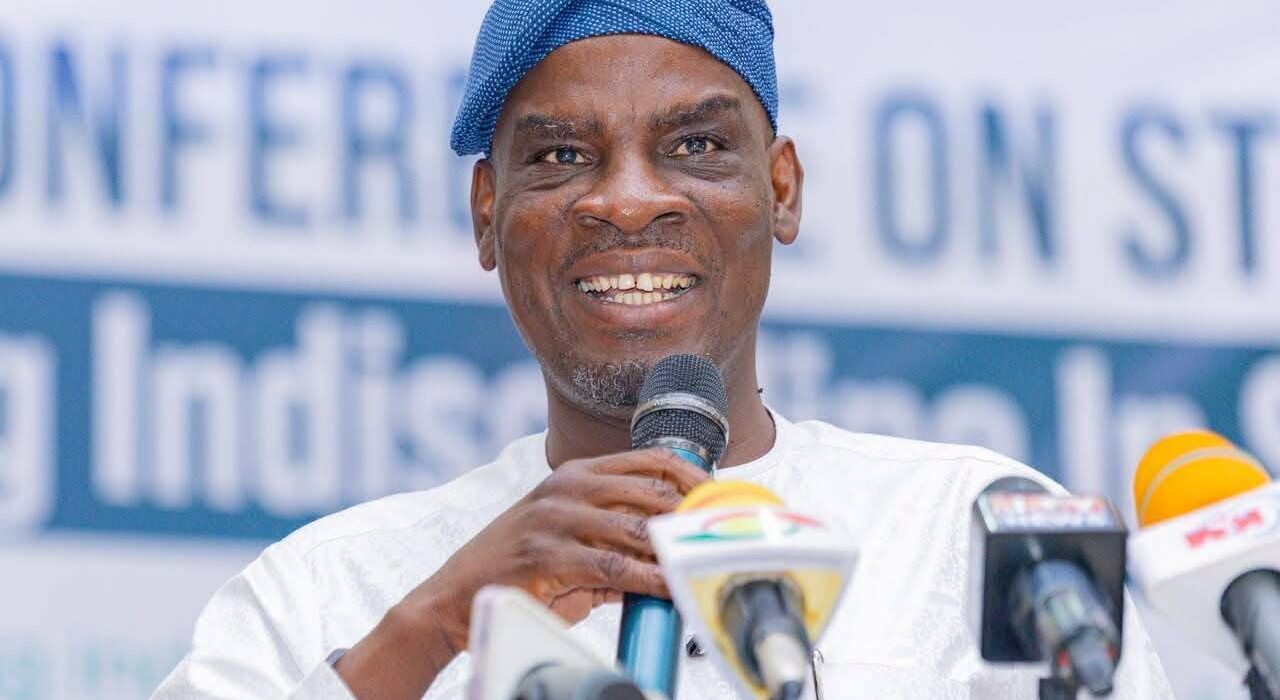
Education Minister Haruna Iddrisu has urged the European Union to adopt a more generous and student-friendly visa regime for Ghanaian students seeking educational opportunities in Europe, while cautioning applicants against errors and inconsistencies that could jeopardise their applications.
Addressing students, European higher education institutions and diplomats at the maiden Study in Europe Fair at the University of Ghana, Legon, on Wednesday, November 4, the minister called on EU member states to facilitate access for qualified Ghanaian students seeking international academic exposure.
“For me, I have a simple message to the EU and our EU partners. Be more friendly and generous in your grant of visas to our students who want opportunities to study abroad, to acquire knowledge, to come back to serve Mother Ghana and serve the world. What we want is for you to be more friendly and more generous,” he said.
The minister stressed that easier access to European education would allow Ghanaian students to acquire knowledge and skills that could contribute to national development and strengthen international academic cooperation.
He, however, urged prospective students to carefully review eligibility criteria and ensure they meet the minimum requirements before applying to institutions abroad.
Mr Iddrisu cautioned against providing inconsistent or inaccurate information during the application process, warning that seemingly minor discrepancies could undermine an otherwise promising application.
“That simple inconsistency can deny you that lifelong opportunity. So I’m just saying this so that as you go through the eligibility criteria, don’t take it for granted. Be thorough and diligent and give as much accurate information as possible,” he added.
The maiden fair brought together European education and scholarship organisations, diplomatic missions and Ghanaian universities to provide students with direct access to information on study programmes, admissions and international academic opportunities.
Participating organisations included Campus France Ghana, the German Academic Exchange Service (DAAD) and the Ghanaian-European Centre, alongside representatives of European diplomatic missions and institutions such as the University of Ghana, KNUST, Ashesi University and the University of Cape Coast.
The exhibition provided a platform for students to explore educational opportunities across Europe while engaging institutions on admission requirements, scholarship pathways and academic partnerships.
Beyond student mobility, the engagement also highlighted the government’s push for joint and double-degree programmes that would allow Ghanaian students to combine academic training at home with international exposure, potentially expanding access to European education while strengthening the country’s human capital.
Meanwhile the government is seeking to promote transnational education through joint and double-degree programmes that would allow students to complete part of their studies in Ghana and the remainder at partner institutions overseas.
Under the proposed model, students could spend one or two semesters at a Ghanaian university, undertake two or three semesters at a partner institution abroad and return to Ghana for their final semester before graduation.
Related Posts