
The International Monetary Fund (IMF) has called on Ghana and other African economies to reinforce fiscal discipline and deepen structural reforms as global headwinds threaten growth.
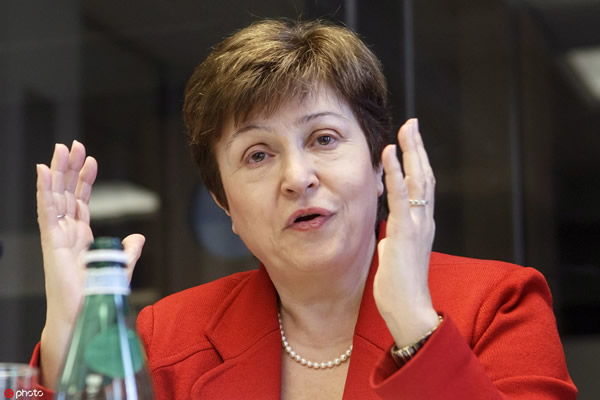
Speaking at a press conference during the IMF-World Bank Spring Meetings, Managing Director Kristalina Georgieva warned that while Africa’s long-term prospects remain strong, immediate policy tightening is needed to navigate looming economic shocks.
While Africa has been home to some of the world’s fastest-growing economies in recent years, Ms Georgieva cautioned that low-income and conflict-affected nations risk falling further behind due to the indirect effects of weakening global demand.
The IMF has already revised down growth projections for the continent.
Impact
The impact of current economic shocks varies across Africa. Oil-exporting nations like Nigeria face budget pressures from falling crude prices, while oil importers, including Ghana, benefit from lower energy costs.
However, Ghana’s recent decision to raise interest rates for the first time in nearly three years—contrasting with Egypt’s rate cut—reflects the differing policy needs across African economies.
Ms Georgieva outlined key recommendations for African governments. First, she emphasised the need to strengthen fiscal policies by broadening tax bases, curbing evasion, and using technology to improve revenue collection.
“There is no excuse for inaction,” she said, urging governments to build financial buffers against future shocks.
On monetary policy, she advised central banks to prioritise domestic conditions over regional trends. The Bank of Ghana’s recent rate hike, aimed at taming inflation, aligns with this approach.
“Policymakers must assess their own inflationary pressures and act accordingly,” she said.
Trade integration
The IMF chief also stressed the importance of good governance and regional cooperation. Corruption and instability in one country, she noted, cast a shadow over the entire continent.
She urged deeper trade integration under the African Continental Free Trade Area (AfCFTA) and praised ongoing efforts to remove infrastructure barriers to commerce.
For Ghana, the IMF’s recommendations reinforce the need for fiscal discipline and structural reforms.
The country’s economic challenges, including high inflation and debt, require sustained policy adjustments while leveraging opportunities within AfCFTA.
Ms Georgieva expressed optimism about Africa’s long-term potential, citing its vast natural resources, young population, and growing markets.
“A more unified and collaborative Africa can become a global economic powerhouse,” she said.
She concluded that as global uncertainty persists, African nations must act decisively to safeguard their economies. For Ghana, this means balancing short-term stability with long-term growth strategies in an increasingly volatile world.
Source: graphic.com.gh
Related Posts