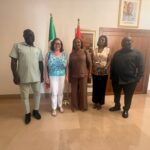

The Israeli Ambassador to Ghana, Roey Gilad, has paid a working visit to the cassava processing centre at Asuboi in the Eastern Region to obtain a first-hand assessment of the facility’s operations and its impact on local farmers.
The facility stands as a practical example of Israel’s development cooperation with Ghana’s agricultural sector. It was established through a partnership involving the Embassy of Israel, MASHAV, Israel’s Agency for International Development Cooperation, and the Development Action Association (DAA), a network of farmer-based organisations.
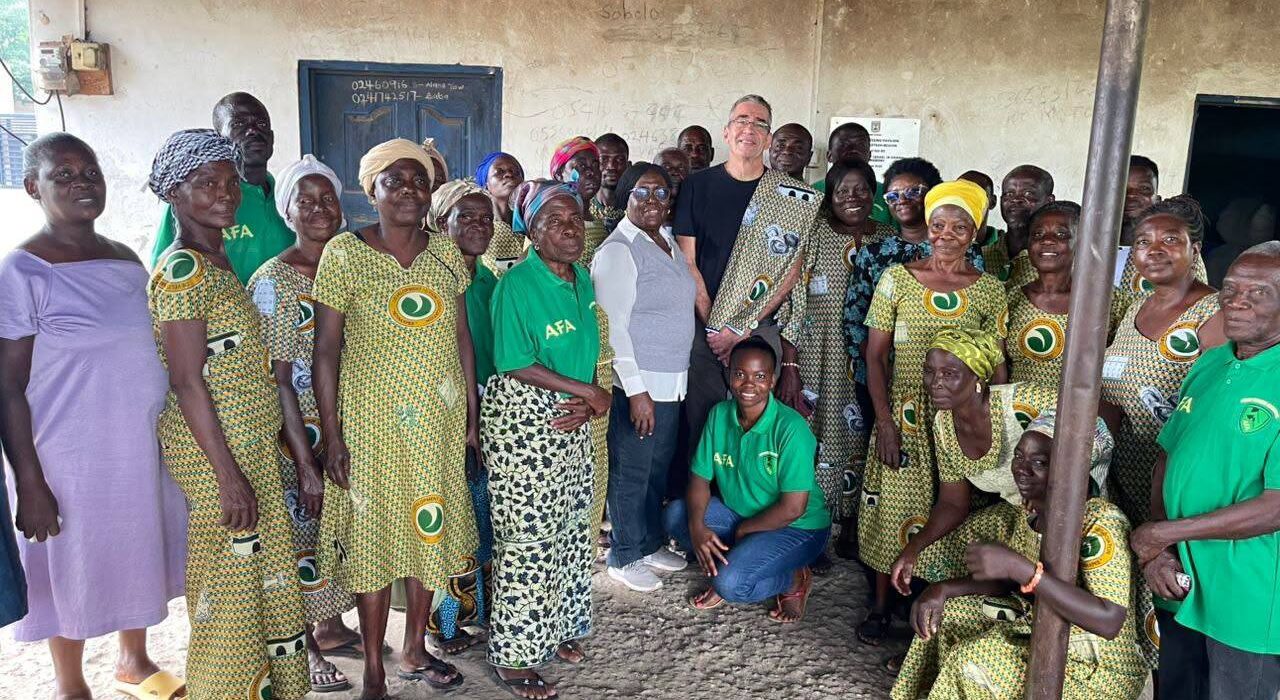
The Executive Director of the DAA, Lydia Sasu, together with members of the Asuboi Farmers Association, received Ambassador Gilad and conducted him around the facility, where he observed the various stages of cassava processing and engaged with those operating the centre.
The Ambassador also visited a proposed site for a mechanised borehole intended to provide the facility with a more reliable and sustainable supply of water for its processing activities.
The processing centre was commissioned in October 2022 as part of activities marking World Rural Women’s Day and was designed to improve working conditions and increase productivity among women cassava farmers in Asuboi and surrounding communities.
The facility includes three locally manufactured cassava processors, a pressing machine, a roasting area and a storeroom, providing farmers with improved infrastructure to process cassava into gari and other value-added products.
The initiative was supported by MASHAV in collaboration with the Development Action Association, whose work focuses on improving the livelihoods of its members through capacity building, agricultural production, food processing and advocacy.
MASHAV, Israel’s Agency for International Development Cooperation under the Ministry of Foreign Affairs, has been active in Ghana for decades, supporting development initiatives through training, technical cooperation and the transfer of knowledge and technology. Its work in Ghana spans agriculture, health, education, innovation, entrepreneurship and women’s empowerment.
In agriculture, MASHAV has supported training programmes and technical cooperation aimed at strengthening Ghanaian expertise and promoting modern agricultural practices. In 2018, for instance, MASHAV signed an agreement with Ghana’s Ministry of Food and Agriculture to enable young Ghanaian agricultural students to undertake an 11-month training programme in Israel.
The Israeli agency has also supported Ghanaian professionals through training programmes across several sectors. The Embassy of Israel has reported that more than 2,000 Ghanaian professionals have benefited from MASHAV training in areas including agriculture, education, health and women’s empowerment.
Beyond agriculture, MASHAV’s cooperation with Ghana has included support for maternal and neonatal healthcare, early childhood education, innovation and entrepreneurship, as well as initiatives designed to strengthen community resilience and sustainable development.
Ambassador Gilad’s visit to Asuboi therefore highlights the continued emphasis on translating development cooperation into practical, community-level initiatives, particularly those that support women farmers, improve agricultural value addition and strengthen rural livelihoods.
The proposed mechanised borehole is expected to further enhance the processing centre’s operations by addressing its water needs and supporting more efficient and sustainable cassava processing.
Related Posts