
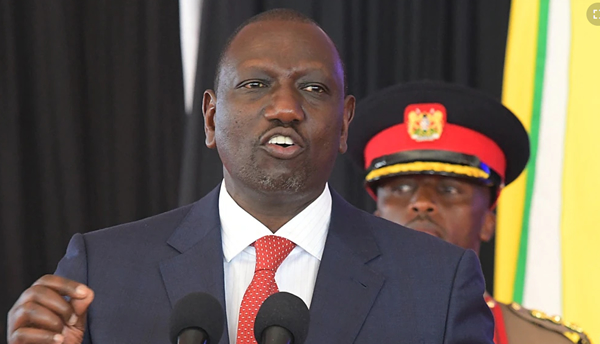
Kenya’s President William Ruto on Thursday defended his tough economic measures in his first State of the Nation address since coming to power last year, saying they were necessary to get the country back on track.
There has been widespread anger among Kenyans over his government’s decision to remove food and fuel subsidies and implement a host of new taxes.
“The time has come, therefore, to retire the false comforts and illusionary benefits of wasteful expenditure and counterproductive subsidies on consumption by which we dug ourselves deeper into the hole of avoidable debt,” he said.
His speech came a day after the finance minister admitted that the country was in a difficult financial position.
Kenya faces a host of challenges, including depleted government coffers, skyrocketing inflation, and a plunging currency that has sent debt repayment costs soaring.
Ruto said that they had to admit that “as a country we have been living large and way beyond our means”.
According to Treasury figures, Kenya had accumulated more than $66 billion in debt by the end of June, equivalent to around two-thirds of gross domestic product.
He said the government owed it to the people of Kenya “to do the right thing” and make the tough decisions that were necessary to get the economy back on track.
The government is spending about half of its revenue on debt-servicing, but he said that progress was being made.
“Our efforts to stabilise the situation have yielded such progress that next month, in December, we will be able to settle the first Kenya shillings,. $300 million or 500 billion Kenya shillings instalment of the $2 billion eurobond debt that falls due next year,” he said.
In July, global credit ratings agency, Fitch Ratings, downgraded Kenya’s ability to repay international lenders from “stable to negative”, citing tax hikes and social unrest.
Source: africanews.com
Related Posts