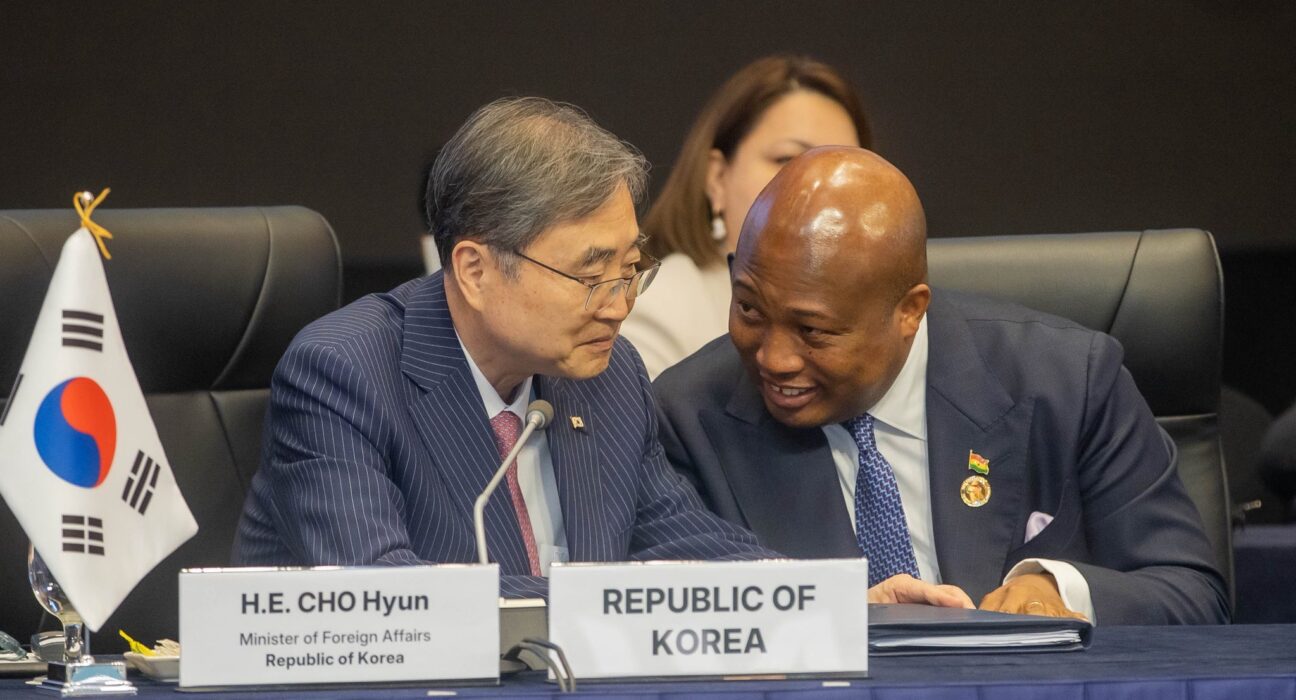
Ghana and its Asian partner, the Republic of Korea, are set to establish a new university in Ghana, marking a key highlight of the Korea–Africa Foreign Ministers’ Meeting in Seoul.
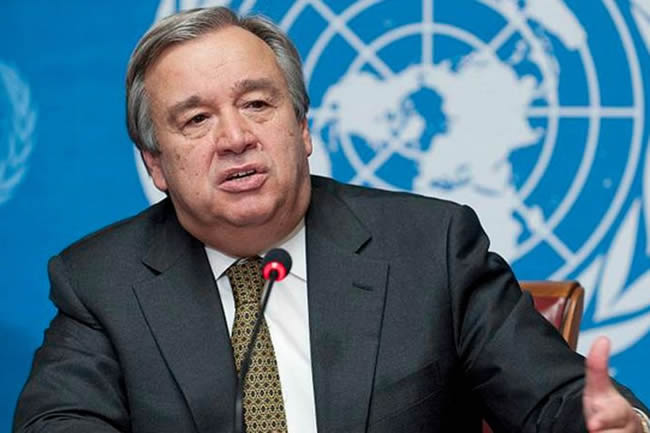
The Minister for Foreign Affairs, Samuel Okudzeto Ablakwa, who co-chaired the high-level engagement between African Foreign Ministers and Korean officials, said the meeting further consolidated the transformative partnership between Seoul and Africa through several cooperation frameworks.
He announced that the two countries will collaborate to establish a university in Ghana, a project expected to symbolise over five decades of diplomatic relations while deepening investment in human development, cultural exchange, knowledge sharing, and people-to-people ties.
The Korean government also outlined additional investments in Ghana arising from the engagement, spanning energy, agriculture, maritime development, education, shipbuilding, roads, and the health sector.
The Lee administration is also expected to pursue the establishment of a Hyundai Automotive Manufacturing Plant in Ghana, building on the existing Hyundai assembly plant established in 2020. The move is expected to further position Ghana as a strategic hub in Africa’s automotive industry.
The proposed manufacturing plant will undertake full-scale vehicle production, from raw materials to finished vehicles. This development further consolidates Accra’s position as a growing automotive centre in Africa, where it already hosts assembly plants for several global brands, including Volkswagen, Toyota, Suzuki, Nissan, Kia, and Hyundai.
“This year, our two countries will open a new university in Ghana; establish a West Africa Hyundai Automotive Manufacturing Plant in Ghana and launch new solar irrigation systems. Additionally, we agreed to have collaboration in AI and new partnerships for energy and critical minerals.” he said.
Korean investment in Ghana will also include the deployment of solar-powered irrigation systems, particularly targeting the northern ecological belt comprising the Savannah, Upper East, Upper West, North East, and Northern Regions. These areas continue to face persistent irrigation challenges that affect agricultural productivity and rural livelihoods.
The irrigation gap has also remained a policy concern following delays in the Pwalugu Multipurpose Dam project, which had been widely anticipated by farming communities in the region.
Other areas of expected cooperation include artificial intelligence, energy, and critical minerals, alongside ongoing progress on a visa waiver agreement covering all categories of passports. Diplomatic and service passport holders have already benefited from earlier arrangements.
Korea’s has had large-scale investemnt in Ghana. In 2024, it committed significant financial support through a $2 billion framework under the Economic Development Cooperation Fund (EDCF), covering priority sectors such as infrastructure, agriculture, health, education, energy, roads, transport, and ICT for the period 2024 to 2029.
The programme is expected to support flagship projects including high-speed railways, highways, and sustainable energy systems.
Related Posts