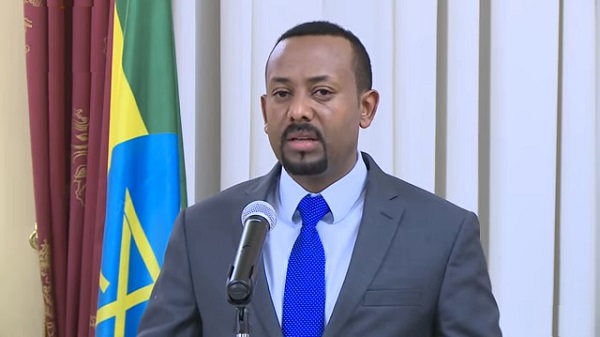

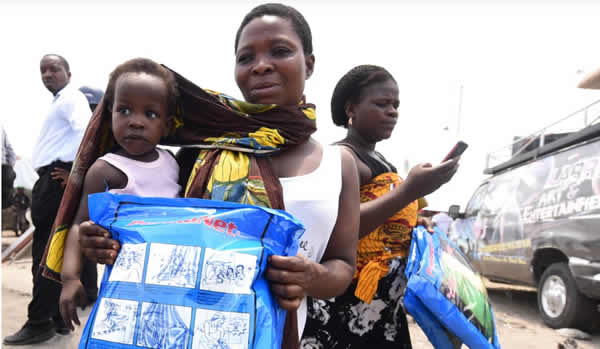
Nigerian President Muhammadu Buhari has launched a council to eradicate malaria and named Africa’s richest man, Aliko Dangote, as its leader. Africa accounts for the vast majority of deaths from the mosquito-borne disease, with nearly a third of victims in Nigeria. But Africa has struggled to eliminate the disease.
The launch of Nigeria’s End Malaria Council, EMC, took place Tuesday at the presidential banquet hall in Abuja.
During the event, Nigerian President Buhari inaugurated the 16-member committee, which will oversee an effort to eliminate malaria in Nigeria within the next eight years.
He appointed business magnate Aliko Dangote as the chairman of the group. Dangote runs a non-profit that has been mobilizing private sector support for malaria control in Africa.
Buhari said the council will advocate for more funding to sustain anti-malaria projects in the country.
“Our inauguration today will ensure that malaria elimination remains a priority on our agenda with strong political commitment from leaders at all levels,” said Buhari. “The successful implementation of the council’s agenda will result in improvement in the quality of life.”
The World Health Organization says Nigeria alone accounts for about 27% of all malaria cases and 32% of malaria deaths globally.
The idea to set up country-led councils to fight malaria in Africa was birthed by the African Union Assembly in 2018 with the stated aim of eliminating the disease from the continent by 2030.
Lack of funding and lack of innovation have been major factors stalling progress, says Lynda Ozor, WHO malaria program chief, who spoke to VOA Tuesday.
“For me it represents the highest political commitment to end malaria. The political commitment which we saw yesterday translates to recommitment to accelerate actions towards ending the disease,” said Ozor. “Malaria is not just a disease but a socioeconomic problem. We hope that in the very near future we should be gearing towards our elimination goal.”
The mosquito-borne disease is endemic in Africa and mostly affects children under five years old, due to low acquired immunity.
Wellington Oyibo, a parasitologist at the University of Lagos, says eradicating malaria will require a multi-pronged strategy. He spoke to a Lagos-based Channels television station.
“With the approval of the vaccine last year, every other control measure – vector control, the use of efficacious medicines, the use of diagnostics to confirm fever before treatment, even going further to the reengineering of the environment will be needed. It’s going to be all tools together,” said Oyibo.
Nigeria is one of more than 20 African countries that have launched country-specific responses to malaria, including Kenya, Zambia, Eswatini, and Uganda.
Source: voanews.com
Related Posts