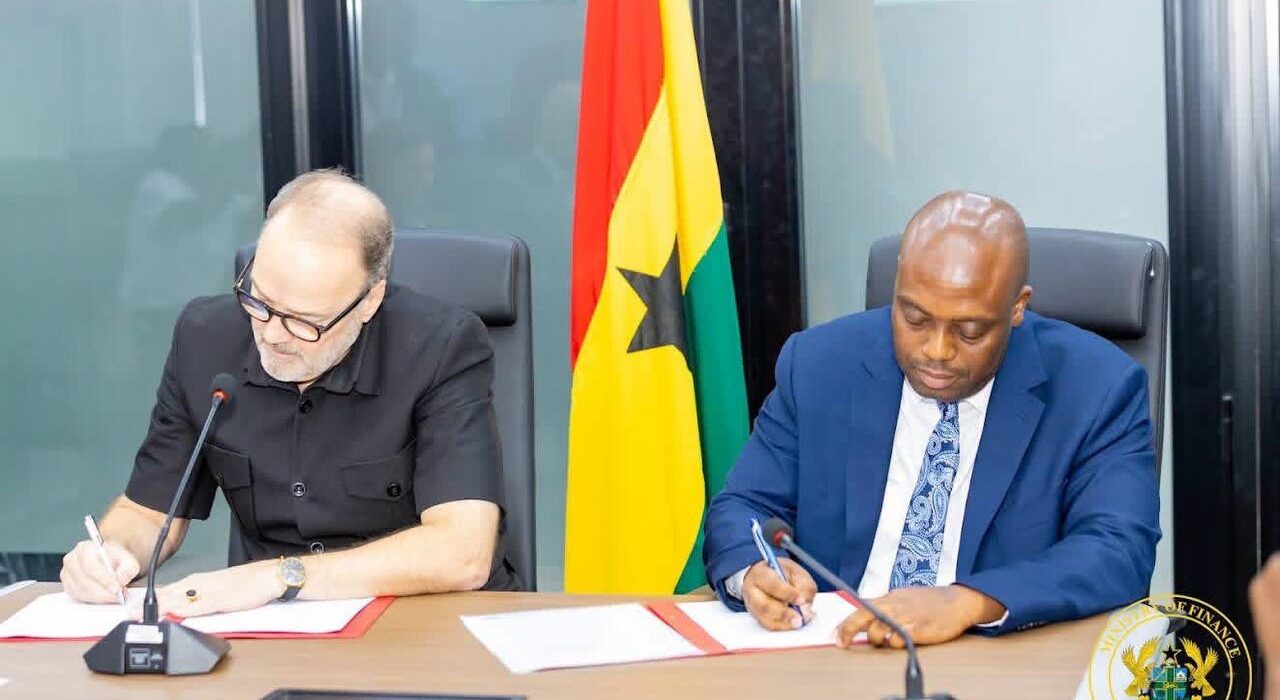
Ghana and Norway have signed an agreement under which Norway will provide up to NOK 100 million in financial support for technical assistance to implement Ghana’s Blue Economy Strategy, aimed at improving marine resource management, strengthening livelihoods and promoting sustainable economic growth.
The agreement, signed on October 19, 2026, establishes a five-year framework for cooperation between the two countries through Norway’s development cooperation agency, Norad, subject to the terms of the agreement and parliamentary appropriations.
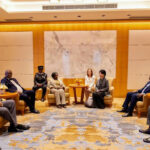
Norway’s Ambassador to Ghana, John Mikal Kvistad, and Deputy Finance Minister Thomas Nyarko Ampem, as the two countries deepen cooperation to advance Ghana’s Blue Economy Strategy.
Speaking on behalf of the Finance Minister at the signing ceremony, Deputy Minister of Finance Thomas Nyarko Ampem described the partnership as an opportunity to strengthen institutions and ensure Ghana’s marine and inland aquatic resources contribute more effectively to national development.
The programme will build on the two countries’ experience under the Fish for Development and Oil for Development programmes, while supporting Ghana’s broader development priorities.
Its objectives include improving food security and incomes, promoting sustainable livelihoods for communities dependent on aquatic resources, strengthening the governance of marine and inland ecosystems, and improving compliance with fisheries and environmental regulations.
The initiative will also support efforts to tackle illegal, unreported and unregulated (IUU) fishing, a persistent challenge to sustainable fish stocks and the livelihoods of fishing communities.
Mr Ampem stressed that the partnership must deliver measurable results, urging implementing institutions, including the Fisheries Commission, the Environmental Protection Authority and the Blue Economy Secretariat, to coordinate their efforts and ensure transparent and efficient use of resources.
“However, we must recognise that partnership comes with responsibility. The resources and technical expertise provided under this programme must be used transparently, efficiently and in pursuit of clearly defined results,” he said.
The agreement follows earlier engagements between Ghanaian officials and the Norwegian Embassy on the proposed Oceans for Development Programme, during which both sides identified sustainable fisheries and aquaculture, marine ecosystem protection, research, digital innovation, blue finance and maritime security as priority areas for cooperation.
Ghana has been working to strengthen the institutional framework for managing its blue economy, including efforts to advance a proposed Blue Economy Commission Bill intended to improve coordination across sectors involved in marine and aquatic resource management.
Mr Ampem expressed Ghana’s appreciation to the Norwegian government for its continued support, saying the partnership should translate shared development ambitions into practical outcomes for both countries.
Ghana’s fisheries cooperation with Norway predates the new Oceans for Development agreement. Under the Fish for Development programme, launched in 2019 with a NOK 50 million grant, Norway worked with Ghana’s Fisheries Commission and the Ministry of Fisheries and Aquaculture Development to strengthen sustainable fisheries management and aquaculture.
Norwegian institutions, including the Institute of Marine Research and the Norwegian Veterinary Institute, supported technical capacity, fisheries data systems, fish health management and regulatory frameworks. The programme concluded in 2026, with an end review identifying progress in technical capacity and fisheries governance.
The partnership has also focused on combating fisheries-related crime. In March 2026, the United Nations Office on Drugs and Crime (UNODC), through its Passenger and Cargo Control Programme, undertook a fisheries-crime mentorship mission in Ghana under FishNET, an initiative funded by Norway.
The engagement brought together UNODC and Ghana’s Fisheries Commission to improve inter-agency coordination and strengthen national authorities’ capacity to detect and address criminal activity in the fisheries sector.
Beyond fisheries enforcement, the two countries have explored wider cooperation in sustainable aquaculture, marine ecosystem protection, ocean research, digital innovation and maritime security.
During a visit to the Apo fishing community in Shama in June 2026, Ghana’s Fisheries Minister, Emelia Arthur, and Norwegian Ambassador John Mikal Kvistad also discussed plans for a modern fishing harbour and a plastic recycling initiative.
By: Nana Kofi Twum-Ampofo Nerrose
Related Posts