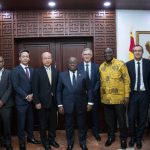

 A project that to seeks to increase latrine coverage and decrease Open Defection, especially among the most vulnerable has been out doored in Accra.
Under the name the United State Agency for International Development’s Water, Sanitation, and Hygiene Partnership and Learning for Sustainability (USAID/WASHPaLS) it would test the effectiveness of targeted subsidies in Open Defecation Free communities.
The USAID/WASHPaLS project, which is under the umbrella of the National Level Learning Alliance Platform hosted by the Ghana WASH Resource Centre Network would focus on the 20 per cent of some selected communities in Kpandai, Yendi and Tatale district Assembly who do not have latrines at ODF areas to provide them with three different latrines that were robust.
Speaking at the launch Jeff Albert, Deputy Project Director USAID/WASHPaLS explained that the project was partnering with the Government, UNICEF WASH Programme to examine if and how subsidies targeted at the most vulnerable might serve to improve the sustainability and equity of behaviour change and sanitation coverage gains from Community Total Led Sanitation (CLTS).
“This is essential to ensure that the research is relevant to government policies and priorities and results are disseminated to decision-makers,” he said.
Globally, he said CLTS had been widely embraced as a strategy to end open defecation, and dozens of countries had incorporated the approach as part of national policy for rural sanitation.
Mr Albert stated that though the “total sanitation “, which focused on CLTS was laudable, there was a reason to believe that the poor and more vulnerable segments of the community do not benefit equally, as they are more likely to construct lower quality twins and revert to open defecation.
Dr Caroline Delaire, a Senior Manager, Research and Programmes at USAID/WASHPaLS clarified that the project would be guided by delving into the extent to which targeted subsidies within ODF-verified communities result in increased latrine coverage, quality, and use among the most vulnerable.
The project, she said would also explore the extent to which these targeted subsidies spill over to the rest of the community and the costs and challenges of implementing a post-ODF targeted subsidy program.
Touching on the methodology, Dr Delaire explained that the project would use a cluster randomized controlled trial in which l00, ODF verified communities in the Northern region of Ghana would be randomly assigned to either a targeted subsidy intervention group or a control group with an expected total sample size of approximately 2800 households.
Source: GNA
Related Posts