

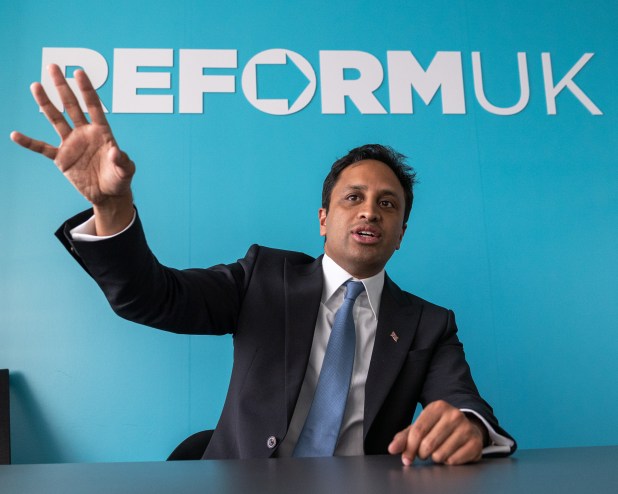
A right-wing populist party in the United Kingdom, Reform UK, has announced plans to block visas for nationals of countries pursuing slave trade reparations, following the adoption of a landmark United Nations resolution on the issue.
The party’s spokesperson, Zia Yusuf, defended the UK’s historical role, emphasizing its contribution as a major colonial power in abolishing the transatlantic slave trade. Yusuf argued that these efforts constitute a form of historical sacrifice and that the UK therefore has no obligation to pay reparations.
He further highlighted that the UK has already contributed £6.6 billion in foreign aid, supporting safety, opportunity, and direct financial assistance in former colonies suggesting that such contributions draws the line on calls for reparations.
The spokesperson added that, if Reform UK wins the next general election with Nigel Farage as Prime Minister, the party would immediately implement a “Reparations Lock”, halting the issuance of visas to countries that officially demand reparations. Yusuf claimed that Britain had issued 3.8 million visas to nationals from these countries, which he described as a privilege that should not be extended in the context of reparations demands.
“A Reform UK government, with Nigel Farage as Prime Minister, will show the backbone that has been missing from Downing Street. Our policy is simple, clear, and firm: the Reparations Lock. From this point forward, should any country formally demand reparations from the United Kingdom, a Reform government will respond immediately. We will halt the issuance of all new visas to its nationals,” Yusuf stated.
Meanwhile, Prime Minister Keir Starmer has dismissed the possibility of paying slave trade reparations, saying his government intends to focus on future-oriented policies rather than dwelling on historical injustices.
The contrasting positions reflect an ongoing debate within the UK over its colonial past. While Reform UK emphasizes punitive measures against countries pursuing reparations, the current Labour government stresses forward-looking development, international cooperation, and addressing contemporary global challenges.
The UK, as a former major colonial power involved in the transatlantic slave trade, continues to face mounting pressure from Caribbean and African nations seeking official apologies and compensation. Yet, no formal reparations have been issued to date, with estimates of potential claims ranging in the trillions of pounds, according to academic and CARICOM analyses.
Estimates of how much the United Kingdom could pay in slavery reparations vary significantly, with some academic assessments running into trillions of pounds. The University of the West Indies Reparations Commission has estimated that the UK could owe between £18 trillion and £19 trillion, based on calculations of unpaid slave labour, economic exploitation and the long-term underdevelopment of formerly colonised regions.
Other economists and researchers have also suggested broader global reparations figures ranging from $7 trillion to $24 trillion, depending on methodology and historical scope.
However, the CARICOM Reparations Commission has not demanded a fixed financial payment. Instead, it has proposed a 10-Point Reparations Plan that includes debt cancellation, development funding, education and health partnerships, technology transfers and a formal apology.
The debate has also drawn attention to the historical precedent where the UK paid £20 million in 1833 — equivalent to roughly £17–£20 billion today, to compensate slave owners following abolition, rather than the enslaved Africans themselves.
The Reform UK stance represents a hardline approach to domestic home affairs and immigration policy, signaling how historical debates over reparations could increasingly influence UK politics, visa policies, and international relations in the coming years.
Related Posts