
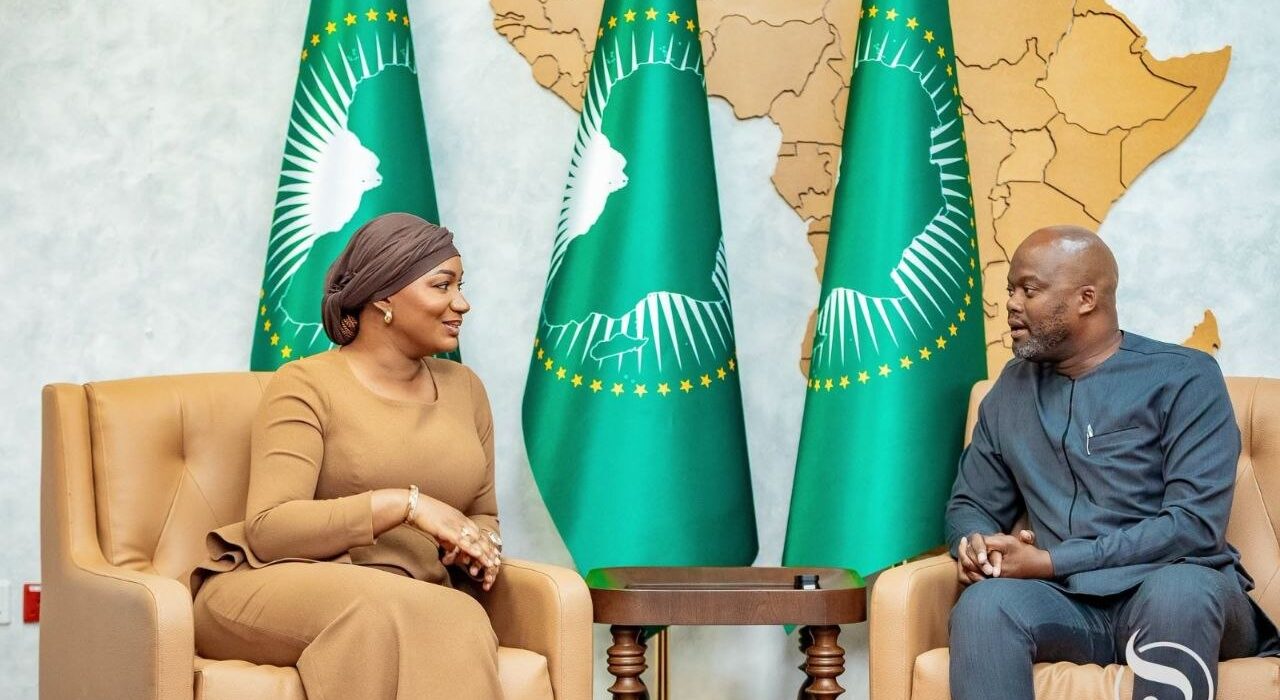
Former Second Lady Samira Bawumia has engaged the Secretary-General of the African Continental Free Trade Area (AfCFTA), Wamkele Mene, on strategies to strengthen the participation of women and young people in Africa’s emerging green economy.
Mrs Bawumia joined Mr Mene at the AfCFTA Secretariat in Accra, where discussions centred on ensuring that women and young people are adequately positioned to benefit from the economic opportunities emerging from Africa’s transition towards greener and more sustainable economies.
She stressed that the inclusion of women and youth must remain central to the implementation of the AfCFTA, particularly as the continent seeks to expand trade, investment, innovation and employment opportunities through the green transition.
“As Africa accelerates the implementation of the AfCFTA, we must ensure that women and young people are not only participants but drivers of Africa’s green and inclusive economic transformation,” she stated.
The green economy is increasingly being viewed as a major source of employment and investment opportunities for Africa. The United Nations Environment Programme (UNEP) projects that restoring nature alone could unlock business opportunities worth about US$10 trillion and create as many as 395 million jobs globally by 2030, while Africa has significant opportunities in renewable energy, sustainable agriculture, nature restoration and the blue economy.
The International Labour Organization has also highlighted the employment potential of Africa’s transition to clean energy, noting that renewable-energy expansion can generate significant new jobs while improving energy access and reducing the health burden associated with traditional fuels.
For Ghana, the transition is already being incorporated into national economic and energy planning. The Energy Commission’s Renewable Energy Master Plan projects that the development of renewable-energy resources could generate about 220,000 jobs by 2030, alongside an estimated US$5.6 billion in investment.
Mrs Bawumia has for several years advocated for stronger participation of women and young people in climate action and the emerging green economy. As founder of the Africa Women and Children Conference (AFRIWOCC), she has used the platform to push for gender-responsive climate policies, greater access to green financing and the inclusion of women and children in climate decision-making.
Her advocacy has also extended to clean energy and technology. As a Global Ambassador for the Clean Cooking Alliance, she has called for greater involvement of women in the design, production and distribution of clean-cooking technologies, arguing that women must have a voice across the clean-cooking value chain.
Ghana is currently expanding policies and financing mechanisms to support green investment. Ghana’s SUNREF programme, implemented with support from the Agence Française de Développement and the European Union, has sought to mobilise private-sector financing for renewable energy, energy efficiency and other environmentally sustainable projects.
Government has further incorporated green growth into its broader economic agenda. The 2026 Budget highlights Ghana’s transition towards a greener, innovation-driven economy, including carbon-market projects, electric mobility, sustainable agriculture, waste-to-compost initiatives and a circular-economy framework for plastics. The framework has already supported SMEs working in biodegradable and recycled materials and contributed to job creation.
Ghana’s Ministry of Finance has also established a Natural Resources, Environment and Climate Change Unit mandated to coordinate financing for climate and green-economy activities and mainstream climate-change and green-economy considerations into national development planning.
At the AfCFTA Secretariat, the discussions therefore placed gender and youth inclusion within the broader question of how Africa can translate its green transition into jobs, enterprise and sustainable economic opportunities, while ensuring that women and young people are positioned not merely as beneficiaries but as active participants in the continent’s next phase of economic transformation.
Related Posts