
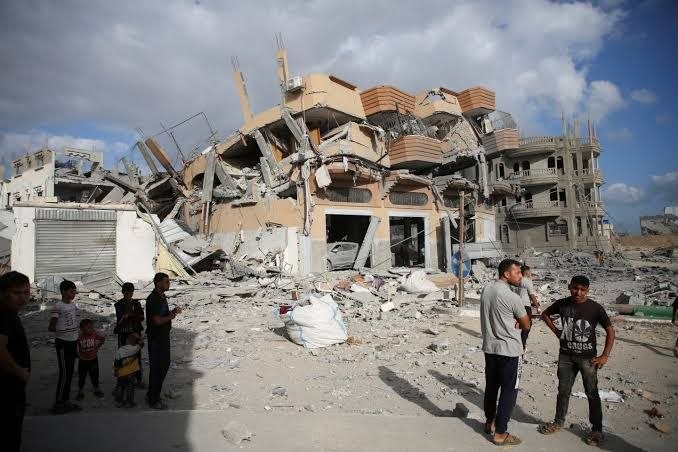
The World Bank Group has identified the prolonged conflict in the Middle East as one of the key external risks to Ghana’s economic outlook, warning that disruptions to global energy markets could weigh on growth, fiscal revenues, inflation and exchange-rate stability.
The warning was contained in the World Bank’s 10th Ghana Economic Update, which projects Ghana’s real GDP growth to ease to 4.8 percent in 2026 as the gains from macroeconomic adjustment begin to taper, oil production softens and higher energy costs linked to the Middle East conflict persist.
The Bank stated that Ghana’s position as an oil producer and major gold exporter provides some cushion against the external shock. However, it cautioned that prolonged disruptions to global trade arising from the conflict could undermine macro-financial stability.
“Real GDP growth is projected to ease to 4.8 percent in 2026 as macro-adjustment gains taper, oil output softens, and energy cost headwinds from the Middle East conflict persist. Ghana’s status as an oil producer and major gold exporter helps cushion the economy, but prolonged global trade disruptions from the Middle East conflict could weigh on macro-financial stability,” the report stated.
The World Bank further identified gold-price volatility, geoeconomic fragmentation and the Middle East conflict among the principal external risks to Ghana’s economic outlook. It said the conflict could raise the cost of energy, food and agricultural inputs, potentially weakening economic growth, reducing fiscal revenues and increasing inflationary and exchange-rate pressures.
The concern is particularly significant for Ghana because disruptions to global energy and shipping routes can quickly translate into higher domestic fuel and transportation costs.
In April, the Middle East conflict had already contributed to month-on-month increases in petrol, diesel and taxi-fare inflation in March, after global crude oil prices rose above US$100 per barrel. The Government Statistician, Dr Alhassan Iddrisu, warned that a sustained reversal in fuel prices could remove one of the major factors that had been helping to keep headline inflation on a downward trajectory.
The Bank of Ghana has similarly warned that the conflict could undermine the country’s improving inflation outlook and put pressure on its external position. Governor Dr Johnson Asiama said that Ghana’s foreign-exchange reserves and inflation outlook faced renewed pressure from rising global energy prices triggered by the conflict. He identified a “dual channel inflation risk” arising from external commodity-price pressures and domestic energy-supply disruptions.
Dr Asiama also warned that the conflict could affect Ghana through its current account and foreign-exchange reserves, particularly if higher energy prices increase the country’s import bill. He noted that the closure of the Strait of Hormuz had contributed to higher global crude oil prices, with direct implications for fuel costs, transport fares, import bills and consumer prices.
Despite these risks, Ghana’s external position has strengthened. The Bank of Ghana reported that gross international reserves had risen to US$14.4 billion as of May 18, 2026, equivalent to about 5.7 months of import cover, compared with US$13.8 billion in December 2025.
The Governor had earlier noted in March that Ghana’s reserves had reached US$14.5 billion, equivalent to 5.8 months of import cover, while stronger gold prices were helping to improve the country’s trade balance and partly offset the inflationary effects of higher oil prices.
The impact of the conflict is therefore likely to be transmitted through several channels. Higher global oil prices increase the cost of petroleum imports, while disruptions to shipping routes can raise freight and supply-chain costs. These pressures can feed into fuel prices, transportation, food and agricultural inputs, ultimately increasing production costs for businesses and the cost of living for households.
For Ghana, the development presents a mixed picture. Higher oil prices can increase earnings from the country’s petroleum exports, while elevated gold prices have significantly strengthened export receipts. However, Ghana remains exposed to higher import costs for petroleum products and other commodities, meaning the net effect of a prolonged conflict could depend on the duration and intensity of the global disruption.
The World Bank’s assessment comes as Ghana continues to consolidate the macroeconomic gains recorded over the past year. The Bank says real GDP grew by 5.8 percent in 2024 and 6 percent in 2025, supported by services and an agricultural recovery, while strong gold exports helped strengthen the current account, reserves and the cedi.
The latest warning therefore points to the Middle East conflict as an external shock that could complicate Ghana’s ongoing economic recovery, particularly if elevated energy prices and disruptions to global trade persist for an extended period.
Related Posts