
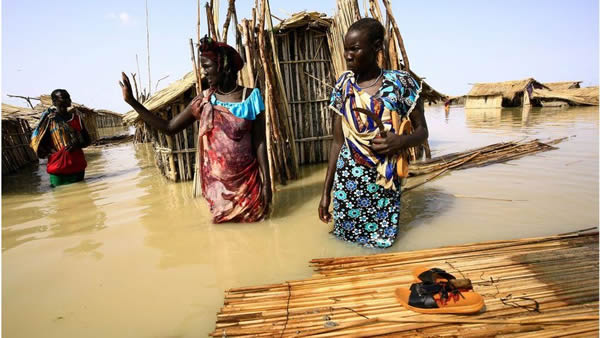
The impact of the calamitous rains that struck East Africa from March to May was intensified by a mix of climate change and rapid growth of urban areas, an international team of climate scientists said in a study published Friday.
The findings come from World Weather Attribution, a group of scientists that analyzes whether and to what extent human-induced climate change has altered the likelihood and magnitude of extreme weather events.
The downpours caused floods that killed hundreds of people, displaced thousands of others, killed thousands of livestock and destroyed thousands of acres of crops.
To assess how human-caused climate may have affected the floods, the researchers analyzed weather data and climate model simulations to compare how these types of events have changed between today’s climate and the cooler pre-industrial one. They focused on regions where the impacts were most severe, including southern Kenya, most of Tanzania and a part of Burundi.
It found that climate change had made the devastating rains twice as likely and 5% more intense. The study also found that with further warming, the frequency and intensity of the rains would continue to increase.
“We’re likely to see this kind of intensive rainfall happening this season going into the future,” said Joyce Kimutai, research associate at Imperial College London and the lead author of the study.
The study also found that the rapid urbanization of East African cities is increasing the risk of flooding.
Highly populated urban areas, especially high-density informal settlements, were significantly impacted by the downpours. Torrential rain flooded houses and roads, in some places exposing weaknesses in urban planning to meet the demands of fast-growing populations.
March to May is “long rains” season in East Africa. It’s when most of the region’s average annual rainfall occurs, and is typically characterized by torrential rains.
East Africa also suffered flooding during the “short rains” of October to December 2023 and before that, it endured a three-year drought. WWA scientists found that both events were worsened by climate change.
Philip Omondi, climate change specialist at the IGAD Climate Prediction and Applications Centre in Nairobi and wasn’t involved in the study, said human-caused impacts result in intense and high-frequency extreme floods and droughts.
Shaun Ferris, senior technical advisor for agriculture and climate change at Catholic Relief Services in Nairobi, said more intense weather put a new level of pressure on old and unplanned buildings and basic infrastructure and there’s a need to put up infrastructure that will be more able to cope with climate change.
“There is huge pressure on basic services,” he said giving the example of Nairobi, whose population has doubled over the past 20 years.
Ferris said that the global community needs to start using the loss and damage fund for climate disasters so they can repair and upgrade their basic infrastructure.
Source: voanews.com
Related Posts