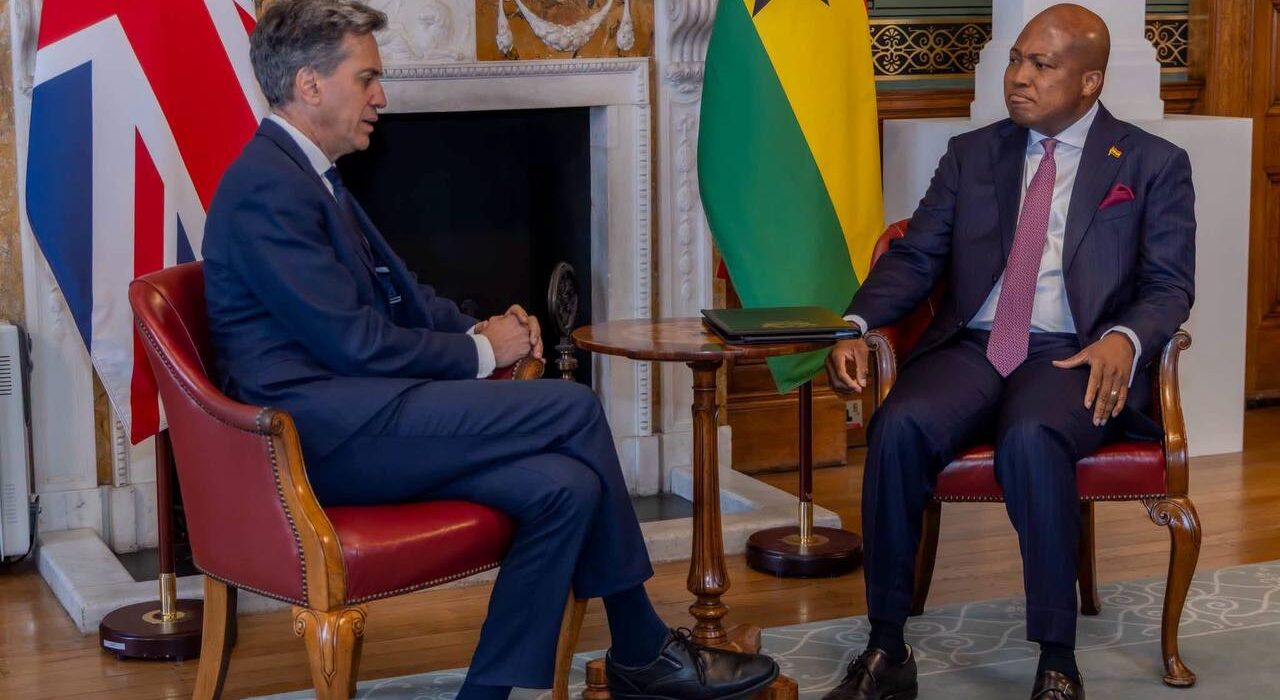
Minister for Foreign Affairs Samuel Okudzeto Ablakwa has announced significant progress in efforts to secure an exemption for Ghanaian students and professionals from the United Kingdom’s International English Language Testing System (IELTS) requirement following engagements with UK Foreign Secretary Ed Miliband.
The latest discussions build on an appeal Mr Ablakwa made to British High Commissioner to Ghana Christian Rogg in January 2026, urging the UK to exempt Ghanaians from the English language examination and its associated fees when applying to study or work in the country.
In an update on the negotiations, Mr Ablakwa said both sides had made considerable progress, with Ghana presenting evidence to support its case for an exemption.
“Thus far, we have demonstrated that Ghana meets the minimum statistical threshold in English proficiency for favourable consideration by our UK friends. Both sides remain highly optimistic,” he said.
The discussions form part of broader efforts to strengthen Ghana-UK relations, with the proposed exemption aimed at reducing the financial and administrative burden on Ghanaians seeking educational and professional opportunities in the UK.
Mr Ablakwa’s appeal rests on Ghana’s longstanding use of English as the medium of instruction from basic education through to tertiary level. Students undertake formal instruction, examinations and academic assessments in English, including the West African Senior School Certificate Examination (WASSCE) and university programmes.
The minister has argued that requiring students who have spent years studying in English to undertake an additional language proficiency examination creates an unnecessary hurdle, particularly for those who already possess recognised academic qualifications.
IELTS assesses proficiency in listening, reading, writing and speaking on a nine-band scale. The examination is widely used by universities and other institutions to assess applicants’ English language abilities.
The cost of taking the test adds to the expenses associated with international education, which can include application fees, visa charges, travel and accommodation. For prospective students from lower-income households, these costs can make overseas study more difficult to pursue.
However, the proposed exemption would require consideration within the UK’s existing English language requirements. Under current UK immigration rules, Ghana is not included on the list of majority English-speaking countries whose nationals automatically meet the English language requirement on that basis.
For student visa applicants, the UK allows certain alternative ways of demonstrating proficiency. These include assessments by universities that are authorised to determine whether applicants meet the required standard, as well as qualifying academic credentials under specified conditions.
The distinction means that a countrywide exemption would require a policy decision by the relevant UK authorities, rather than an automatic change arising from Ghana’s use of English in its education system.
IELTS performance statistics may also inform the discussions. The test’s official reporting includes average scores by nationality for different categories of test-takers. However, average results among people who take the examination do not, on their own, establish that an entire country meets a formal exemption threshold.
For Ghana, the central argument is that its education system already provides sustained instruction and assessment in English, and that this should be taken into account when determining whether applicants need an additional proficiency test.
The outcome of the negotiations could have implications for Ghanaian students pursuing university education in the UK, as well as professionals seeking opportunities in sectors where English proficiency is a requirement.
For now, Mr Ablakwa’s announcement signals progress in Ghana’s efforts to secure the exemption, but no final decision or implementation date has been announced. The next stage will depend on the outcome of discussions with UK authorities and any policy changes required to formalise an exemption for eligible Ghanaian applicants.
Related Posts