

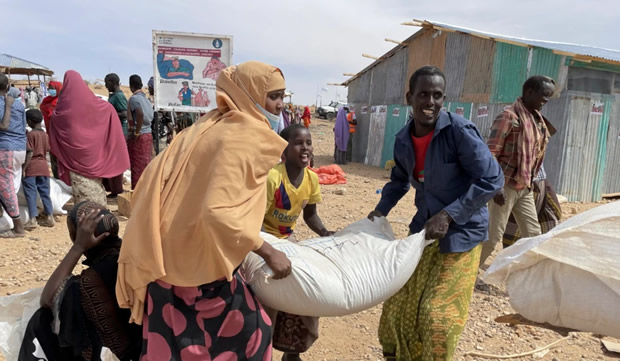
Christine Akuol — not her real name — is just 15 years old but already is the mother of two children.
Three years ago, her impoverished family married her off in exchange for food.
Unfortunately, the man she was married to delivered only pain, both physical and emotional. A scarcity of resources forced her into subsistence farming.
Even that was taken away this year by the persistent floods that have plagued much of South Sudan. Now, like many South Sudanese, Christine is not sure where her next meal is coming from.
She said would welcome any kind of support from NGOs. She said she doesn’t have a room for sleeping because floods destroyed all of her possessions. She said she and her children don’t have food or money for medical treatment.
Joint report describes stark situation
Josephine Lagu, South Sudan’s minister of Agriculture and Food Security, said a report produced by the World Food Program, UNICEF and the Food and Agricultural Organization points to a very worrying situation for South Sudan.
“The most severe acute food insecure populations are in locations with chronic vulnerabilities, worsened by frequent climate-related shocks, severe flooding and dry spells, the war in Ukraine, the macroeconomic crisis, and of course, low agricultural production,” he said. “These chronic vulnerabilities are found in 47 counties.”
George Otto, U.N. humanitarian resident coordinator, said urgent action is needed to save nearly 8 million people, including 1.4 million who could face severe malnutrition.
“The report is here. This is the time for action,” he said. “The U.S. is committed to working hand in hand with the government in its effort to ensure that over time, we’ll be able to address the key particular issue of food security in South Sudan.”
According to the U.N. report, eastern Equatoria, in the country’s southeast, has seen the most significant deterioration in food security among South Sudan’s drought-affected counties.
Meshack Malo, FAO representative in South Sudan, said South Sudan needs urgent support to promote self-reliance through smart agricultural practices that mitigate the impact of climate change.
“It is significantly important that peace, which is one of the factors that affect food security, is put in place,” said Malo. “Second, flooding continues to be a factor. We now need to put into planning. It is just not going to be unprecedented because it is something that has become a reality, so smart agriculture planning is going to be significant so that we plan with these aspects in mind.”
Climate, conflict, climbing costs linked to hunger
Experts say the decline in food security and the high prevalence of malnutrition is linked to a combination of conflict, poor macroeconomic conditions, climate change, and spiraling costs of food and fuel.
A drop in the funding of humanitarian programs despite the steadily rising need also has been cited as a major contributor to the worsening situation.
The U.N. agencies say funding for next year’s humanitarian response in South Sudan is needed within the next few months, or agencies will be unable to position aid, leaving millions of families at risk of sinking deeper into hunger.
Source: voanews.com
Related Posts