

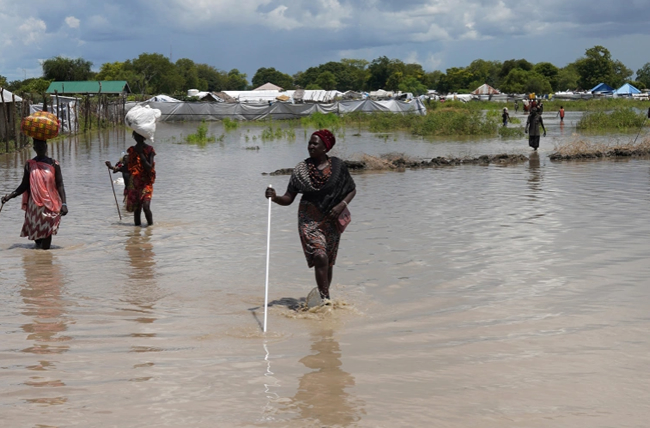
A new report finds half of all countries globally lack early warning systems that could save lives by alerting communities of impending disasters, including typhoons, droughts, and heatwaves. The joint report by the U.N. Office for Disaster Risk Reduction, or UNDRR, and the World Meteorological Organization is being released to mark the International Day for Disaster Risk Reduction.
Extreme weather is increasing in frequency and intensity. The United Nations estimates up to 3.6 billion people live in areas that are highly vulnerable to climate change and related disasters. It says the number of recorded disasters has increased by a factor of five, driven in part by human-induced climate change and more extreme, unpredictable weather events.
The UNDRR predicts 560 disasters will take place annually by the year 2030. It warns the number of droughts will increase by 30 percent and the number of scorching heatwaves will triple by 2030.
Loretta Hieber Girardet is UNDRR’s chief of the risk knowledge, monitoring and capacity development branch. She says the best ways for communities to protect themselves and to adapt to climate change is to scale up early warning systems. Yet, she notes only half of the world has functioning systems in place.
“This means that one out of three people globally, primarily in small island developing states and least developed countries and six out of every 10 persons in Africa lack access to effective early warning systems,” Girardet said. “This is unacceptable.”
She says lack of early warning leads to loss of lives and livelihoods and unnecessary damage to assets. She says new data show disaster-related deaths are eight times higher in countries with limited early warning coverage than in those that have comprehensive systems in place.
“And yet we know that early warnings by only 24 hours can cut the ensuing damage by 30 percent…A climate-related hazard does not have to translate into a disaster,” Girardet said. “It becomes a disaster because communities are not prepared and because the vulnerabilities and exposures of that community has not been mitigated.”
Many early warning systems cover only one type of hazard, like floods or cyclones. However, given the many extreme, unpredictable climate-change-related events, the United Nations urges countries to invest in multi-hazard early warning systems. Such systems, it notes, can address several climate-induced disasters that may occur simultaneously.
Source: voanews.com
Related Posts