
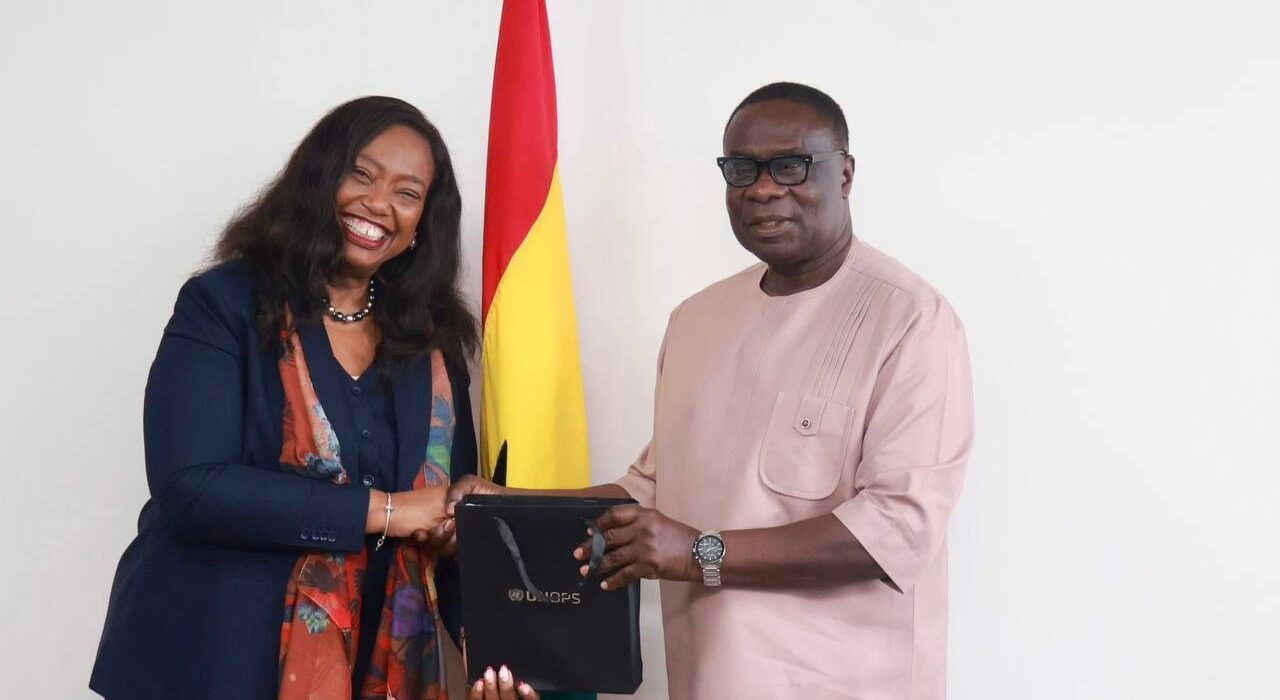
The Deputy Chief Executive Director of the United Nations Office for Project Services (UNOPS) has expressed the agency’s interest in deepening collaboration with the Government of Ghana, particularly in mobilizing climate finance as the country develops its Roadmap for Climate-Resilient Infrastructure.
She emphasized the importance of this partnership, noting UNOPS’ commitment to supporting Ghana in climate-finance mobilization and the development of bankable, climate-smart projects.
Climate financing remains a critical gap in Ghana’s National Climate Policy, which requires an estimated $22.6 billion by 2030 to fully implement the country’s Nationally Determined Contributions (NDCs) under the United Nations Framework Convention on Climate Change (UNFCCC).
The UNOPS official made these commitments during a working visit to the Deputy Minister of Foreign Affairs, James Gayle Quayson, as the agency marks ten years of operations in Ghana, contributing to major national development initiatives.
Among UNOPS’ ongoing climate-resilient interventions are health system strengthening through the provision of medical and non-medical equipment to the Ghana Health Service, sustainable procurement programmes, and institutional capacity-building collaborations with state agencies.
Ghana, though a minor contributor to global greenhouse gas emissions, continues to face significant climate impacts, including rising temperatures, rainfall variability and coastal vulnerability driven by sea-level rise.
However, the country’s ability to secure adequate funding for climate-resilient programmes remains constrained. Weak adherence to the Public Financial Management Act by some Metropolitan, Municipal and District Assemblies (MMDAs), coupled with gaps in implementation, has undermined confidence in domestic financial management systems.
To address these constraints, Ghana established the Climate Financing Division (CFD), a unit responsible for mobilizing and managing financial resources to support the country’s climate-resilient development agenda.
The Division plays a pivotal role in aligning climate finance initiatives with national and international climate commitments, including the Sustainable Development Goals (SDGs), the Paris Agreement, and Ghana’s Nationally Determined Contributions (NDCs).
Ghana committed to 31 mitigation and adaptation actions across seven economic sectors in its NDCs submitted in 2015 and reinforced this commitment by ratifying the Paris Agreement in 2016. This step signaled strong political will to both Ghanaians and the international community that Ghana is acting decisively, together with other nations, to combat climate change
Related Posts