
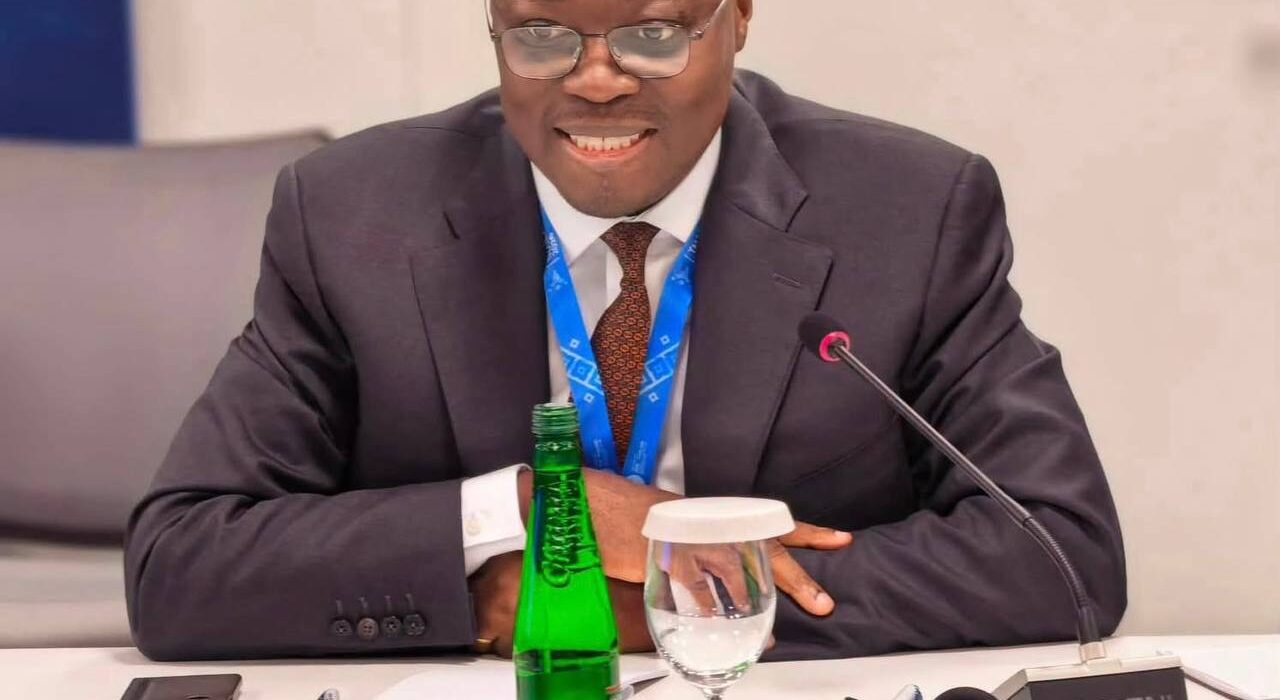
Ghana’s Finance Minister, Dr Cassiel Ato Forson, has expressed confidence that the country will outperform the International Monetary Fund’s (IMF) economic growth forecast, citing the government’s commitment to fiscal discipline and reforms aimed at sustaining the economic recovery.
He reaffirmed the government’s position during a high-level meeting with the IMF’s African Department Director, Zeine Zeidane, on the sidelines of the IMF and World Bank Group Annual Meetings in Bangkok, Thailand.
The meeting comes as Ghana seeks to consolidate the gains made under its IMF-supported Extended Credit Facility (ECF) programme and transition from economic stabilisation to sustained growth and development.
During the engagement, Mr Zeidane commended Ghana for its performance under the programme, which was approved in May 2023 to support the country’s recovery from a severe economic crisis that undermined debt sustainability and restricted its access to international capital markets.
“I want to first commend you on how you are performing. The ECF was a great success. We tell others to follow your steps,” he said.
Ghana’s 39-month ECF arrangement was designed to restore macroeconomic stability and debt sustainability through fiscal consolidation, debt restructuring, tighter monetary and exchange-rate policies, and structural reforms.
The IMF Executive Board completed the programme’s sixth and final review in July 2026, authorising a final disbursement of approximately US$371 million and bringing total disbursements under the arrangement to about US$3 billion.
The Fund’s assessment also highlighted improvements in Ghana’s economic indicators. Real gross domestic product grew by 6 per cent in 2025, while the economy expanded by 6.4% year-on-year in the first quarter of 2026.
The primary fiscal balance recorded a surplus equivalent to 2.1% of GDP in 2025, while gross international reserves reached approximately US$11.9 billion by the end of that year.
The gains have been supported by fiscal adjustment measures, progress in debt restructuring and efforts to strengthen public financial management. However, the IMF has emphasised that sustaining the recovery will require continued discipline, stronger domestic revenue mobilisation and improved oversight of state-owned enterprises, particularly in the energy and cocoa sectors.
Among the government’s fiscal measures has been the tightening of expenditure controls, an audit of outstanding government payables and commitments, and a review of public investment projects to identify those that should be cancelled, rescaled or rescheduled based on their value for money and alignment with available resources.
The government has also pursued changes to public procurement rules to limit the use of emergency and single-source procurement procedures, strengthening competition and accountability in the award of public contracts.
Another key reform is the establishment of the Value for Money Office, intended to independently assess major government programmes, projects and contracts before public funds are committed. The IMF’s programme documents indicate that the office is being operationalised, with full implementation targeted for June 2027.
The reforms are intended to improve the efficiency of public expenditure and reduce the risk of poorly planned projects, excessive costs and commitments that exceed the government’s available resources.
In July 2026, the IMF also completed its review of Ghana’s economic programme and considered a proposed 36-month Policy Coordination Instrument, a non-financing arrangement intended to anchor reforms beyond the ECF and help attract development and market financing.
Dr Ato Forson said his engagement with the Fund’s African Department Director provided an opportunity to reaffirm the government’s commitment to maintaining fiscal credibility, strengthening discipline and pursuing reforms to support growth beyond the IMF’s projections.
“In Bangkok, I met with the IMF’s African Department Director, Zeine Zeidane, and reaffirmed our commitment to the fiscal credibility, discipline and bold reforms powering Ghana’s economic turnaround,” he said.
The government is now preparing to outline its next phase of economic policy through the proposed New Economy framework and the 2027 Budget, with the focus expected to shift from stabilisation towards sustained economic transformation.
While the completion of the ECF programme marks a significant milestone in Ghana’s recovery efforts, maintaining the gains will depend on the government’s ability to sustain fiscal discipline, manage public debt and translate improving macroeconomic indicators into jobs, investment and better living conditions for Ghanaians.
Related Posts