The World Bank Group is proposing a new Country Partnership Framework (CPF) for Ghana covering 2027 to 2032, with an estimated US$2.7 billion in International Development Association (IDA) financing aimed at addressing the country’s development challenges and creating more and better jobs.
At the centre of the proposed framework is the recognition that Ghana’s economic growth has not generated sufficient productive, private-sector employment opportunities.
According to the World Bank Group’s 2026 Growth and Jobs Report, Ghana has recorded average annual GDP growth of about 5.8% but the gains have not translated into enough formal employment, with only one in 11 new working-age Ghanaians securing a formal job.
The proposed CPF seeks to address this gap through four strategic areas designed to strengthen macroeconomic stability, stimulate private-sector growth, improve skills and employment opportunities, and expand resilient infrastructure.
The first priority focuses on improving macroeconomic stability and strengthening public policies that support sustainable growth. Proposed interventions include improving domestic revenue mobilisation, public financial management and debt management, while advancing reforms in the energy sector and state-owned enterprises.
The framework also seeks to improve the business environment and access to finance to encourage private-sector investment and help firms expand. Support is expected to target sectors with strong job-creation potential, including agriculture, agribusiness, manufacturing and irrigation, while mobilising additional private capital through investments and guarantees.
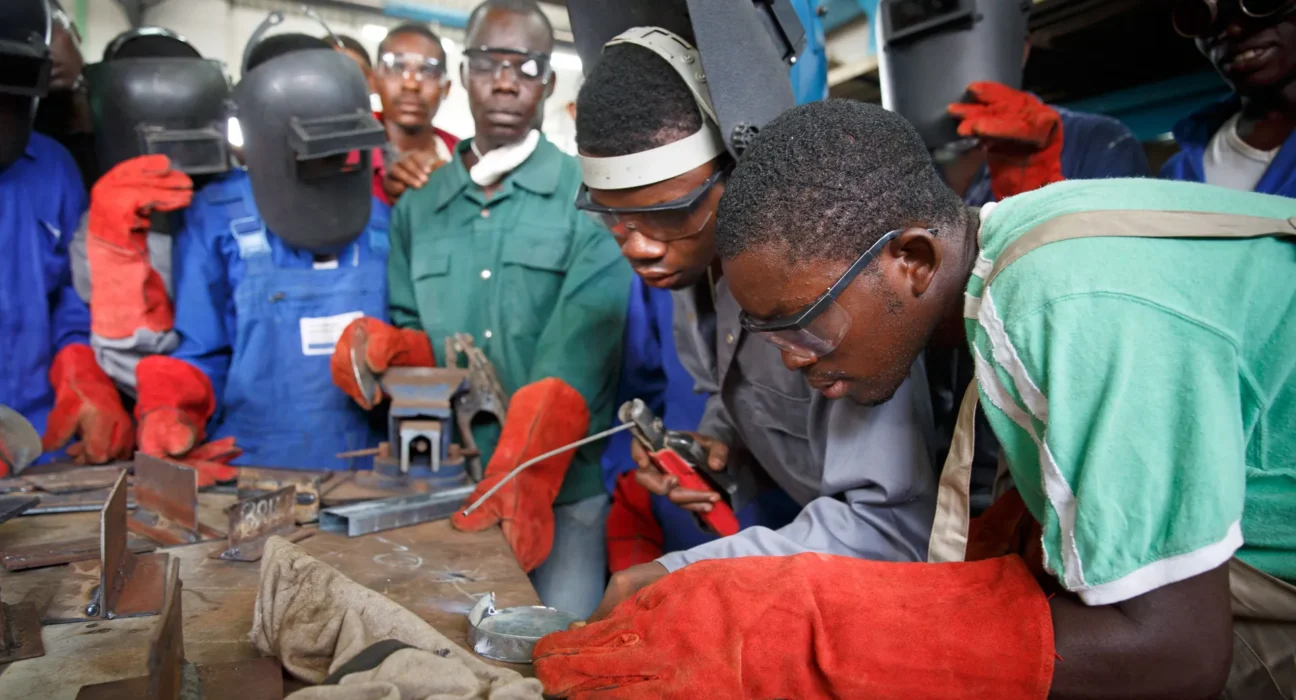
A key component of the strategy will focus on addressing skills and inclusion challenges, particularly among young people and women. The World Bank Group proposes increased investment in education, technical and vocational education and training (TVET), and digital skills to improve employability and strengthen the transition from school to work.
The fourth priority centres on expanding resilient infrastructure and addressing climate-related constraints to economic growth. Proposed investments include feeder roads and connectivity, energy and digital infrastructure, natural-resource management and climate resilience.
The proposed framework responds to several structural challenges identified in the Growth and Jobs Report, including macro-fiscal fragility, weak firm growth, low agricultural productivity, skills gaps and persistent infrastructure and climate constraints.
The report notes that weaknesses in domestic revenue mobilisation, public expenditure and financial management, as well as debt-related risks, have limited the government’s capacity to make sustained investments in infrastructure and other sectors critical to job creation.
Many businesses, particularly small and informal enterprises, also face challenges accessing finance, navigating regulations and expanding their operations, limiting their ability to increase productivity and create employment.
Agriculture, meanwhile, continues to face fragmented value chains, limited irrigation and processing capacity, and weak connections between producers and markets, reducing the sector’s potential to generate higher incomes and jobs.
The proposed CPF will bring together public and private financing across the World Bank Group to support a coordinated approach to Ghana’s development priorities.
By combining macroeconomic reforms, private-sector investment, skills development and infrastructure expansion, the World Bank Group said the proposed framework aims to help Ghana translate economic growth into more productive employment opportunities and improved livelihoods.
The Country Partnership Framework is currently undergoing consultations with key stakeholders, including government institutions, civil society organisations and other development partners, ahead of its finalisation for the 2027–2032 period.
The engagement focused on identifying Ghana’s most pressing development priorities over the next six years, the biggest barriers to creating more and better jobs, particularly for women and young people, and key areas requiring reform and investment.
Discussions also explored how accountability, citizen engagement and implementation could be strengthened to improve development outcomes, results and service delivery.
Related Posts