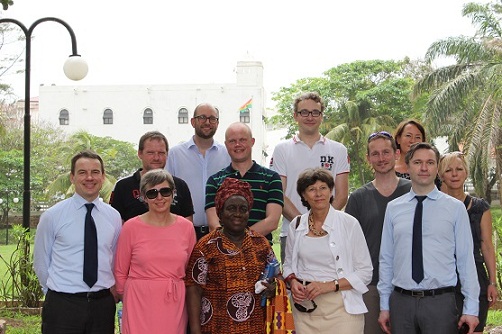

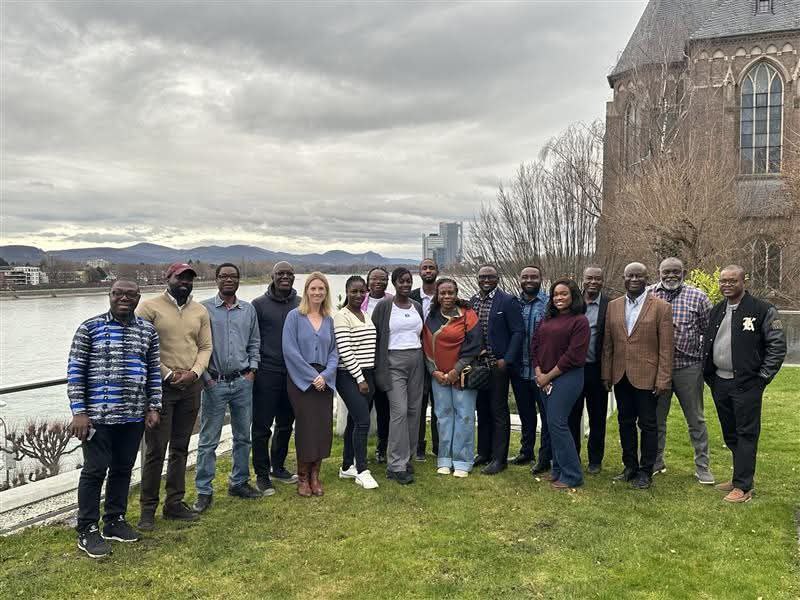
The EU–Germany–Ghana Joint Action for Jobs, Migration and Development (JMD) has held an information session for Diaspora Focal Persons, in close collaboration with the Diaspora Affairs Office at the Office of the President, to promote informed diaspora investment in Ghana as a driver of socio-economic development.
The engagement forms part of JMD’s broader objective to bridge critical information gaps that often push individuals into irregular migration, by providing credible, practical and up-to-date guidance on investment opportunities, business registration processes and regulatory requirements in Ghana. Organisers noted that access to accurate information remains a key factor in enabling diaspora communities to make sustainable economic decisions at home.
Participants received first-hand briefings from major public sector institutions, including the Ghana Investment Promotion Centre (GIPC), Lands Commission, Office of the Registrar of Companies, Ghana Revenue Authority (GRA), Food and Drugs Authority (FDA), Ghana Standards Authority (GSA) and the Ghana Ports and Harbours Authority (GPHA). These institutions outlined procedures for land acquisition, business registration, tax compliance, product certification and import–export processes.
The session also sought to strengthen the role of Diaspora Focal Persons as trusted information conduits, enabling them to support prospective investors with accurate guidance and reduce exposure to misinformation that often complicates business set-up and investment decisions.
JMD was established to enhance the capacities of both state and non-state actors involved in migration governance, employment promotion and youth empowerment. The initiative provides counselling and labour market information covering Ghana, Germany, Europe and the wider West African sub-region, helping young people make informed choices about employment, migration and skills development.
Since its inception, the programme has supported over 70,000 Ghanaians through short-term skills training, job placements, business start-ups, counselling and psycho-social support. It has also rolled out the ‘JOBS’ (Just One Bold Step) Roadshow Campaign, in collaboration with the Ministry of Labour, Jobs and Employment, to take employment and migration information directly to communities.
Officials noted that irregular migration often leaves migrants without access to decent work, exposing them to exploitation and limited legal protections in destination countries. In response, Germany and the European Union continue to advance a development-oriented approach to migration management, focused on job creation, skills development and investment at source as sustainable alternatives.
Migration remains a significant part of Ghana’s socio-economic landscape, with close to 1.05 million Ghanaians living abroad as of 2025, and an estimated 29% residing in Europe, according to the latest migration briefs. Data from the Ghana Statistical Service shows that more than 37% of Ghanaian emigrants migrated to Europe in 2021, reflecting long-standing ties and ongoing movement between Ghana and European countries.
Irregular migration, in particular, continues to pose serious risks for young Ghanaians seeking opportunities abroad. Reports have documented thousands of Ghanaians being repatriated from Libya after attempting to reach Europe via unsafe routes, and a significant share of migrants returning home voluntarily through EU-supported programmes since 2017.
These patterns highlight the dangers of irregular routes, with only a small fraction of those attempting such journeys ever reaching their intended destinations, and underscore the importance of development-oriented initiatives that provide safer, informed pathways for employment, training and investment
Related Posts