

Ghana and Spain are set to sign a Labour Mobility Agreement aimed at creating structured employment opportunities for Ghanaian youth to work in Spain under improved and regulated working conditions.
The proposed agreement comes amid Spain’s landmark decision to grant legal status to approximately 500,000 undocumented migrants, a move intended to address labour shortages caused by the country’s ageing population.
The policy is expected to expand Spain’s workforce, particularly in sectors such as agriculture, construction, hospitality, and care services, where demand for labour continues to rise. The regularisation programme is part of broader migration reforms designed to ensure safe, orderly, and legal pathways for foreign workers while strengthening Spain’s economy.
Ghana’s Minister for Foreign Affairs, Samuel Okudzeto Ablakwa, announced the labour mobility initiative, which is complementary to the government’s broader national agenda of job creation as Ghana explores employment opportunities beyond its borders. The move is also expected to reduce irregular migration by providing structured and legally protected employment pathways.
The announcement follows high-level engagements undertaken by the government, including diplomatic discussions during the Vice President’s official interactions aimed at deepening bilateral cooperation between Ghana and Spain. The agreement is expected to formalise labour migration channels while ensuring protection of Ghanaian workers’ rights.
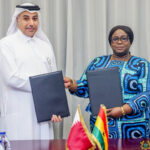
This would be the second labour mobility agreement to be pursued under President John Mahama’s second term, following a similar agreement reached with the State of Qatar. The Ghana–Qatar Labour Mobility Agreement targets the deployment of up to 50,000 Ghanaian workers to Qatar by 2030, up from an estimated 13,000 currently working in Doha. The agreement also established a Joint Technical Committee to oversee recruitment processes, ensure transparency, and monitor working conditions.
Under the Qatar arrangement, both countries agreed on structured recruitment, improved welfare protections, and skills development collaboration. The agreement further guarantees better working conditions, regulated contracts, grievance mechanisms, and stronger diplomatic oversight to protect Ghanaian workers abroad. It also aims to reduce exploitation and informal recruitment practices by introducing government-backed deployment channels.
The proposed Ghana–Spain agreement is expected to follow a similar framework, focusing on mutual benefits. Spain is projected to strengthen its workforce to support its ageing population and sustain economic growth, particularly in labour-intensive sectors.
Spanish Prime Minister Pedro Sánchez has previously emphasised that migrants play a crucial role in supporting the country’s economic expansion and social security system.
On the Ghanaian side, the initiative is expected to help reduce unemployment, which currently stands at approximately 12.8%. Job creation was a central pillar of the government’s campaign ahead of the 2024 elections, when unemployment was estimated at around 14%.
The labour mobility strategy is therefore positioned as part of a broader effort to create employment opportunities, enhance skills transfer, and increase remittance inflows to support national development.
The agreement is also expected to include safeguards to ensure fair recruitment, decent working conditions, and protection of workers’ rights, while strengthening bilateral relations between Ghana and Spain through structured labour cooperation.
Beyond employment creation, the agreement is expected to strengthen Ghana–Spain bilateral relations, expand economic cooperation, and enhance people-to-people exchanges. It also underscores Ghana’s increasing engagement in labour diplomacy as part of its international economic strategy.
The anticipated agreement reflects a growing trend of structured labour partnerships between African countries and European economies seeking to address demographic challenges while supporting development outcomes in labour-sending countries.
Related Posts