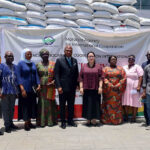


Ghana’s Minister for Labour, Jobs and Employment, Abdul-Rashid Hassan Pelpuo, has called for intensified innovation, stronger partnerships and sustainable financing mechanisms to end preventable maternal deaths across Africa.
He made the call on April 13, 2026, at the United Nations Headquarters in New York, where he addressed a high-level side event of the United Nations Population Fund (UNFPA) during the 59th Session of the Commission on Population and Development (CPD59).
Speaking at the session themed “The Infrastructure of Survival: Harnessing Technology, Innovation and Catalytic Capital to End Preventable Maternal Deaths in Africa,” the Minister described maternal mortality as a critical development, equity and human rights challenge, noting that Africa still accounts for nearly 70 percent of global maternal deaths.
He emphasised that while progress has been made over the years, the persistence of preventable maternal deaths underscores the need for urgent, coordinated and results-driven action.
Mr. Pelpuo further stressed the importance of translating political commitments into measurable outcomes, noting that strong policy frameworks must be backed by implementation, accountability and sustained investment.
Highlighting Ghana’s approach, he referenced key national interventions including free maternal healthcare under the National Health Insurance Scheme, the Community-based Health Planning and Services (CHPS) programme, and targeted initiatives such as the Presidential Initiative on Maternal Health Emergency Rescue (PRIMER), which seeks to elevate maternal health to a cross-sectoral national priority.
He also pointed to broader efforts to expand primary healthcare access, strengthen universal health coverage, and integrate digital health innovations such as telemedicine and data-driven systems to improve maternal health service delivery.
The Minister further underscored the need for Africa to build health sovereignty through strengthened local manufacturing, harmonised regulatory systems and improved regional supply chains to ensure equitable access to essential medicines.
He highlighted innovation as central to the solution, citing the need to scale up technologies such as real-time inventory tracking systems, digital forecasting tools and drone delivery of critical medical supplies to bridge last-mile healthcare gaps.
On financing, Mr. Pelpuo called for a decisive shift from donor dependency to sustainable domestic resource mobilisation, while encouraging catalytic financing models and stronger partnerships with development partners and the private sector to scale impact.
“How do we convert commitments into sustained investments and tangible results?
The answer lies in ownership.
We must move decisively from donor dependency to domestic sustainable financing and resource mobilization, ensuring that our national budgets reflect our priorities especially in safeguarding maternal and newborn health”
Emphasising the urgency of action, the Minister delivered a strong call to protect maternal lives through collective responsibility.
“No woman should lose her life while giving life especially when we possess the technical expertise, the tools, and the innovations to prevent it,” he stated.
The high-level session formed part of global efforts led by UNFPA to advance solutions at the intersection of population dynamics, technology and sustainable development.
By Hussein Habibata Maltiti
Related Posts