
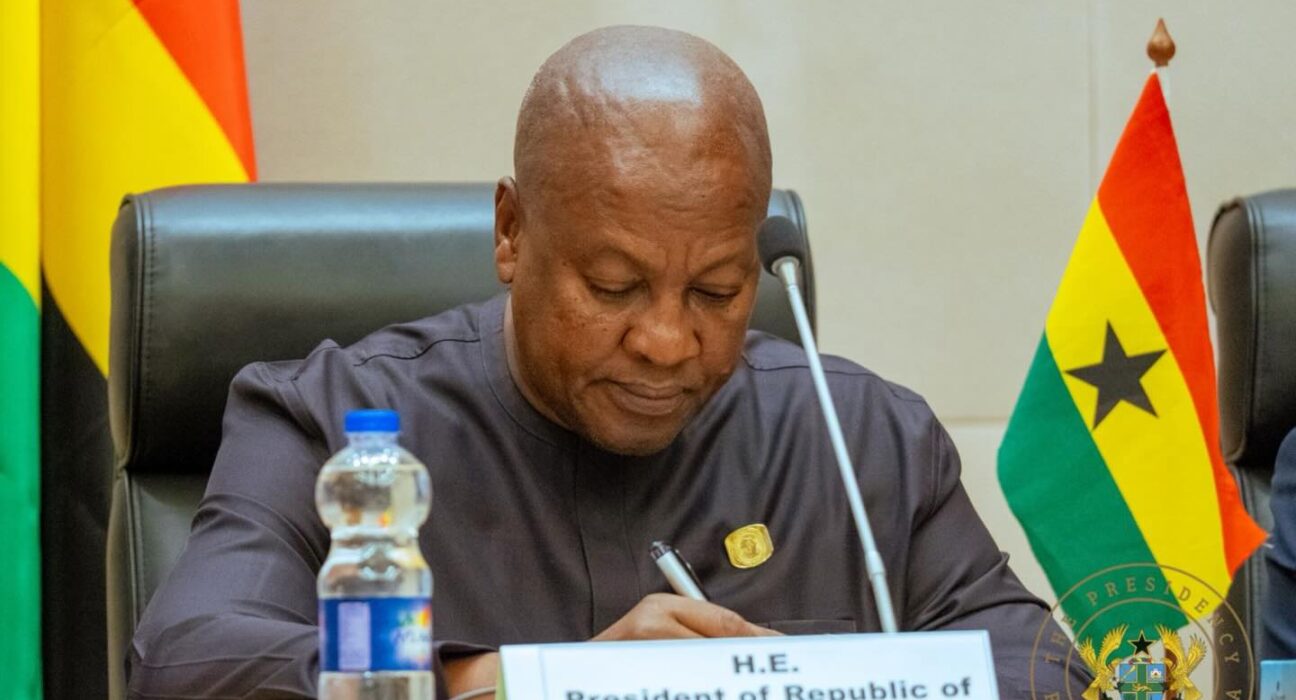
President John Dramani Mahama has declared that reparatory justice for Africa “will not be handed to us,” insisting that it must be secured through unity, strategy and determination across the continent.
Addressing the Assembly of Heads of State and Government of the African Union, Mahama underscored that the campaign for reparations has entered a decisive phase, but warned that sustained collective effort is required to achieve meaningful outcomes.
Referencing his earlier remarks at the 80th Session of the United Nations General Assembly in September last year, Mahama revealed that he has initiated processes to table a resolution before the General Assembly in March seeking global recognition of the Transatlantic Slave Trade as the gravest crime against humanity. He described the move as part of a broader diplomatic push to elevate the issue beyond moral debate into formal international acknowledgment.
“Reparatory justice will not be handed to us. Like independence, it must be secured through unity and determination,” Mahama stated, drawing parallels between the continent’s historic struggle for political liberation and its present quest for historical justice. He stressed that Africa must approach the issue with clarity of purpose and a unified voice in global forums.
According to the him, 2025 designated as the African Union Year of Justice through Reparations, has already marked a turning point in reframing the global conversation. He told fellow Heads of State that structured institutional steps have been taken to transform reparations from a symbolic demand into a coordinated continental agenda.
Mahama disclosed that an AU Coordination Team and a Committee of Experts on Reparations have been established to drive the process forward. He noted that engagements have been initiated with major global institutions, including the United Nations and UNESCO, alongside sustained advocacy across four continents to build diplomatic consensus.
He emphasized that the conversation on reparations must move beyond historical grievance and instead focus on forward-looking instruments for justice and equity. In his view, reparations should encompass formal apologies, restitution, development partnerships and binding agreements that address structural inequalities rooted in slavery and colonial exploitation.
However, Mahama cautioned that the work is far from complete. He called on all AU Member States to strengthen domestic institutions, establish national reparations commissions and align national policies with continental objectives. Without coordinated national frameworks, he warned, Africa risks weakening its collective negotiating position.
Concluding his remarks, Mahama urged African leaders to maintain solidarity and strategic focus, arguing that reparations represent not only a moral claim but a matter of economic justice and global equity. He reiterated that just as independence was won through collective struggle, reparatory justice must be pursued with the same resolve, discipline and continental unity.
Africa’s campaign for reparatory justice has moved from academic debate and grassroots advocacy to the forefront of continental and international policy, anchored by the African Union’s decision to designate 2025 as the “Year of Justice for Africans and People of African Descent Through Reparations.”
This initiative reflects decades of collective effort by African states and diaspora partners to seek accountability for historical injustices, including the transatlantic slave trade, colonialism, apartheid and systemic discrimination.
At the heart of this agenda is the African Union’s effort to establish frameworks and institutional mechanisms—such as the Committee of Experts on Reparations and an African Reparations Fund, to craft a common continental position and strategy for reparatory justice, including restitution, financial and developmental redress, and global cooperation.
Building on this platform, African states are increasingly engaging international bodies to secure formal recognition and legal frameworks for reparations. Additionally, high-level global dialogues like the Africa Dialogue Series at the UN headquarters have brought African leaders, UN officials and diaspora representatives together to push for transformative justice that goes beyond apologies to include accountability, restitution and structural reform.
These efforts signal a growing continental commitment to turn historical recognition into enforceable rights and equitable outcomes on the world stage.
Related Posts