
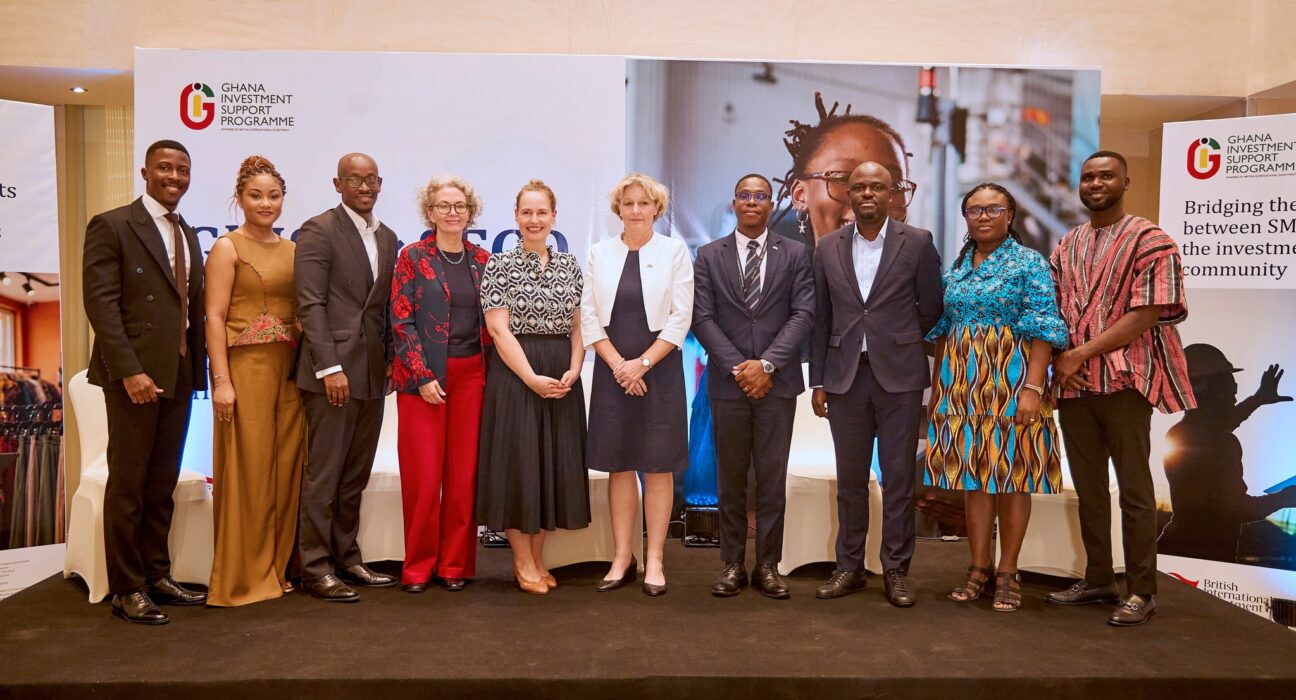
The Swiss Government has reaffirmed its commitment to supporting a resilient Ghanaian private sector that drives inclusive and sustainable growth through its partnership in the Ghana Investment Support Programme (GhISP).
Through its development agency, the Swiss State Secretariat for Economic Affairs (SECO), Switzerland has joined forces with the anchor sponsors of the programme, including British International Investment (BII) and the United Kingdom’s Foreign, Commonwealth and Development Office (FCDO).
The partnership is designed to mobilise long-term capital into Ghana’s private sector by supporting private capital investors and financial institutions to expand financing for small and medium-sized enterprises (SMEs).
The programme also works with pension funds to increase allocations to private capital investments in Ghana, while offering pipeline development, investment readiness support and deal matchmaking services to strengthen both the demand and supply sides of SME finance.
The initiative underscores Switzerland’s broader objective of contributing to a thriving private sector and boosting employment opportunities by expanding financing to SMEs, which remain the backbone of Ghana’s economy.
According to data from the Ghana Statistical Service and the Ministry of Trade and Industry, SMEs account for more than 90 percent of registered businesses in Ghana and contribute an estimated 60 to 70 percent of total employment. They also play a significant role in GDP generation, particularly in sectors such as agriculture, manufacturing, trade and services.
Despite their centrality to the economy, Ghanaian SMEs face persistent structural constraints. Access to affordable long-term financing remains one of the most critical challenges, with lending rates historically elevated and collateral requirements often prohibitive.
Many SMEs operate informally or lack the financial records required to attract institutional investors. Limited technical capacity, weak corporate governance structures and inadequate integration into regional and global value chains further constrain growth. In addition, macroeconomic volatility in recent years has tightened liquidity conditions and increased the cost of capital, reducing the ability of smaller firms to scale operations and create jobs.
The Ghana Investment Support Programme is designed to address these systemic bottlenecks. By strengthening Ghana’s private capital ecosystem, the programme aims to crowd in domestic and international investment, de-risk SME financing and improve the quality of investment pipelines.
On the supply side, GhISP works directly with private equity funds, venture capital firms and financial institutions to enhance their capacity to deploy capital effectively. On the demand side, it supports SMEs to become investment-ready through improved governance, financial management and sustainability practices.
The anticipated impact is significant. Increased access to patient capital is expected to enable SMEs to expand production, formalise operations, adopt climate-smart technologies and create decent jobs, particularly for young people and women.
By encouraging pension funds and institutional investors to diversify into private capital, the programme also helps deepen Ghana’s domestic capital markets and reduce overreliance on short-term bank financing. Over time, this could lead to a more resilient and diversified economy capable of withstanding external shocks.
The Swiss Embassy in Ghana has expressed appreciation to the Foreign, Commonwealth and Development Office and British International Investment for their leadership in strengthening Ghana’s investment ecosystem.
The collaboration reflects a broader pattern of bilateral economic cooperation between Switzerland and Ghana, rooted in sustainable development, private sector competitiveness and responsible investment. Switzerland has long supported Ghana through technical assistance, trade facilitation initiatives and economic reform programmes aimed at enhancing productivity and environmental sustainability.
By situating GhISP within this broader framework of bilateral relations, the initiative represents more than a standalone financing mechanism.
It embodies a strategic partnership focused on inclusive growth, ensuring that the benefits of higher productivity are shared with poorer and marginalised communities , while promoting sustainability through environmentally responsible investment and climate adaptation. In doing so, it aligns with Ghana’s national development priorities and Switzerland’s global development agenda, reinforcing a shared commitment to building a productive, inclusive and sustainable Ghanaian economy.
Related Posts