
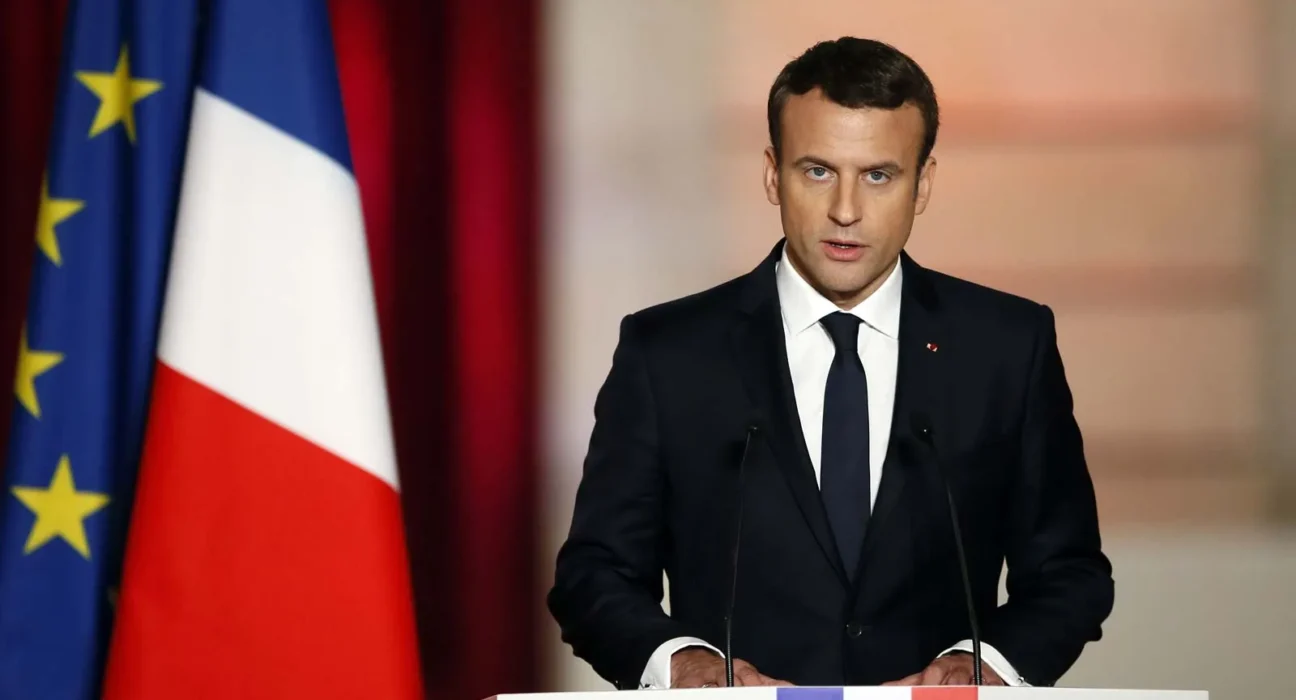
French President Emmanuel Macron has declared that France will not hesitate to deploy its resources in support of partners affected by the escalating conflict involving the United States, Israel, and Iran, should they formally request assistance. His remarks come amid rising military tensions and fears of a broader regional war in the Middle East.
His statement positions France as both a potential strategic backer and a diplomatic advocate for de-escalation at a time of mounting international uncertainty.
“France also stands ready to deploy the necessary resources to protect its closest partners, should they request it. The ongoing escalation is dangerous for all. It must stop.” he stated
Macron warned that the outbreak of open war between the United States, Israel, and Iran would carry “grave consequences for international peace and security.” He stressed that the situation represents a decisive moment not only for the region but for global stability, given the strategic importance of Middle Eastern security and energy routes.
He stated that France is taking every necessary measure to ensure the protection of its national territory, its citizens abroad, and its strategic interests in the Middle East. France maintains military assets and diplomatic missions across the region, placing it directly within the sphere of potential impact should hostilities intensify.
The French leader underscored that France stands ready to deploy necessary military, logistical, or diplomatic resources to defend its closest partners if they request support. This assurance signals Paris’ willingness to act, while making clear that any intervention would be coordinated and not unilateral.
Macron emphasized the urgency of de-escalation. He warned that continued strikes and counter-strikes risk triggering a wider confrontation that could draw in additional regional and global actors.
At the heart of the current crisis are mounting hostilities linked to Iran’s nuclear and ballistic missile programs. Washington has long accused Tehran of advancing its nuclear capabilities beyond acceptable civilian limits, arguing that such developments threaten regional and global security. Tehran, however, maintains that its nuclear program is peaceful, even as enrichment levels and regional proxy tensions have intensified scrutiny.
Israel has consistently viewed Iran’s nuclear ambitions as an existential threat, vowing to prevent Tehran from acquiring a nuclear weapon. That posture has fueled years of shadow conflict, covert operations, cyberattacks, and targeted strikes across the region. The latest flare-up marks a dangerous shift from indirect confrontation to more overt military engagement.
Macron said the Iranian regime must now engage in good-faith negotiations aimed at ending its nuclear and ballistic missile programs, as well as what he described as destabilizing regional activities. He argued that renewed diplomacy is absolutely necessary for the security of all in the Middle East.
“The ongoing escalation is dangerous for all. It must stop. The Iranian regime must understand that it now has no other option but to engage in good faith in negotiations to end its nuclear and ballistic programs, as well as its regional destabilization activities” he said
Beyond military concerns, Macron addressed Iran’s internal situation. He said the Iranian people must be able to freely shape their future, criticizing what he described as massacres committed by the Islamic regime. He suggested that such actions undermine the legitimacy of the leadership and strengthen calls for political accountability.
France, he said, remains faithful to its principles and fully aware of its international responsibilities. As a permanent member of the United Nations Security Council, France is calling for an urgent Security Council meeting to address the crisis and seek coordinated international action.
Macron confirmed he is in close contact with European partners and regional allies in the Middle East to align diplomatic efforts. European governments have expressed growing concern that further escalation could destabilize global markets and trigger a humanitarian crisis.
Related Posts