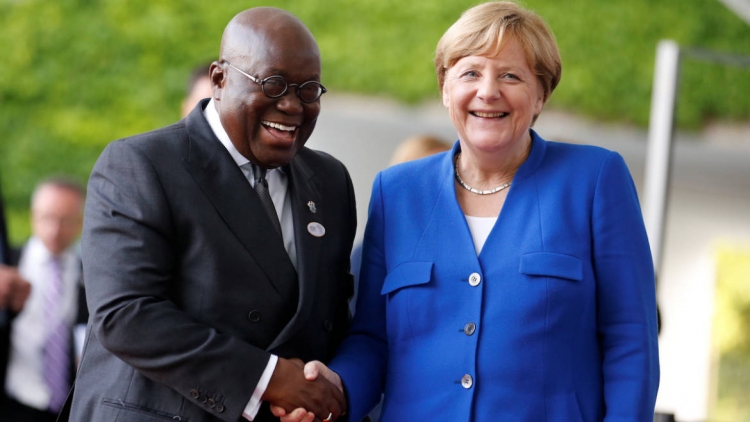


The United Nations Resident Coordinator in Ghana, Zia Choudhury, has paid a courtesy call on the National Chief Imam, Sheikh Osmanu Nuhu Sharubutu, commending Ghana’s longstanding interfaith harmony as a product of visionary leadership and sustained dialogue among the country’s religious leaders.
The meeting, held at the Office of the National Chief Imam in Accra, underscored the critical role of faith leadership in promoting peace, tolerance and national cohesion. Mr. Choudhury described Ghana as a model of religious coexistence in West Africa, noting that its stability is deeply rooted in mutual respect across faiths.
The Office of the National Chief Imam remains one of the most revered religious institutions in Ghana, serving not only as a spiritual authority for the Muslim community but also as a unifying national voice. Over the years, it has attracted visits from political leaders, diplomats, civil society actors and corporate institutions, reinforcing the role of religion in governance, peacebuilding and national development.
The visit carries symbolic significance, as engagement with the Chief Imam represents a direct connection to Ghana’s Muslim community and its broader network of grassroots leadership. For the United Nations, such engagement strengthens community relations and enhances collaboration with local actors in advancing peacebuilding initiatives and sustaining social cohesion.
During the interaction, Sheikh Osmanu Nuhu Sharubutu emphasised the centrality of shared human identity as the foundation of peaceful coexistence. He underscored that recognising humanity first, before religious or ethnic differences, cultivates mutual respect, love and harmony across faiths and generations.
Mr. Choudhury expressed deep appreciation for the opportunity to seek the Chief Imam’s guidance and wisdom, describing the exchange as both meaningful and inspiring. He acknowledged that Ghana’s interfaith harmony has been carefully nurtured over decades through consistent leadership, dialogue and collaboration among religious authorities.
Ghana is widely regarded as one of Africa’s most religiously tolerant nations. According to the Ghana Statistical Service’s 2021 Population and Housing Census, approximately 71 percent of the population identifies as Christian, about 20 percent as Muslim, with the remainder adhering to traditional religions or other beliefs. Despite this diversity, the country has experienced minimal religious conflict compared to several regions globally, a testament to institutionalised interfaith cooperation and dialogue.
Interfaith collaboration in Ghana is further strengthened by platforms such as the National Peace Council and the longstanding cooperation between the Christian Council of Ghana and the Office of the National Chief Imam. Religious leaders routinely issue joint statements during national elections and periods of tension, promoting calm and peaceful participation.
The National Chief Imam himself has become a unifying figure, frequently engaging leaders across Christian denominations and other faith traditions to reinforce the message of tolerance and national unity.
The courtesy call concluded with renewed assurances of continued collaboration between the United Nations and Ghana’s faith leadership, reinforcing the shared commitment to sustaining peace, strengthening community resilience and advancing inclusive national development.
Related Posts