
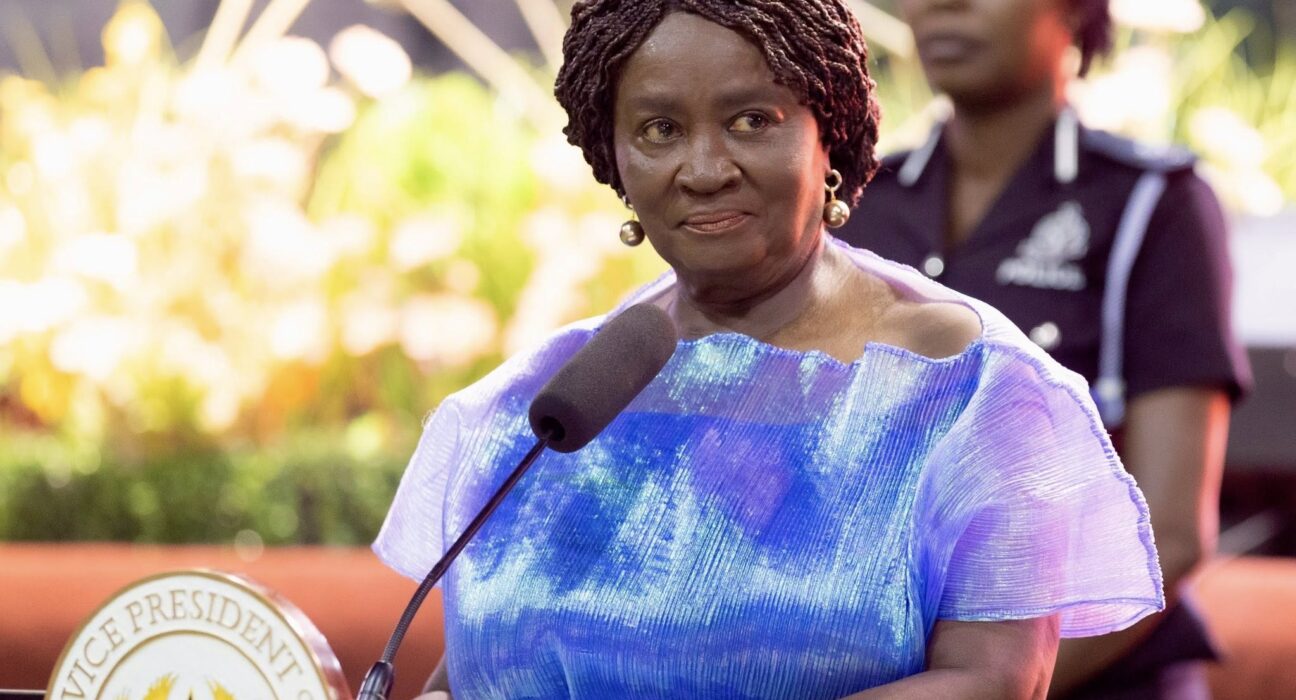
Vice President Prof. Jane Naana Opoku-Agyemang has underscored the enduring strength of Ghana–China relations, stressing that sustainable development must rest not only on infrastructure but also on people, culture, and mutual respect.
She delivered the remarks at the 2026 Sunon Asogli Chinese New Year celebration marking the Spring Festival and the Year of the Horse, a symbolic gathering that highlighted the depth of engagement between Ghana and China beyond formal diplomacy.
Her participation signified the strategic importance of the Asian nation in Ghana’s development architecture and reaffirmed the vitality of people-to-people connections that continue to anchor the bilateral partnership.
Tracing the history of bilateral relations, the Vice President recalled that diplomatic ties between Ghana and China were first established in 1960 under the administration of Kwame Nkrumah. Although relations were severed following the 1966 coup, they were restored in 1972 under the leadership of Ignatius Kutu Acheampong and have remained resilient ever since.
Prof. Opoku-Agyemang stressed that the strength of the partnership extends beyond economic investment, resting equally on cultural exchange, educational cooperation, and mutual respect. According to her, these softer dimensions of diplomacy have ensured that the relationship continues to evolve in a balanced and sustainable manner.
She noted that over the decades, the ties have blossomed into cooperation in key sectors of human development, industry, and technical exchange. Trade relations, she observed, remain a cornerstone of the partnership, with China standing as Ghana’s largest trading partner.
“Diplomatic relations between our two countries date back many decades and have grown beyond formal ties into meaningful cooperation in education, trade, industry, and technical exchange,” she stated, reinforcing the breadth of collaboration that now defines the relationship.
Trade remains a cornerstone of the partnership, with China consistently ranking as Ghana’s largest trading partner. Ghana’s exports have further benefited from China’s zero-tariff treatment for a wide range of African goods, a policy expected to deepen commercial exchange and diversify Ghana’s access to global markets. Bilateral trade volumes have reached approximately $11 billion, reflecting the scale of economic interdependence between the two countries.
At the infrastructural level, Chinese-backed projects have significantly reshaped Ghana’s development landscape. These include the Bui Dam, which expanded national power generation capacity; the construction of Terminal 3 Kotoka International Airport, positioning Accra as a modern aviation hub; and transformative urban projects such as the Pokuase Interchange. Chinese firms have also contributed to market redevelopment initiatives, road networks, railway modernisation efforts, and telecommunications infrastructure, reinforcing Ghana’s industrial and transport backbone.
She also acknowledged the contribution of Sunon Asogli Power Ghana Limited, whose thermal power operations remain a significant component of Ghana’s energy mix. Yet, she cautioned that infrastructure alone cannot define the success of a partnership.
“Development is not built by infrastructure alone, but also by people, cultures, and mutual respect. Enduring partnerships must be anchored in clarity of purpose, accountability, and alignment with national development priorities,” she affirmed.
Looking ahead, the Vice President expressed optimism about deepening cooperation in areas aligned with Ghana’s strategic agenda, industrialisation, energy security, technological transfer, and long-term economic resilience. She emphasised that the next phase of Ghana–China relations must prioritise sustainable growth, institutional strengthening, and inclusive prosperity, ensuring that investments translate into measurable improvements in livelihoods.
Beyond trade, China has played a pivotal role in Ghana’s infrastructure transformation. Major projects supported through Chinese financing and construction include the Bui Dam, which significantly expanded Ghana’s power generation capacity; the Terminal 3 Kotoka International Airport, enhancing the country’s aviation infrastructure; the Cape Coast Sports Stadium and the Takoradi Market Circle Redevelopment project; as well as major road interchanges such as the Pokuase Interchange.
The Chinese New Year, also known as the Spring Festival, is the most significant traditional celebration in China and among Chinese communities worldwide. Marking the beginning of the lunar calendar, the festival symbolises renewal, family unity, prosperity, and hope for the year ahead.
Celebrations typically span several days and are characterised by family reunions, cultural performances, the exchange of goodwill messages, and traditional symbolism tied to the zodiac animal of the year, in this case, the Year of the Horse, which represents strength, endurance, and forward momentum.
Related Posts