
The European Union Delegation to Ghana has congratulated the country on securing a second consecutive term on the United Nations Human Rights Council (UNHRC), describing the re-election as recognition of Ghana’s commitment to multilateralism and human rights.
Ghana received 173 votes in the October 13 election at the UN General Assembly in New York, securing one of the four seats allocated to African states for the 2027–2029 term. Zambia topped the African group with 177 votes, followed by Ghana with 173, Nigeria with 172 and Burundi with 160.
In a post on social media, the EU Delegation reaffirmed its commitment to working with Ghana and its member states Germany and Ireland at the Council in Geneva to advance shared human rights priorities.
“The EU looks forward to continuing our close collaboration with Ghana in Geneva to advance shared priorities and uphold the rules-based international order,” the Delegation wrote.
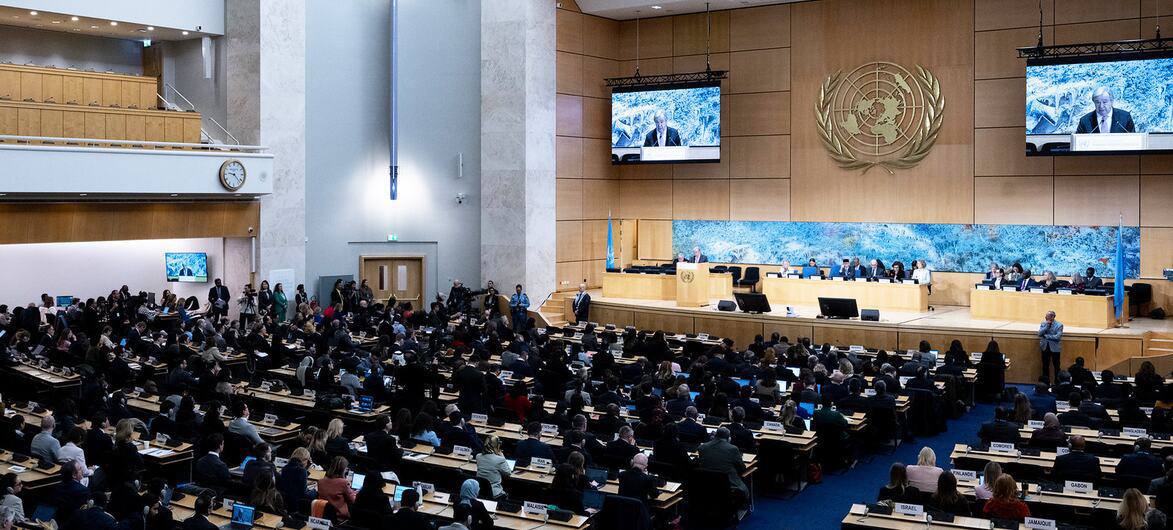
Ghana’s re-election extends its membership of the 47-member Council beyond its current 2024–2026 term, giving it another three years to participate in international discussions on human rights protection, accountability and fundamental freedoms.
The election saw 15 countries chosen across the Council’s five regional groups. In the Asia-Pacific group, Kuwait and Nepal received 173 votes each, followed by Jordan with 171 and Japan with 166. In Eastern Europe, the Republic of Moldova secured 168 votes and Ukraine 162.
Brazil and the Dominican Republic each received 170 votes, while Uruguay obtained 165 in the Latin American and Caribbean group. In the Western European and Others group, Ireland received 165 votes and Germany 163.
Ghana’s re-election comes after a first term during which it played a role in advancing resolutions addressing racial discrimination and human rights capacity-building.
At the Council’s 60th session in October 2025, Ghana sponsored, on behalf of the Group of African States, a resolution titled “From rhetoric to reality: a global call for concrete action against racism, racial discrimination, xenophobia and related intolerance”. The resolution was adopted without a vote and called for concrete action to address racism and related forms of intolerance.
Ghana also sponsored resolutions on behalf of the African Group at the Council’s 58th session in March 2025 on technical assistance and capacity-building in human rights in Mali. Such initiatives form part of the Council’s efforts to support human rights institutions and strengthen protections in countries facing challenges in this area.
The Council, established in 2006, is the United Nations’ principal intergovernmental body responsible for promoting and protecting human rights worldwide. Its work includes examining alleged violations, reviewing the human rights records of UN member states through the Universal Periodic Review, appointing independent experts and supporting investigations into serious abuses.
Under the framework establishing the Council, members are expected to uphold the highest standards in the promotion and protection of human rights and cooperate fully with the body.
Ghana’s new mandate will provide further opportunities to shape international discussions and work with other countries on human rights issues. It will also bring renewed attention to how the country uses its position to advance those principles consistently in international forums and at home.
Related Posts