
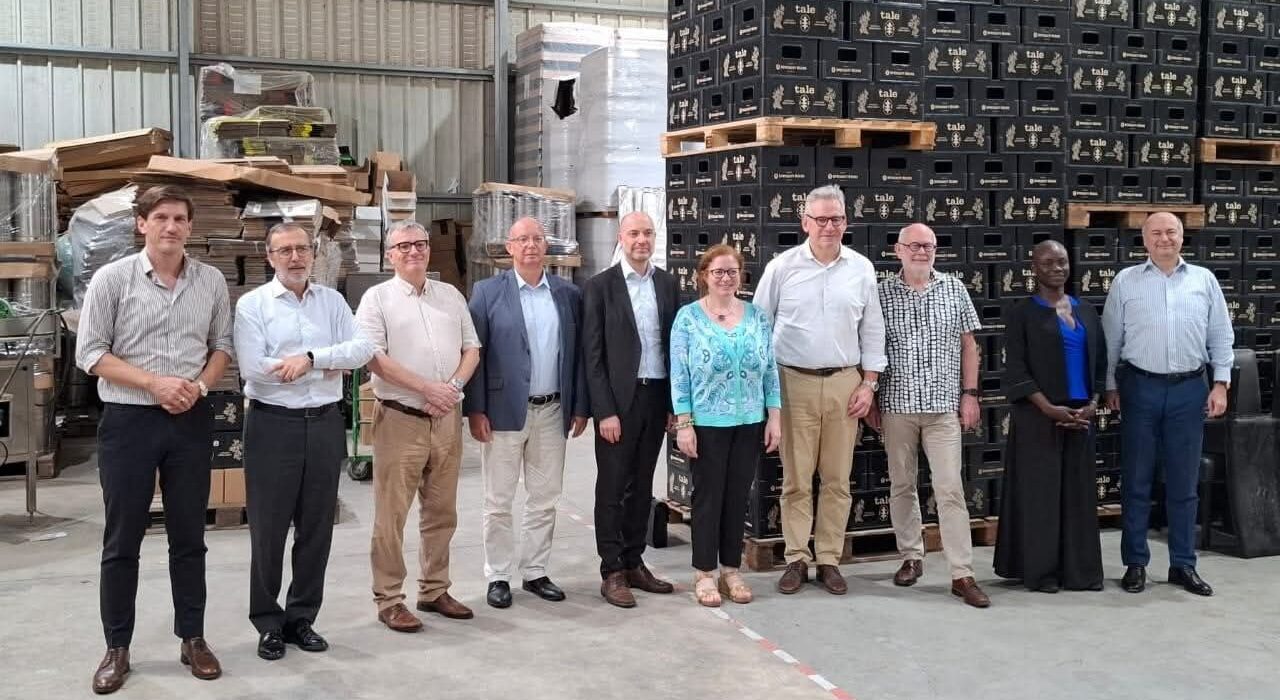
The European Union Ambassador to Ghana, Rune Skinnebach, has convened a strategic retreat with ten ambassadors representing EU member states accredited to Ghana, as part of preparations toward the upcoming annual EU–Ghana Dialogue.
The engagement was not merely ceremonial; it formed part of a coordinated diplomatic effort to refine the EU’s collective priorities in Ghana and align them with the evolving dynamics of Ghana’s governance, economy, and regional role within West Africa.
The annual EU–Ghana Dialogue serves as a high-level platform for structured engagement between the European Union and the Government of Ghana. It provides an opportunity to assess progress in bilateral cooperation, review shared commitments, and identify new areas of partnership.
The dialogue typically covers governance and democratic consolidation, trade and investment, security cooperation, climate action, migration management, and sustainable development. It is also a mechanism for accountability, ensuring that both sides measure the impact of joint initiatives.
Ambassador Skinnebach’s retreat created space for internal coordination among EU member states before engaging Ghanaian authorities. Such coordination is crucial because the European Union operates through a “Team Europe” approach, harmonizing the policies and development interventions of individual member states with broader EU institutional strategies.
By aligning their positions ahead of the dialogue, the ambassadors strengthen the EU’s capacity to present unified priorities on issues ranging from economic resilience to digital transformation.
Representatives at the retreat included ambassadors from Austria, the Czech Republic, Denmark, France, Germany, Hungary, Italy, the Netherlands, Malta, and Spain. Together, these missions represent a significant share of Ghana’s development and trade partnerships within Europe. T
heir presence underscored the EU’s collective diplomatic footprint in Ghana, where European countries remain major investors, development partners, and contributors to governance reform and institutional capacity-building.
Beyond development cooperation, the EU–Ghana Dialogue has growing importance in the context of regional security. Ghana’s strategic position within West Africa, particularly amid instability in parts of the Sahel, places it at the center of preventive diplomacy and security coordination.
The European Union has consistently supported Ghana in border management, counter-terrorism preparedness, and peacebuilding initiatives. The retreat therefore allowed ambassadors to review how these security engagements can be reinforced within the framework of the next dialogue.
Trade and economic transformation are also expected to feature prominently in the discussions. Ghana’s participation in the EU’s Economic Partnership Agreement framework provides duty-free, quota-free access to the European market for many Ghanaian exports.
The dialogue offers a forum to address trade bottlenecks, regulatory alignment, and support for Ghanaian small and medium enterprises seeking to access European markets. With Ghana positioning itself as a hub under the African Continental Free Trade Area, the EU’s strategic engagement becomes even more consequential.
Climate cooperation remains another critical pillar of EU–Ghana relations. The European Union’s Green Deal ambitions intersect with Ghana’s commitments to renewable energy expansion, sustainable mining practices, and forest conservation.
During preparatory engagements such as the retreat, ambassadors typically review how climate finance instruments, technical assistance, and green investment initiatives can be tailored to Ghana’s national development agenda.
Migration and mobility, long-standing areas of EU–Ghana cooperation, are also expected to shape the dialogue. Ghana is often cited as a key partner in promoting safe, orderly, and regular migration pathways, while addressing irregular migration through youth employment and skills development initiatives. Coordinated planning among EU ambassadors ensures that migration discussions remain balanced, combining development support with mutual responsibilities.
Ultimately, the retreat reinforced the EU’s commitment to engaging Ghana not only as a beneficiary of development assistance but as a strategic partner. By fostering internal cohesion and clarifying shared objectives ahead of the annual dialogue,
Ambassador Skinnebach and his colleagues demonstrated the importance of unified diplomacy in advancing the EU’s agenda in Ghana. The upcoming EU–Ghana Dialogue is therefore expected to build on this preparatory work, deepening cooperation in ways that reflect both Ghana’s national priorities and Europe’s evolving global strategy.
Related Posts