
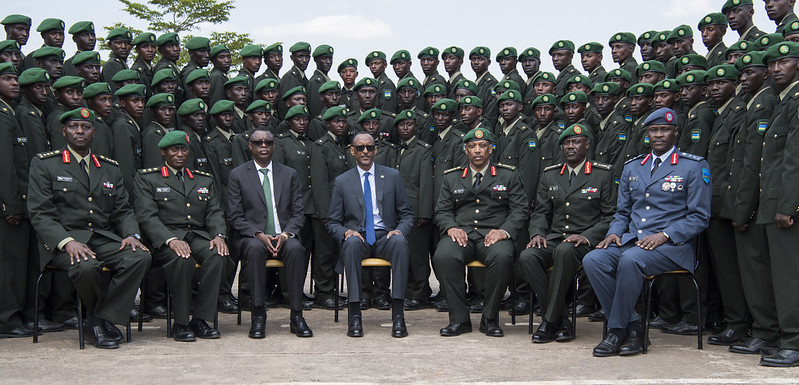
The United States of America through the U.S. Department of the Treasury’s Office of Foreign Assets Control (OFAC), announced sweeping sanctions against the Rwanda Defence Force (RDF) along with several of its senior commanders over support for M23 Rebel group.
The move marks a significant escalation in Washington’s response to the deteriorating security situation in eastern Democratic Republic of Congo where the militia group has been accused of human rights abuse and violence against the vulnerable.
According to the Treasury Department, the measures are linked to allegations of Rwandan support for the March 23 Movement (M23), an armed group operating in eastern Democratic Republic of the Congo. The M23 has been accused by the Congolese government and United Nations experts of carrying out attacks that have displaced thousands of civilians and destabilised the mineral-rich region.
Those individually designated under the sanctions regime include Maj. Gen. Vincent Nyakarundi, Maj. Gen. Ruki Karusisi, Gen. Mubarakh Muganga, and Brig. Gen. Stanislas Gashugi. U.S. authorities allege that the officers played roles connected to Rwanda’s military posture and activities related to the conflict in eastern Congo.
While the United States has previously sanctioned individuals accused of involvement in the Congo conflict, this is the first time it has designated the RDF itself as a sanctioned entity. Targeting a national army is rare and signals heightened diplomatic and strategic pressure on Kigali.
“M23, a US- and UN-sanctioned entity, is responsible for horrific human rights abuses, including summary executions and violence against civilians, including women and children,” State Department spokesman Tommy Pigott said in a statement
Under U.S. sanctions law, the designation triggers an immediate asset freeze. Any RDF property or financial interests within U.S. jurisdiction are blocked, and American financial institutions are required to freeze such funds and report them to OFAC.
The measures also impose a broad transaction ban. U.S. citizens and companies are prohibited from conducting transactions with the RDF, including providing goods or services, extending credit, or maintaining business relationships with the force. This effectively cuts the RDF off from direct access to the U.S. financial system.
The implications extend beyond American borders. Through the mechanism of so-called secondary sanctions, non-U.S. banks or firms that process RDF-related transactions using the U.S. dollar or U.S. financial institutions could also face penalties. This significantly widens the potential global impact of the designation.
The sanctions come against the backdrop of longstanding tensions between Rwanda and the DRC. Kinshasa has repeatedly accused Kigali of backing M23 rebels, claims Rwanda has denied. The resurgence of M23 in recent years has intensified fighting in North Kivu province, worsening one of Africa’s most protracted humanitarian crises.
Rwanda is also one of the largest contributors to United Nations peacekeeping missions and reportedly receives more than $100 million annually in reimbursements for troop deployments. Observers note that the RDF designation could complicate financial flows linked to international operations, potentially increasing economic pressure on the Rwandan government.
From a military standpoint, the sanctions may restrict the RDF’s access to U.S.-origin equipment, spare parts, and defence-related services. Contracts involving U.S. components, financing, or logistical support could be blocked, affecting procurement and modernisation programmes.
Security cooperation between Washington and Kigali could also be affected. Joint training exercises, intelligence-sharing arrangements, and other forms of bilateral military collaboration may face suspension or review as a result of the sanctions.
Diplomatically, the move represents a sharp signal from Washington amid broader international concern about regional stability in the Great Lakes region. The United States has repeatedly called for de-escalation, dialogue, and respect for the sovereignty of the DRC.
Regional bodies, including the African Union and the East African Community, have attempted mediation efforts aimed at ending hostilities and addressing the root causes of the conflict. However, repeated ceasefire agreements have struggled to hold.
While the sanctions do not dissolve or dismantle the Rwanda Defence Force, they severely restrict its financial and military interactions involving U.S. systems. The impact is expected to be legal, operational, and diplomatic, with potential ripple effects across regional security cooperation and international peacekeeping engagements.
Related Posts