
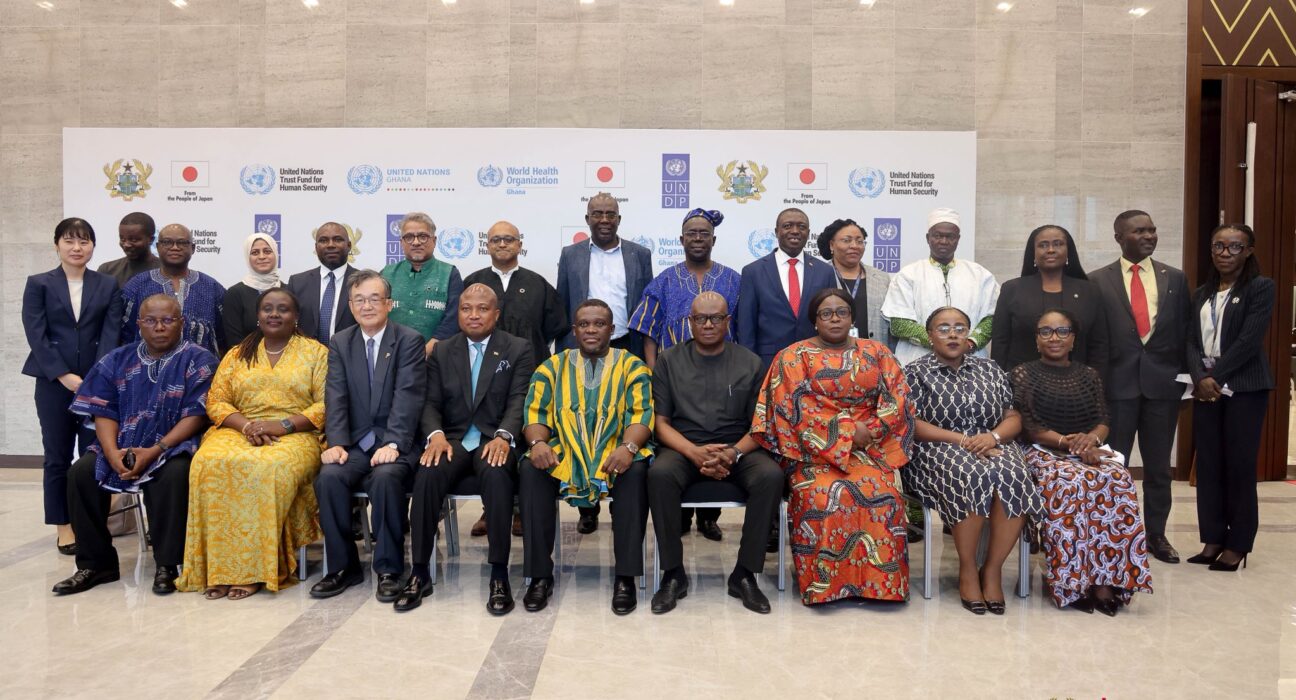
The Governments of Ghana and Japan, together with the United Nations and the World Health Organization, have collectively committed $1.5 million towards three development initiatives aimed at advancing peacebuilding in Bawku, digital transformation, and health innovation in Ghana.
The initiatives fall under Japan’s Fiscal Year 2025 Supplementary Budget and are anchored on the Humanitarian-Development-Peace (HDP) Nexus framework. They include: strengthening peacebuilding efforts in Bawku, accelerating public sector digital transformation through capacity building, and harnessing Artificial Intelligence to improve health outcomes while mitigating associated human security risks.
At the core of the intervention is the long-standing conflict in Bawku, which has persisted for over six decades, resulting in significant loss of life, displacement, and economic disruption. The peacebuilding component seeks to complement national reconciliation efforts by promoting dialogue, rebuilding trust, and strengthening community resilience within a structured humanitarian-development-peace approach.
The digital transformation component aims to enhance efficiency in Ghana’s public sector through targeted capacity building and the integration of modern technologies, aligning with the country’s broader digitalisation agenda. The health-focused initiative seeks to explore the responsible use of Artificial Intelligence in improving healthcare delivery, diagnostics, and system efficiency while addressing ethical and security concerns.
The Foreign Affairs Minister, Samuel Okudzeto Ablakwa, described the initiatives as a reflection of strong multilateral commitment to sustainable peace, particularly in Bawku, noting that they reinforce ongoing national efforts to achieve lasting stability through integrated development and reconciliation strategies.
The Japanese Ambassador to Ghana, Hiroshi Yoshimoto, underscored the importance of the partnership in deepening bilateral relations between Accra and Tokyo, reaffirming Japan’s commitment to supporting Ghana’s peacebuilding and development priorities through human security-centred interventions.
The UN Resident Coordinator, Mr. Zia Choudhury, also praised the collaborative design of the initiatives, highlighting that they align directly with 13 of the 17 Sustainable Development Goals, particularly in the areas of peace, health, innovation, and institutional strengthening.
The United Nations plays a central role in ensuring that the initiatives align with global development standards, particularly through the Sustainable Development Goals framework, ensuring coherence between international support and national priorities. Its involvement also strengthens coordination among development partners to ensure long-term impact, accountability, and scalability of results.
Similarly, the World Health Organization provides technical leadership in guiding the responsible integration of Artificial Intelligence into Ghana’s health system. This includes safeguarding ethical standards, strengthening health data systems, and ensuring that digital health innovations translate into improved service delivery and equitable access to care.
At the national level, Ghana’s peace efforts in Bawku are anchored on the formal mediation process led by Otumfuo Osei Tutu II, the Asantehene, who was appointed by government to facilitate structured dialogue between the feuding factions. The process has produced a comprehensive mediation report presented to President John Dramani Mahama, which has since been endorsed by government as the roadmap for reconciliation and long-term stability in the area.
This intervention is complemented by the work of the National Peace Council, security agencies, and traditional authorities, who continue to support the implementation phase through community engagement, confidence-building measures, and monitoring of ceasefire adherence in the conflict zone.
On the digital transformation and AI front, Ghana’s policy direction is guided by the National Artificial Intelligence Strategy (2023–2033), which provides a structured framework for integrating AI across key sectors of the economy, including public service delivery, education, and healthcare. The strategy is coordinated by the relevant digital governance institutions under the state’s broader digitalisation agenda and sets out principles for ethical, responsible, and development-oriented AI deployment.
Related Posts